By Louis ‘Barok‘ C. Biraogo — September 14, 2024
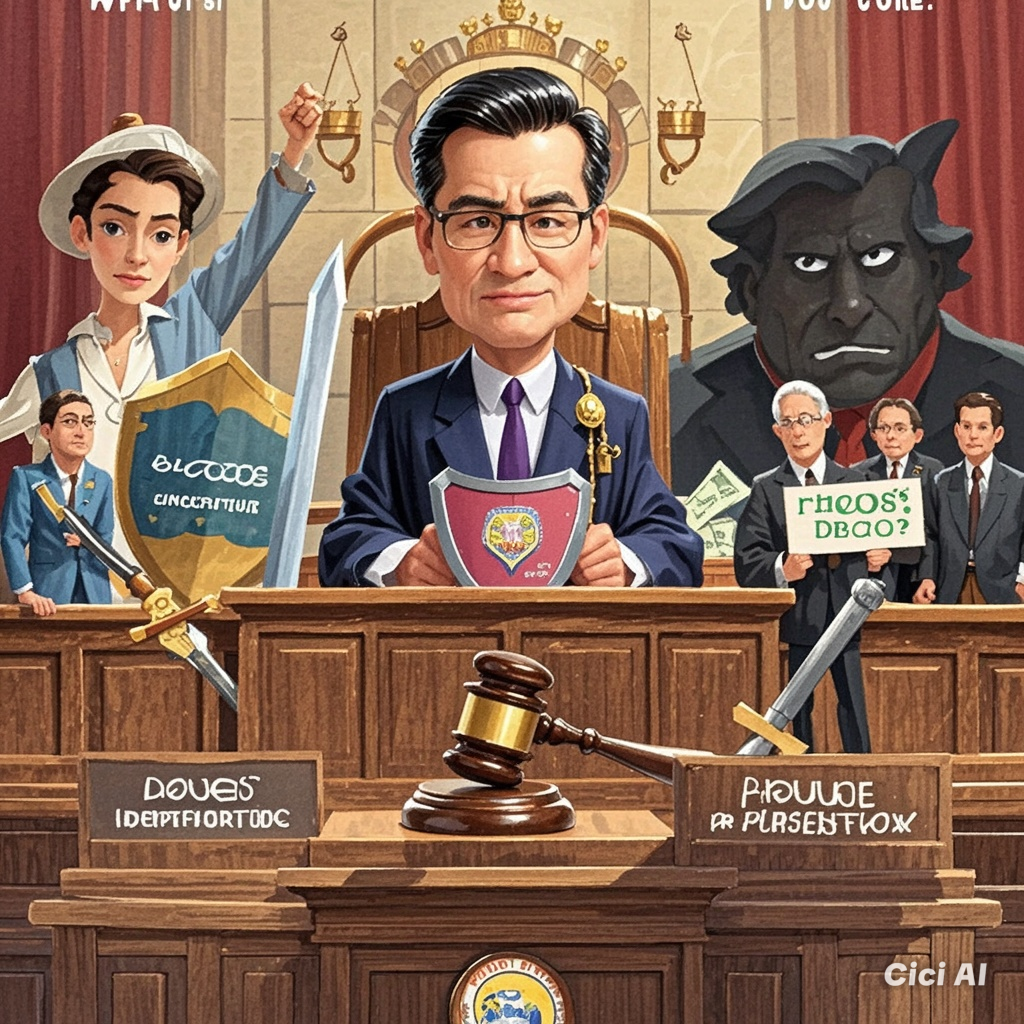
HARRY Roque’s fall from grace is a story of contradictions. Once hailed as a defender of civil liberties, Roque’s alignment with the Duterte administration and his connections to the POGO industry have turned him into a lightning rod of controversy, challenging the legacy he once fought to uphold.
The House of Representatives’ quad-committee has cited Roque for contempt after his refusal to submit requested documents—tax returns and his Statement of Assets, Liabilities, and Net Worth (SALN)—and failure to attend hearings related to his alleged involvement with the raided POGO hub, Lucky South 99. Roque vehemently denies these accusations, asserting that he only acted as legal counsel to Katherine Cassandra Li Ong, a stakeholder in Whirlwind Corporation, which leased land to Lucky South 99.
Roque’s decision to challenge the contempt order in court underlines the complex intersection of his political career, his past human rights advocacy, and the legal questions regarding the limits of legislative power, the right to privacy, and due process.
The Case for Roque: Arguments in Favor of His Stance
Roque’s legal team intends to file two legal actions: a petition for a writ of habeas corpus to challenge his possible arrest, and a petition for certiorari to annul the contempt order. The central claims are that the House has exceeded its authority and violated his constitutional rights by demanding irrelevant personal documents.
1. Right to Privacy
Roque may invoke the Supreme Court’s ruling in Ople v. Torres, G.R. No. 127685, July 23, 1998, which established that the right to privacy is constitutionally protected. In that case, the Court struck down the proposed national ID system, citing that it would violate individuals’ right to privacy without sufficient safeguards. Roque’s defense could argue that the House’s demand for documents such as his tax returns and SALN constitutes an unwarranted intrusion into his personal privacy, as these documents are irrelevant to the investigation. The demand for these documents could be seen as a violation of Section 2, Article III of the 1987 Constitution, which protects citizens against unreasonable searches and seizures.
2. Limits on Legislative Power and Abuse of Discretion
Roque’s team may cite Senate v. Ermita, G.R. No. 169777, April 20, 2006, where the Supreme Court ruled that the legislative branch’s power to summon individuals for investigations is not unlimited. The case emphasized that such powers should be exercised “in aid of legislation” and within the bounds of the Constitution. Roque’s legal strategy could assert that the House is overstepping its investigatory authority by demanding documents that have no bearing on the POGO-related investigation, thus constituting grave abuse of discretion.
3. Certiorari and Habeas Corpus
Roque’s petition for certiorari challenges the contempt order on the grounds of grave abuse of discretion. Citing Arroyo v. De Venecia, G.R. No. 127255, August 14, 1997, where the Court invalidated a congressional subpoena as an excessive use of investigatory power, Roque may argue that the House’s subpoenas and contempt citation against him similarly exceed the scope of its powers.
Roque’s potential arrest under the contempt order could also be challenged via a writ of habeas corpus, based on the ruling in Boado v. Court of Appeals, G.R. No. 156364, January 12, 2004, which underscored that habeas corpus can be invoked when an individual is detained without lawful authority. Roque’s legal team could argue that any arrest based on the contempt order would be unlawful, given that the House’s actions lack a valid legislative purpose.
The Other Side of the Coin: Counterarguments to Roque’s Stance
On the other hand, the House’s quad-committee may argue that its actions are well within the scope of its investigatory powers, as the documents requested could reveal whether Roque benefitted from his alleged ties to Lucky South 99, thus justifying the need for transparency.
1. The Investigative Powers of Congress
The Supreme Court in Gonzales v. Senate Blue Ribbon Committee, G.R. No. 89914, November 20, 1991, upheld the power of legislative bodies to conduct inquiries “in aid of legislation.” In that case, the Court ruled that Congress’s investigative powers are broad, provided they are exercised for a legitimate legislative purpose. The House may argue that the request for Roque’s documents is necessary to determine whether he engaged in unethical conduct or profited from his alleged ties to the POGO hub, making it a legitimate exercise of its investigatory authority.
2. Public Interest vs. Privacy
The House could counter Roque’s privacy claims by citing Republic v. Sandiganbayan, G.R. Nos. 104768-69, July 21, 2003, where the Court ruled that government officials, by the nature of their public service, have a diminished expectation of privacy, particularly when it concerns their financial dealings. As a former public official, Roque’s SALN and tax returns could be subject to scrutiny if there is a credible public interest in their disclosure, particularly if they may reveal potential conflicts of interest or unlawful benefits from the POGO industry.
3. The Contempt Power of Congress
In In re: Subpoena Duces Tecum, G.R. No. L-22595, January 12, 1968, the Supreme Court upheld Congress’s power to cite individuals for contempt when they refuse to comply with subpoenas in investigations. The Court emphasized that Congress’s contempt power is essential for enforcing its constitutional mandate. The House may argue that Roque’s refusal to submit the requested documents and his absence from the hearings warrant his contempt citation, as this behavior impedes their investigation.
The Verdict: Which Side Has the Stronger Argument?
While both sides present compelling arguments, Roque’s challenge hinges on whether the documents requested by the House are truly necessary for the POGO investigation. If the Supreme Court finds that the documents have no relevance to the inquiry, Roque’s claims of grave abuse of discretion may prevail. However, the precedent set in Gonzales v. Senate Blue Ribbon Committee suggests that the investigative powers of Congress are broadly construed, and the Court may lean toward deferring to the legislative branch’s authority, especially if public interest is invoked.
Political and Legal Consequences
- If the Supreme Court Rules in Favor of Roque: A ruling in Roque’s favor could restrict Congress’s ability to compel personal documents from individuals, particularly former officials. This could set a precedent that strengthens the right to privacy and curtails legislative investigations into individuals’ personal finances unless directly linked to official conduct. Politically, this could also be seen as a blow to the current administration’s efforts to clamp down on perceived corruption in industries like POGO.
- If the Supreme Court Rules Against Roque: A ruling upholding the House’s contempt order could embolden legislative bodies to more aggressively pursue investigations, especially those concerning high-profile figures. It would also signal that public interest, particularly in cases involving government officials, may override certain privacy concerns, encouraging greater transparency in official financial dealings.
Recommendations
1. For Roque: To strengthen his case, Roque should narrow his arguments to emphasize the irrelevance of the requested documents to the core issue of the investigation. He should also highlight any procedural missteps by the House in issuing the contempt citation, and make a clear distinction between his role as legal counsel and any involvement with the POGO industry.
2. For the House: The quad-committee should focus on demonstrating the relevance of the requested documents to the investigation, ensuring that the demand for transparency is grounded in public interest. To avoid future legal challenges, it should also ensure that all procedural requirements for issuing subpoenas and contempt orders are strictly followed.
In conclusion, as this case unfolds, the Supreme Court faces a critical decision: protect the sanctity of privacy rights or expand Congress’s authority to demand sensitive information. The ruling will not only impact the POGO investigation but also set a legal framework for future confrontations between individual freedoms and legislative power—a decision that could define the boundaries of democracy in the Philippines.

- “Forthwith” to Farce: How the Senate is Killing Impeachment—And Why Enrile’s Right (Even If You Can’t Trust Him)

- “HINDI AKO NAG-RESIGN!”

- “I’m calling you from my new Globe SIM. Send load!”

- “Mahiya Naman Kayo!” Marcos’ Anti-Corruption Vow Faces a Flood of Doubt

- “Meow, I’m calling you from my new Globe SIM!”

- “No Special Jail for Crooks!” Boying Remulla Slams VIP Perks for Flood Scammers

- “PLUNDER IS OVERRATED”? TRY AGAIN — IT’S A CALCULATED KILL SHOT

- “Several Lifetimes,” Said Fajardo — Translation: “I’m Not Spending Even One More Day on This Circus”

- “Shimenet”: The Term That Broke the Internet and the Budget

- “We Did Not Yield”: Marcos’s Stand and the Soul of Filipino Sovereignty


 KWEBA ni BAROK
Leave a comment