By Louis ‘Barok‘ C. Biraogo — September 16, 2024
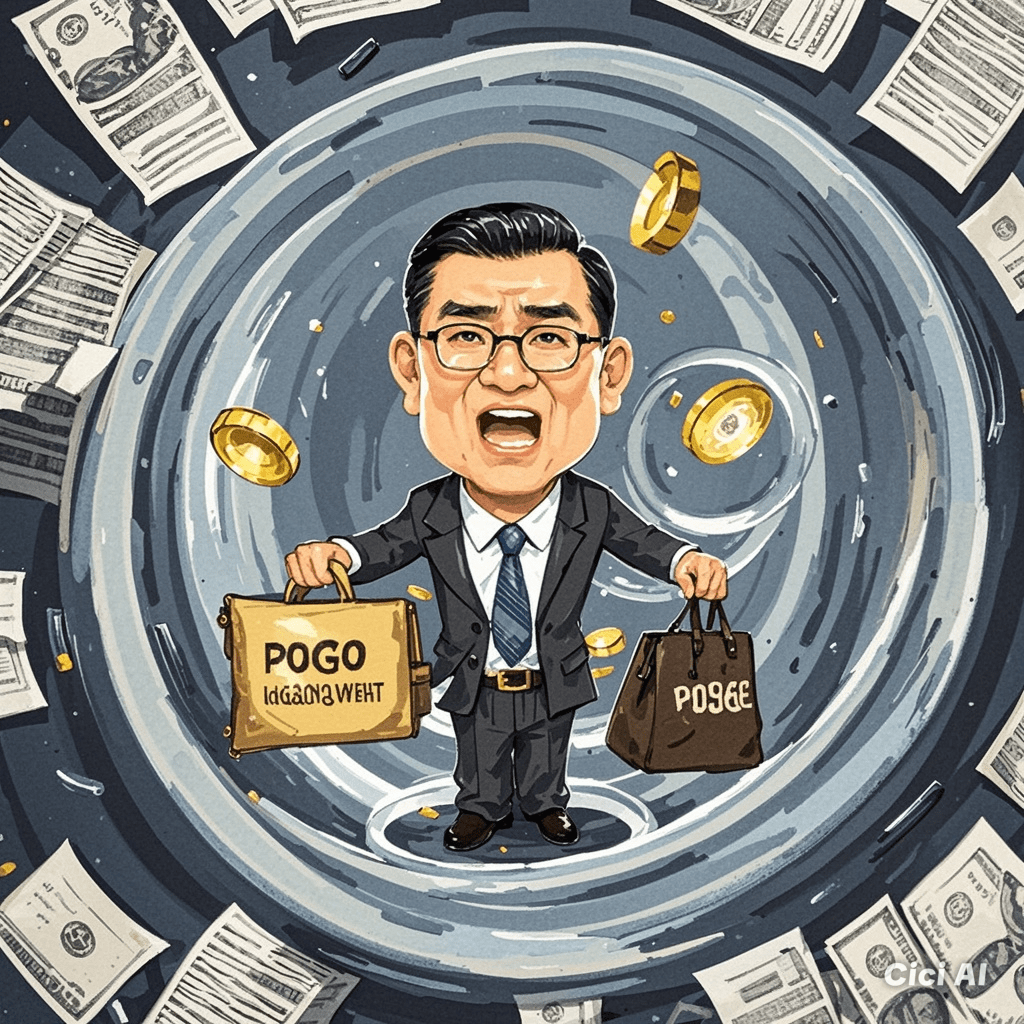
IN THE underworld of Philippine Offshore Gaming Operators (POGOs), where fortunes are made and laws are bent, a new player has entered the spotlight: Harry Roque. Once the voice of a president, now the focus of a swirling congressional investigation, Roque’s alleged involvement in the illegal gaming scandal threatens to expose dark financial dealings and test the limits of political loyalty. How did a former legal champion get so deeply ensnared in this web of deceit?
The crux of the controversy lies in the sudden surge in Roque’s wealth between 2017 and 2018. His company, Biancham, saw an astronomical jump from P1.5 million in net cash to P125 million in just one year, while his other company, PH2LOT37 Pinewood Holdings, experienced similar financial windfalls. Roque has publicly attributed this to the sale of family property in Multinational Village, Parañaque. Yet the timing of these financial gains — coinciding with the rise of POGOs and the Duterte administration’s support for these operations — has raised alarm bells.
The Harry Roque Conundrum: Where Law and Politics Collide
As the House of Representatives’ quad committee digs deeper, Roque’s connections have become even more damning. His name surfaced again when his former aide, AR Dela Serna, revealed he had lived in the infamous Lucky South 99 POGO compound, a notorious site for illegal activities including human trafficking. Dela Serna’s further admission that Roque’s influence enabled him to live rent-free in the compound, coupled with the revelation that they shared a joint bank account, places Roque squarely in the investigative crosshairs.
The involvement of Roque’s former assistant in these illicit operations, paired with the unexplained spike in his wealth, makes the case against Roque appear all the more serious. Further, Roque’s wife, Mylah, signed a lease contract for their family property with a Chinese national, Yun Wan. That property later became the hideout for Sun Liming, a fugitive wanted in China for defrauding hundreds of thousands of victims through an internet scam. Roque’s insistence that he was unaware of Sun’s criminal background, and that Yun Wan was the tenant, has not been enough to stave off suspicion.
A Question of Ethics and Law
The ethical and legal framework governing public officials in the Philippines, under which Roque’s actions are now being scrutinized, is anchored in the Anti-Graft and Corrupt Practices Act (RA 3019), and the Code of Conduct and Ethical Standards for Public Officials and Employees (RA 6713). These laws mandate that public officials avoid conflicts of interest and conduct their affairs in a transparent and honest manner. At the heart of the investigation lies the question of whether Roque violated these ethical standards by using his position to benefit financially or shield his associates from scrutiny.
The sudden and substantial increase in Roque’s wealth raises concerns under RA 3019, particularly provisions that criminalize the accumulation of unexplained wealth. The circumstances under which Roque’s properties became entangled with POGO operations — especially with his legal ties to Lucky South 99 — suggest potential breaches of these laws. The House quad committee is pursuing the money trail, suspecting that Roque may have benefited from POGO-linked activities.
In his defense, Roque has pointed out that neither Biancham nor PH2LOT37 hold POGO licenses, an assertion backed by the Philippine Amusement and Gaming Corporation (PAGCOR). However, his previous legal work for Whirlwind Real Estate, the company leasing its compound to Lucky South 99, coupled with his role in helping the POGO operator renew its gaming license, further intertwines him with the scandal.
Roque’s Defense: A Thin Veil or Genuine Innocence?
Roque’s defense has been built on several key points. First, he claims that the wealth increase was due to the sale of family property, specifically the 1.8-hectare Multinational Village property. He argues that the proceeds from this sale were then invested in First Bataan, a legitimate business. Further, Roque has maintained that his legal dealings with POGOs were above board, insisting that he only handled legitimate legal transactions and had no involvement in the criminal operations that subsequently emerged.
Roque has also leaned heavily on the narrative that the quad committee’s investigation is politically motivated, aiming to tarnish his reputation as a prominent ally of Duterte. He frames the congressional contempt order as part of a larger vendetta against him, highlighting his prominent role in prosecuting similar congressional investigations that led to the incarceration of former Senator Leila de Lima.
His refusal to comply with the committee’s subpoenas has only added fuel to the fire. His defiance, however, may stem from legitimate legal arguments. Under the Constitution, the principle of the separation of powers suggests that Congress should not usurp the role of the courts. Roque may argue that his detention for contempt is a violation of his due process rights, and as he has stated, plans to take the matter to the Supreme Court.
Doubts and Defenses: Examining the Weaknesses of the Accusations
Despite the mounting accusations, several counterarguments may mitigate the strength of the case against Roque. First, much of the evidence against him remains circumstantial. The connection between Roque’s wealth increase and the POGO operations is not definitively proven, and the committee’s investigation may struggle to establish direct links between his personal finances and illegal activities.
Moreover, the political context cannot be ignored. Roque’s opponents may well be using the POGO scandal to discredit him and weaken his political influence. His legal work for POGOs, while ethically questionable given the eventual criminal revelations about Lucky South 99, could still be argued as part of his legitimate practice as an attorney.
From a legal standpoint, the quad committee’s actions may be overreaching. Roque’s detention for contempt and the ongoing efforts to locate him may be excessive if not grounded in clear legal violations. Roque’s threat to elevate the matter to the Supreme Court could test the bounds of congressional authority in these types of investigations. The high court has ruled in several instances, including in the case of People vs. Sandiganbayan, that legislative bodies must respect the due process rights of individuals under investigation.
Recommendations
For the quad committee, a more cautious approach is recommended. It must focus on gathering solid documentary evidence to support its claims rather than relying on circumstantial evidence and political posturing. If it aims to prove that Roque benefited from POGO operations, a meticulous financial investigation that follows the money trail — potentially involving collaboration with the Anti-Money Laundering Council — is crucial.
For Roque, it would be in his best interest to comply with the subpoenas and provide full documentation of his financial dealings. Transparency is his best defense against the accusations swirling around him. While Roque may argue that the investigation is politically motivated, his refusal to cooperate only weakens his position. If his wealth truly stems from legitimate sources, as he claims, presenting those documents could alleviate much of the suspicion.
Conclusion
The case against Harry Roque is as much a political drama as it is a legal quagmire. The sudden rise in his wealth, his legal work with POGOs, and his entanglements with former aides and Chinese fugitives paint a deeply suspicious picture. Yet the evidence, while troubling, remains largely circumstantial. In the coming months, as this case winds its way through the courts and congressional halls, Roque’s fate may well hinge on whether the quad committee can tie the complex threads of this story into a compelling and legally sound case.
- “Forthwith” to Farce: How the Senate is Killing Impeachment—And Why Enrile’s Right (Even If You Can’t Trust Him)
- “HINDI AKO NAG-RESIGN!”

- “I’m calling you from my new Globe SIM. Send load!”

- “Mahiya Naman Kayo!” Marcos’ Anti-Corruption Vow Faces a Flood of Doubt

- “Meow, I’m calling you from my new Globe SIM!”

- “No Special Jail for Crooks!” Boying Remulla Slams VIP Perks for Flood Scammers

- “PLUNDER IS OVERRATED”? TRY AGAIN — IT’S A CALCULATED KILL SHOT

- “Several Lifetimes,” Said Fajardo — Translation: “I’m Not Spending Even One More Day on This Circus”

- “Shimenet”: The Term That Broke the Internet and the Budget

- “We Did Not Yield”: Marcos’s Stand and the Soul of Filipino Sovereignty




 KWEBA ni BAROK
Leave a comment