By Louis ‘Barok‘ C. Biraogo — September 19, 2024
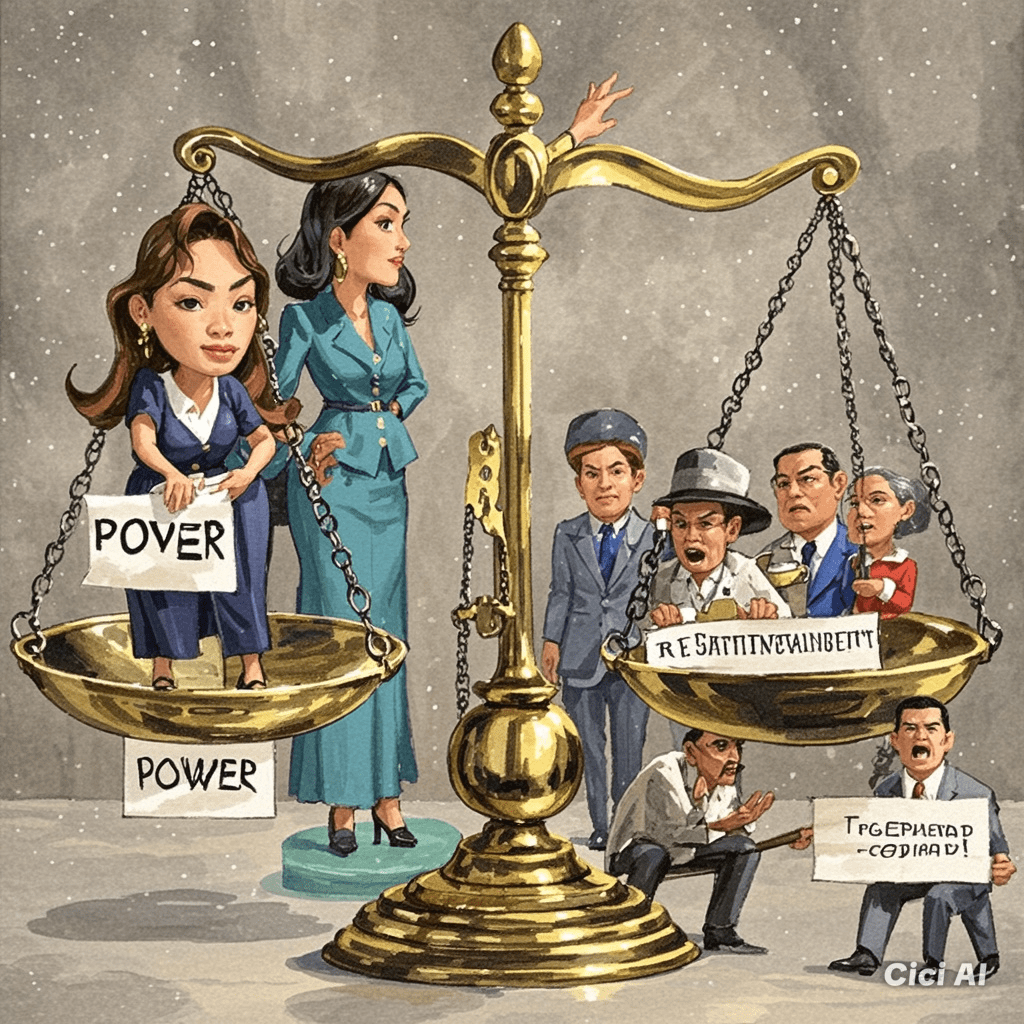
IN A bold act of defiance, Vice President Sara Duterte’s refusal to take an oath at the House hearing sends a message that’s hard to ignore. While some see it as a masterful power move amid political maneuvering, others decry it as an outright dodge of accountability. As questions swirl over her use of public funds, this symbolic moment exposes the fragile balance between authority and transparency—and what it means for the future of governance in the Philippines.
The Context: A Brewing Political Battle
Duterte’s appearance at the House hearing—though brief and marked by her refusal to take an oath—unfolds against the backdrop of an increasingly fractured alliance with President Ferdinand Marcos Jr., a strained relationship dating back to her resignation from his cabinet. The hearing, prompted by accusations of irregularities in her office’s budget, particularly the use of millions in confidential funds, has intensified the political conflict. Representative Rolando Valeriano’s privilege speech, which questioned the utility of those funds for Metro Manila residents, only further escalated tensions.
Duterte’s refusal to take the oath was immediately challenged by lawmakers, particularly after former President Gloria Macapagal Arroyo came to her defense, citing Supreme Court rulings distinguishing between witnesses and resource persons in congressional inquiries. Duterte, refusing to submit to a process she characterized as politically motivated, invoked both procedural objections and claims of an impending impeachment plot.
Duterte’s Defiance: A Legal and Political Showdown
Arguments for Duterte’s Refusal
- Procedural Concerns and Legal Precedents: Duterte’s argument hinged on a clear distinction between witnesses and resource persons, supported by Arroyo’s citation of a Supreme Court ruling. While legislative inquiries can compel witnesses to take an oath, resource persons have sometimes been exempt. Duterte argued that the hearing was merely an initial deliberation, not a formal accusation of wrongdoing. Such procedural nuances could, in theory, bolster her refusal to take the oath as she was not yet formally accused. Moreover, Duterte could invoke the right against self-incrimination enshrined in the Philippine Constitution. While typically associated with formal trials, this protection might apply in legislative inquiries if she anticipated that her testimony would lead to further legal complications, including impeachment.
- Political Strategy: Duterte’s refusal to comply with the hearing can be seen as a move to shift the narrative. Her portrayal of the hearing as politically motivated resonates with those who perceive the inquiry as a mere stepping stone toward undermining her 2028 presidential ambitions. She likely calculates that resisting such an inquiry could strengthen her image as a defiant leader standing up against what she frames as political opportunism.
- Historical Precedents: Political leaders in the Philippines have historically employed similar strategies to avoid legislative scrutiny. Former President Gloria Macapagal Arroyo herself, once under siege by allegations of corruption, often sidestepped inquiries with similar legal maneuvers, positioning herself as the victim of political attacks. Duterte may be following this playbook in the hope of consolidating her political base.
Arguments Against Duterte’s Refusal
- Transparency and Accountability: The central issue that fueled the inquiry—how the OVP utilized billions in public funds—remains unanswered due to Duterte’s refusal to engage in the process. Critics argue that as a public servant, she has an obligation to uphold transparency and accountability, core principles of good governance. Her refusal to take the oath raises red flags about what she might be trying to hide. The public deserves to know how funds were spent, especially in light of the Commission on Audit’s (CoA) initial findings of potential misuse.
- Legislative Oversight and Ethical Standards: The Philippine Constitution grants Congress the power to conduct inquiries in aid of legislation (Article VI, Section 21), making Duterte’s non-cooperation problematic. Legislative inquiries serve as a vital check on executive power, ensuring that public officials are held accountable. Duterte’s refusal could set a precedent that weakens legislative oversight, allowing future officials to avoid scrutiny simply by challenging procedural definitions or claiming political motivations. This undermines the ethos of public service, as stated in the Code of Conduct and Ethical Standards for Public Officials and Employees (Republic Act No. 6713), which demands that public servants “provide information on their policies and procedures in clear and understandable language.”
- Public Perception and Political Backlash: While Duterte’s refusal may solidify her loyal base, it risks alienating a broader electorate that may view her actions as evasive. In a country where corruption remains a deep public concern, her unwillingness to explain her use of public funds could backfire. The Marcos administration may leverage this issue to weaken her political ambitions, further deepening the rift between the two.
The Lawmakers’ Perspective: The Case for Oath-Taking
- Upholding Legislative Functions: Lawmakers argue that Duterte’s refusal to take an oath undermines their constitutional role in investigating public fund use. The 1987 Philippine Constitution explicitly empowers Congress to conduct inquiries in aid of legislation. Failing to hold Duterte to this standard may erode the power of the legislative branch and embolden other public officials to sidestep accountability.
- Supreme Court Precedents: While Duterte and her allies cite distinctions between witnesses and resource persons, the Supreme Court has upheld Congress’s authority to demand testimony under oath in previous cases. For instance, in the landmark case of Senate v. Ermita (2006), the Court affirmed that legislative inquiries, even involving executive officials, are legitimate, so long as they serve legislative purposes.
- Political Calculations: Lawmakers are also keenly aware of the optics surrounding Duterte’s defiance. Allowing her to evade the inquiry without consequence could embolden her politically. By pressing the issue, they might corner Duterte into a legal and public relations quagmire, while also signaling that no public official is beyond scrutiny.
SWOT Analysis of Duterte’s Refusal to Take an Oath
Strengths:
- Strategic Positioning: Duterte’s refusal positions her as a defender against perceived political attacks, appealing to her core supporters.
- Legal Ambiguity: Leveraging the resource-person versus witness distinction allows her to challenge the procedural legitimacy of the inquiry.
Weaknesses:
- Perception of Evasion: Her refusal could be viewed as a lack of transparency, raising suspicions about the OVP’s budget use.
- Undermining Accountability: Duterte’s actions challenge the principle of accountability, which may have long-term repercussions for her credibility.
Opportunities:
- Political Capital: By framing the inquiry as politically motivated, Duterte can galvanize her supporters and reinforce her image as a tough, unyielding leader.
- Strengthened Legal Defense: If successful, her challenge could limit future legislative inquiries’ scope, giving her a broader shield against future probes.
Threats:
- Legal Repercussions: Duterte risks judicial rebuke if the courts side with Congress’s authority to compel testimony.
- Public Backlash: A continued lack of transparency may erode public trust, giving her political opponents more ammunition for future attacks.
Recommendations
Moving forward, Duterte would benefit from a more measured approach. While her defiance appeals to her political base, engaging substantively with the inquiry could demonstrate a willingness to uphold transparency—critical for a leader with presidential aspirations. She could demand clearer procedural guarantees while agreeing to provide detailed answers about her office’s use of funds, thereby balancing transparency with self-preservation.
For lawmakers, maintaining firm but fair oversight is key. They must ensure that their inquiries remain focused on policy and governance, avoiding the appearance of personal or political vendettas. Upholding the integrity of legislative oversight is essential for the health of Philippine democracy.
As the dust settles, this stand-off will be remembered not just as a legal dispute, but as a defining chapter in the nation’s political history. Whether it strengthens the people’s trust in their leaders or deepens their disillusionment, its consequences will be written into the fabric of Philippine governance for years to come.
- “Forthwith” to Farce: How the Senate is Killing Impeachment—And Why Enrile’s Right (Even If You Can’t Trust Him)
- “HINDI AKO NAG-RESIGN!”

- “I’m calling you from my new Globe SIM. Send load!”

- “Mahiya Naman Kayo!” Marcos’ Anti-Corruption Vow Faces a Flood of Doubt

- “Meow, I’m calling you from my new Globe SIM!”

- “No Special Jail for Crooks!” Boying Remulla Slams VIP Perks for Flood Scammers

- “PLUNDER IS OVERRATED”? TRY AGAIN — IT’S A CALCULATED KILL SHOT

- “Several Lifetimes,” Said Fajardo — Translation: “I’m Not Spending Even One More Day on This Circus”

- “Shimenet”: The Term That Broke the Internet and the Budget

- “We Did Not Yield”: Marcos’s Stand and the Soul of Filipino Sovereignty


 KWEBA ni BAROK
Leave a comment