By Louis ‘Barok‘ C. Biraogo — October 4, 2024
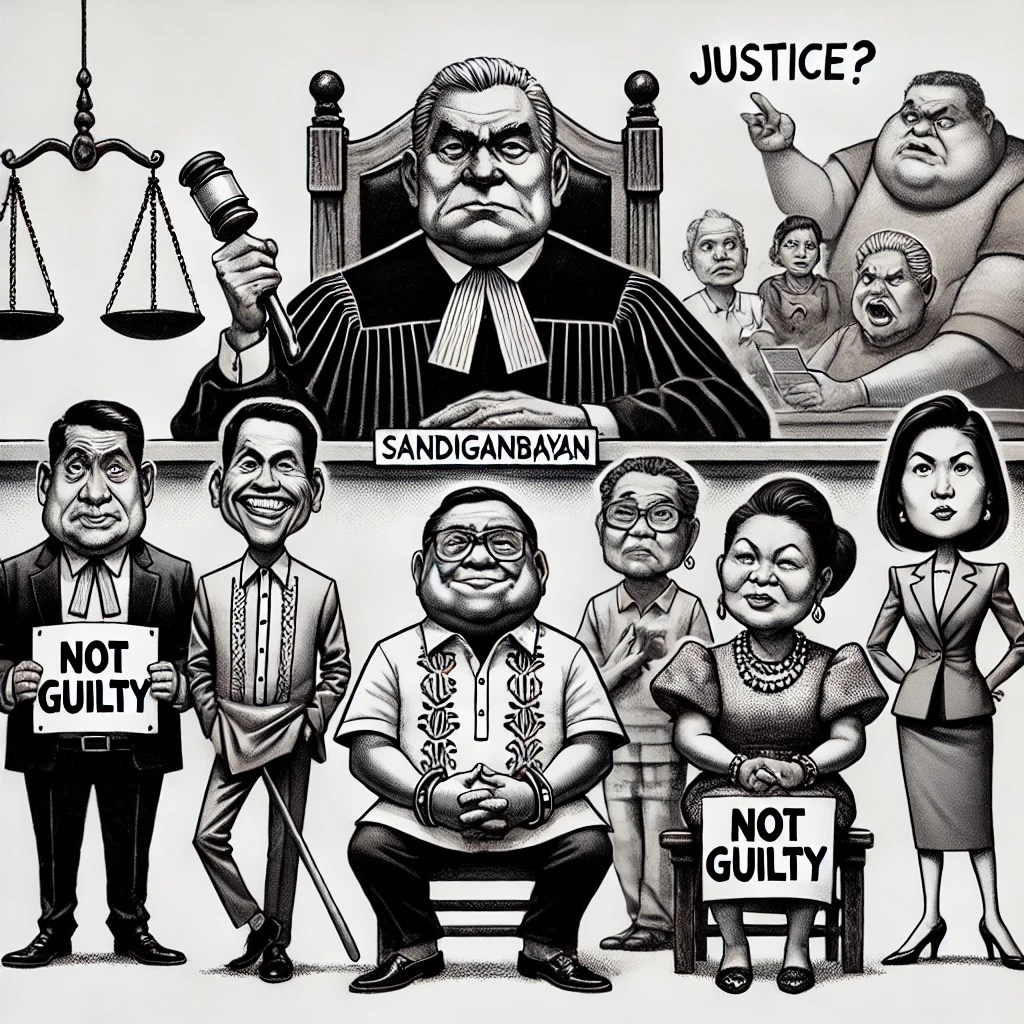
IN A stunning twist that few anticipated, former Senate President Juan Ponce Enrile and his key allies, Jessica ‘Gigi’ Reyes and Janet Lim Napoles, walked free from charges in the infamous pork barrel scandal. Despite Napoles serving time for other convictions, the acquittal spotlights troubling gaps in the prosecution’s case—and raises urgent questions about the integrity of the country’s justice system.
The Scandal That Shook the Nation: A Brief History of the PDAF Controversy
The PDAF scandal, commonly known as the pork barrel scam, first gained widespread attention in 2013 when it was exposed that billions in government funds had been diverted through bogus non-governmental organizations (NGOs) linked to Napoles. The PDAF, initially designed as a mechanism for lawmakers to channel funds toward development projects in their districts, became a tool for corruption, enriching public officials and private individuals alike.
The mechanism worked through a series of fraudulent transactions: lawmakers would direct their PDAF allocations to NGOs under Napoles’ control, these NGOs would propose non-existent or overpriced projects, and once the funds were released, they would be funneled back to the lawmakers and their accomplices in the form of kickbacks.
The political fallout from the scandal was immense, implicating several prominent politicians, including Senators Enrile, Jinggoy Estrada, and Ramon Revilla Jr. In response to public outrage, the Philippine government abolished the PDAF in 2014, though corruption and discretionary spending practices persisted in different forms, such as the controversial Disbursement Acceleration Program (DAP).
The Web of Power: Political and Legal Connections
The plunder case against Enrile, Reyes, and Napoles revolved around the misuse of P172 million in PDAF allocations between 2004 and 2010. Under Republic Act 7080, plunder is defined as the accumulation of ill-gotten wealth amounting to at least P50 million through a series of criminal acts by a public official. Despite the gravity of the charges, the Sandiganbayan ruled that the prosecution failed to establish guilt beyond reasonable doubt.
Juan Ponce Enrile, a veteran politician and former Senate President, was accused of orchestrating the misuse of his PDAF through Reyes and Napoles. Enrile, known for his formidable legal skills, posted bail in 2015 due to health reasons, delaying the proceedings significantly.
Jessica “Gigi” Reyes, his long-time aide, allegedly facilitated the transactions between Enrile and Napoles’ network of NGOs. Reyes was detained in 2014 but released on bail in 2023 after years of legal wrangling.
Janet Lim Napoles, the central figure in the pork barrel scam, managed the network of NGOs that received the PDAF allocations. Despite her acquittal in this case, she remains incarcerated for separate plunder convictions.
The acquittal of these key figures underscores the challenges in prosecuting high-profile corruption cases in the Philippines, where delays, procedural issues, and the complexities of proving ill-gotten wealth often frustrate justice.
The Mechanics of Corruption: How the Pork Barrel Scam Worked
The pork barrel scam operated through a well-oiled mechanism of political corruption. Lawmakers received lump-sum allocations under the PDAF, which were intended for public works, scholarships, and social services. However, Napoles orchestrated a system in which NGOs under her control submitted fake project proposals, often for agricultural supplies or livelihood programs. These projects, backed by forged signatures of local officials, were approved by the lawmakers, allowing the release of funds to these NGOs.
Once the funds were released, they were funneled through Napoles’ network and returned to the participating lawmakers and officials as kickbacks. Lawmakers reportedly received between 40% to 60% of the project funds, while Napoles kept the remainder. This scheme flourished for years, facilitated by weak oversight and collusion between government officials and private individuals.
The Verdict: Analyzing the Supreme Court’s Decision
The acquittal of Enrile, Reyes, and Napoles highlights the difficulties in securing convictions in plunder cases. The prosecution must demonstrate beyond reasonable doubt that the accused accumulated ill-gotten wealth through a series of criminal acts. In this case, the Sandiganbayan ruled that the prosecution failed to meet this standard, primarily because of weak evidence linking the accused directly to the illegal transfers and kickbacks.
The legal entanglement of Republic Act 7080 (Plunder Law) requires proof of a series of criminal acts amounting to at least P50 million, which the court found lacking in this instance. Further complicating matters were procedural delays, witness credibility issues, and the advanced age and health conditions of Enrile.
Repercussions and Implications
The acquittal of such high-profile figures as Enrile, Reyes, and Napoles has significant repercussions for the Philippines’ justice system and anti-corruption efforts. The outcome demonstrates the prosecution’s struggles to gather sufficient evidence in complex corruption cases, a situation compounded by political influence and procedural delays.
From a legal perspective, the decision may embolden other public officials implicated in corruption scandals, sending a signal that securing convictions, especially in high-profile cases, is exceptionally challenging. The acquittal also calls into question the effectiveness of the country’s plunder law and raises concerns about judicial independence and fairness.
Ethically, this case touches on provisions of Republic Act 6713, or the Code of Conduct and Ethical Standards for Public Officials and Employees, which demands accountability, integrity, and efficiency in public service. The acquittal, however, shows that technicalities in the law can overshadow moral and ethical considerations, undermining public trust in government.
Recommendations
- Strengthen the Prosecution’s Resources: The government must equip its prosecution teams with better resources, expert witnesses, and financial forensic experts to build stronger cases against high-profile figures.
- Judicial Reforms: The judiciary should prioritize the expeditious resolution of corruption cases, implementing stricter timetables to prevent undue delays that weaken prosecutions and embolden the accused.
- Public Oversight: Strengthening the role of watchdog organizations like the Commission on Audit (COA) and creating robust safeguards for whistleblowers are crucial to ensuring transparency in public spending.
- Legislative Reform: The government must re-examine laws like the Plunder Law (RA 7080) to address gaps that allow defendants to exploit procedural loopholes. A review of the framework for prosecuting corruption cases, including clear mechanisms to freeze and seize ill-gotten wealth, is necessary.
In conclusion, the acquittal of Enrile, Reyes, and Napoles may be lawful, but it echoes a much larger truth: the Philippines’ fight against corruption is far from over. Until our justice system is equipped with sharper tools—stronger prosecutions, swifter judicial processes, and tougher legislative safeguards—this cycle will only repeat. Genuine accountability demands more than legal victories; it calls for systemic change..

- ₱75 Million Heist: Cops Gone Full Bandit

- ₱6.7-Trillion Temptation: The Great Pork Zombie Revival and the “Collegial” Vote-Buying Circus

- ₱1.9 Billion for 382 Units and a Rooftop Pool: Poverty Solved, Next Problem Please

- ₱1.35 Trillion for Education: Bigger Budget, Same Old Thieves’ Banquet

- ₱1 Billion Congressional Seat? Sorry, Sold Out Na Raw — Si Bello Raw Ang Hindi Bumili

- “We Will Take Care of It”: Bersamin’s P52-Billion Love Letter to Corruption

- “Skewed Narrative”? More Like Skewered Taxpayers!

- “Scared to Sign Vouchers” Is Now Official GDP Policy – Welcome to the Philippines’ Permanent Paralysis Economy

- “Robbed by Restitution?” Curlee Discaya’s Tears Over Returning What He Never Earned

- “My Brother the President Is a Junkie”: A Marcos Family Reunion Special






 KWEBA ni BAROK
Leave a comment