By Louis ‘Barok‘ C. Biraogo — October 14, 2024
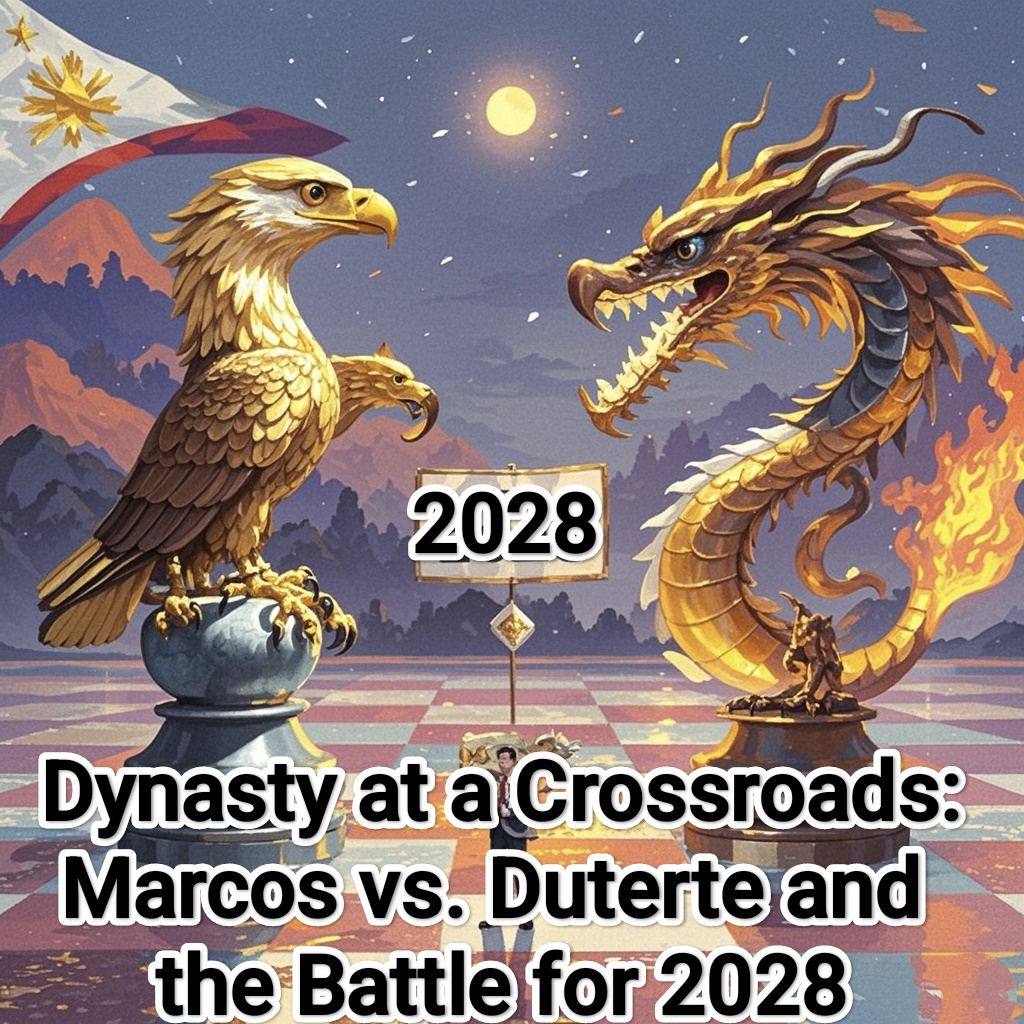
ONCE united under the “UniTeam” banner, the Marcos and Duterte political clans now stand on the brink of a high-stakes rivalry. The latest OCTA survey signals a seismic shift: the Marcoses are gaining momentum, while the Dutertes’ influence is waning. With the 2025 midterms approaching and the 2028 presidential race already on the horizon, these former allies are headed for a dramatic political confrontation that could change the course of Philippine history.
The Rise and Fall of Political Giants
The Marcos and Duterte families dominate Filipino political history. Ferdinand Marcos Sr. ruled from 1965 to 1986, imposing martial law, amassing untold wealth, and leaving behind a legacy of both nostalgia and trauma. Rodrigo Duterte’s presidency (2016–2022) embodied another strongman era, with populist rhetoric, an iron-fisted drug war, and pivoting alliances with global superpowers. Both figures left deep imprints on the nation’s psyche: Marcos Sr. as a byword for control and Duterte as the firebrand enforcer of discipline.
After Duterte’s tenure, the landslide victory of Ferdinand “Bongbong” Marcos Jr. in 2022 signaled the return of his family to the pinnacle of power. Initially, this success was cemented by a partnership with Vice President Sara Duterte—Rodrigo’s daughter—under the “UniTeam” coalition. However, cracks in this alliance soon became visible, as the Dutertes began to challenge the Marcoses’ hold on power, seeing their influence gradually eclipsed.
The UniTeam Fractures: Allies Turned Foes
The OCTA survey highlights a clear trajectory: public support for President Marcos Jr. is steadily rising, with 38% of Filipinos now identifying as pro-Marcos, a 2% increase from the second quarter. Meanwhile, pro-Duterte sentiment has declined to 15%, reflecting a 1% drop from the previous survey and part of a troubling downward trend throughout 2024. The growing tension between these political behemoths is no longer a question of “if” but “when” it will culminate in open political combat.
Mindanao, the Duterte family’s traditional stronghold, is the last bastion where their influence holds firm, with 48% of respondents in the region identifying as pro-Duterte. But the Marcoses dominate the rest of the archipelago: Balanced Luzon (43%), Metro Manila (42%), and the Visayas (37%) have thrown their support behind the president. Even Mindanao, where Marcos’ support trails at 25%, hints at a gradual inroad by the northern-based dynasty. The political stage is thus set for a showdown—one that will be critical not only for 2025 but for the much-anticipated 2028 presidential race.
The Marcos Resurgence: Understanding the Shift in Public Opinion
Several factors explain Marcos Jr.’s increasing popularity. His administration’s focus on economic recovery post-pandemic, including efforts to attract foreign investment, seems to resonate well with many Filipinos. Additionally, the renewed partnership with the U.S.—a pivot from Duterte’s China-centric foreign policy—has reassured those who long for stability in international relations.
Marcos Jr. has also capitalized on a crucial demographic shift. Class E voters, who form a significant voting bloc, are increasingly rallying behind him, with 40% now identifying as pro-Marcos. His administration’s narrative of restoring order and progress—tempered by a younger electorate unfamiliar with the darker chapters of his father’s dictatorship—continues to gain traction.
The administration’s ability to distance itself from the most controversial elements of Duterte’s drug war while still addressing crime-related concerns has also played well. High-profile efforts to purge corrupt police officers have softened criticisms, painting Marcos as both a reformer and a stabilizing force.
Duterte’s Decline: Unraveling the Strongman’s Legacy
For the Duterte camp, the picture is grim. With the strongman era fading into memory, Rodrigo Duterte’s brutal drug war—once celebrated—is now a liability. Public backlash, including international scrutiny and human rights investigations, has dented the Dutertes’ standing, even in Mindanao. Vice President Sara Duterte’s high-profile resignation from the Marcos-led cabinet earlier this year further strained the alliance and may have contributed to her declining political influence.
The Dutertes’ regional influence remains potent in Mindanao, but beyond their southern fortress, their relevance is shrinking. NCR (6%) and Balanced Luzon (3%) report almost negligible support for the Duterte faction, signaling the erosion of national influence. The same trend extends across socioeconomic classes, with support among Class ABC voters stagnant at 15%, undermining any hopes of nationwide resurgence.
2025 and 2028: High Stakes, Hidden Dangers
The 2025 midterm elections will be a critical litmus test for both camps. A strong showing by Marcos-backed candidates could consolidate his power and pave the way for a near-guaranteed presidential successor in 2028. Conversely, if the Dutertes fail to reassert themselves, they risk becoming politically irrelevant by the next presidential election—a fate no dynasty takes lightly.
However, the high number of independent voters (26%) presents both a challenge and an opportunity. This bloc of unaffiliated voters—many of whom may feel disillusioned by the excesses of both dynasties—could be pivotal. The opposition, though still weak with only 7% support, may seek to court these independents, potentially complicating the Marcos-Duterte calculus.
Strategies for Survival: What the Marcos and Duterte Camps Must Do
For the Marcoses:
- Expand Influence in Mindanao: Marcos Jr. must continue penetrating Duterte’s stronghold to neutralize their southern advantage.
- Strengthen Class E Support: The administration should intensify its outreach to the poorest sectors, consolidating its dominance among the economically vulnerable.
- Engage Independents and Opposition Voters: Subtle overtures to independents and moderate opposition voters could seal a decisive electoral victory in 2025.
For the Dutertes:
- Solidify the Southern Fortress: Sara Duterte must double down on retaining Mindanao, ensuring her faction’s relevance in future elections.
- National Rebranding: A pivot away from Rodrigo Duterte’s contentious policies is essential, with Sara crafting a narrative focused on governance and economic growth.
- Forge Strategic Alliances: In a fragmented political landscape, even unexpected partnerships—perhaps with sections of the opposition—could provide a lifeline.
The Road Ahead: An Uncertain, Polarized Future
The OCTA survey suggests that the Marcos dynasty is ascendant, while the Duterte name is becoming a regional force with limited national appeal. But Philippine politics is nothing if not unpredictable. A sudden scandal, an economic downturn, or a geopolitical crisis could radically reshape public sentiment.
With 2025 just around the corner, both the Marcos and Duterte camps know that every move matters. The stakes are high—not just for their political legacies but for the future direction of the Philippines itself. What lies ahead is a contest not just of policy but of power, identity, and survival, in a country where history always looms large and alliances are as fleeting as the monsoon rains.
With 2028 on the horizon, the impending duel between the Marcoses and the Dutertes is more than a fight for power—it’s a fight for the future of the Philippines. Will the Marcoses seal their place as the nation’s ruling family, or will the Duterte brand rise once more to challenge the status quo? One thing is certain: this isn’t just another election. The decision made in the next few years will reverberate through the very soul of the country, shaping its path for years to come.

- ₱75 Million Heist: Cops Gone Full Bandit

- ₱6.7-Trillion Temptation: The Great Pork Zombie Revival and the “Collegial” Vote-Buying Circus

- ₱1.9 Billion for 382 Units and a Rooftop Pool: Poverty Solved, Next Problem Please

- ₱1.35 Trillion for Education: Bigger Budget, Same Old Thieves’ Banquet
- ₱1 Billion Congressional Seat? Sorry, Sold Out Na Raw — Si Bello Raw Ang Hindi Bumili

- “We Will Take Care of It”: Bersamin’s P52-Billion Love Letter to Corruption
- “Skewed Narrative”? More Like Skewered Taxpayers!

- “Scared to Sign Vouchers” Is Now Official GDP Policy – Welcome to the Philippines’ Permanent Paralysis Economy
- “Robbed by Restitution?” Curlee Discaya’s Tears Over Returning What He Never Earned

- “My Brother the President Is a Junkie”: A Marcos Family Reunion Special

- “Mapipilitan Akong Gawing Zero”: The Day Senator Rodante Marcoleta Confessed to Perjury on National Television and Thought We’d Clap for the Creativity
- “Just Following Orders” Is Dead: How the Hague Just Turned Tokhang’s Finest Into International Fugitives

 KWEBA ni BAROK
Leave a comment