By Louis ‘Barok‘ C. Biraogo — October 20, 2024
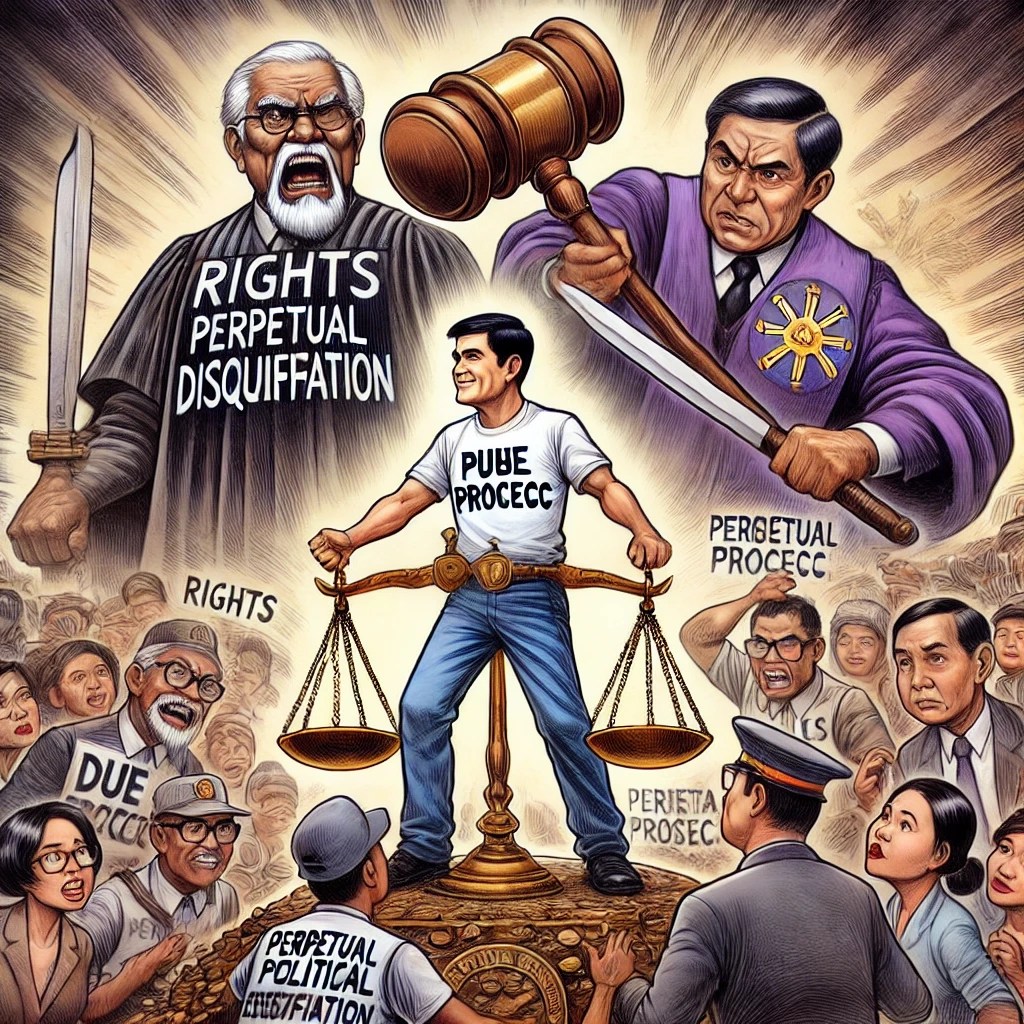
ALBAY is on edge. As Noel Rosal, its former governor, faces disqualification from running for office, his legal showdown with the Commission on Elections (Comelec) has become a battle of principles: rights versus rules, justice versus political expediency. At stake is not only Rosal’s political future but the balance of due process and electoral authority in the Philippines. The outcome could ripple far beyond one man’s career—challenging the very framework of our democracy.
The Legal and Political Context
The controversy began with an Ombudsman decision in June 2024, which dismissed Rosal from his position and ordered his perpetual disqualification from holding public office due to alleged violations. The grounds for the decision remain contentious, with Rosal challenging the Ombudsman’s findings. He swiftly appealed to the Court of Appeals in September 2024, invoking his right to a review. Meanwhile, the Comelec, basing its actions on the Ombudsman’s ruling, moved to disqualify Rosal from running for governor, a decision Rosal argues is both legally premature and procedurally flawed.
At stake is not just Rosal’s political career, but the procedural safeguards that govern the imposition of penalties by administrative bodies. Rosal contends that the perpetual disqualification penalty should only be applied once the Ombudsman’s decision becomes final and executory, as his appeal has not yet been resolved. His legal arguments are multifaceted, touching on the powers of the Ombudsman, the rights of the accused to appeal, and the scope of Comelec’s authority under Philippine law.
The Watchdog of Government: Understanding the Ombudsman’s Legal Power
Under Philippine law, the Ombudsman holds considerable power to investigate and discipline government officials for misconduct. The Constitution and Republic Act No. 6770, known as the Ombudsman Act of 1989, grant the Ombudsman the authority to impose penalties, including dismissal and perpetual disqualification. However, jurisprudence indicates that while an Ombudsman decision may be immediately executory, the penalty of perpetual disqualification typically requires the decision to be final. This is because the accused has the right to seek judicial relief and a final determination of their culpability.
Rosal’s argument hinges on this distinction. He asserts that while the dismissal may take immediate effect, the broader consequence of perpetual disqualification cannot apply until the appellate process is exhausted. Rosal’s case aligns with prior jurisprudence, such as the Supreme Court’s decision in Garcia v. Mojica, where the Court ruled that penalties involving disqualification must be enforced only after all appeals have been exhausted.
The Right to Appeal
The constitutional right to due process underpins Rosal’s argument that the penalties should be suspended during the pendency of his appeal. He cites the principle that one is presumed innocent until proven guilty and that penalties for alleged offenses should not be irrevocably enforced while an appeal is still pending. The Administrative Code and relevant judicial precedents support this stance, indicating that administrative actions affecting a person’s right to suffrage should not be executed while remedies are still available in higher courts.
Rosal’s case also echoes the Supreme Court’s ruling in Jalosjos v. Comelec, where the Court stressed the importance of finality in cases involving perpetual disqualification. He argues that disqualifying him at this stage undermines his appeal rights and may prematurely end his political career, even if his appeal ultimately succeeds.
The Power of the Comelec
The Comelec has broad authority under the Omnibus Election Code to ensure fair and credible elections, which includes the power to disqualify candidates based on certain grounds, such as conviction for crimes involving moral turpitude or offenses carrying penalties of perpetual disqualification. The Comelec has argued that the Ombudsman’s decision, though still appealable, provides sufficient grounds for immediate disqualification to preserve the integrity of the electoral process.
The Comelec may cite its duty to uphold public interest and maintain the electorate’s confidence in the integrity of elections. The principle that an Ombudsman decision is immediately executory, pending appeal, supports its stance that Rosal’s disqualification is both legal and necessary to prevent unqualified candidates from occupying public office.
However, Rosal contends that the Comelec’s decision is flawed because it delegated the disqualification process to its Law Department, which he claims acted both as the complainant and the judge. This arrangement, he argues, violates his right to procedural due process and fairness, creating a conflict of interest and depriving him of an impartial adjudication. The Supreme Court has consistently held that administrative proceedings must comply with due process standards, which include the right to an impartial tribunal.
The Legal Framework: Analyzing Rosal’s Arguments and the Legal Context
Rosal’s legal team raises several core arguments to support his position:
- Premature Disqualification: They argue that penalties of perpetual disqualification should only be applied when the Ombudsman’s decision is final. The Garcia and Jalosjos cases, among others, emphasize the need for a final judgment in such instances.
- Due Process Violations: Rosal claims the Comelec’s referral of his case to its Law Department, which simultaneously acted as the complainant, prosecutor, and adjudicator, breaches procedural due process. He argues that this setup precludes a fair hearing and threatens his fundamental right to seek public office.
- Statutory Interpretation: His legal team contends that the Comelec misinterpreted the relevant laws by treating the Ombudsman’s immediately executory decision as grounds for permanent disqualification without considering the pending appeal.
The Comelec’s Counterarguments: Upholding Electoral Integrity
The Comelec’s potential arguments in favor of Rosal’s disqualification may include:
- The Immediate Executory Nature of the Ombudsman’s Decision: The Comelec may assert that the Ombudsman’s findings are enforceable despite pending appeals. The law supports the immediate execution of penalties such as dismissal, though the application to perpetual disqualification is debated.
- Ensuring Public Interest and Election Integrity: The Comelec may argue that disqualifying candidates under administrative sanction, even if appeals are pending, serves the public’s interest. Allowing a candidate with an Ombudsman order to run may damage the public’s trust in the election’s fairness.
- Comelec’s Statutory Authority: Under the Omnibus Election Code, the Comelec may argue that its mandate extends to preventing ineligible candidates from participating in elections to maintain a level playing field.
The Legal Balancing Act: Who Holds the Advantage in the Rosal Case?
Rosal’s position appears to have the upper hand based on principles of due process and the legal requirement for a final judgment in disqualification cases. The Supreme Court’s precedents on procedural fairness and the need for a final decision support his contention that the Comelec acted prematurely. Furthermore, the alleged procedural flaws in the Comelec’s internal processes could bolster Rosal’s argument for the restoration of his candidacy pending a final court decision.
However, the Comelec’s stance is bolstered by its mandate to protect electoral integrity and prevent candidates with significant legal challenges from seeking office. The court may weigh this interest heavily, particularly if it finds that allowing Rosal to run could create a precedent where disqualified candidates can bypass penalties simply by filing appeals.
Recommendations
For Rosal:
- Emphasize the right to due process and the principle that penalties should only apply after a decision becomes final. Cite further Supreme Court rulings to reinforce the argument.
- Highlight procedural irregularities in the Comelec’s handling of the disqualification process to strengthen claims of due process violations.
For the Comelec:
- Argue the immediacy of implementing penalties as essential to safeguarding the public’s interest in transparent elections.
- Strengthen the case by citing statutory provisions that permit the execution of administrative sanctions pending appeal, while addressing Rosal’s claims of procedural bias.
For the Supreme Court:
- The Court should use this case as an opportunity to clarify the circumstances under which administrative penalties, especially perpetual disqualification, become final and enforceable. This clarity would guide both the Ombudsman and Comelec in future cases.
As the Supreme Court weighs Rosal’s rights against the public interest, the outcome will do more than just settle one man’s fate. It will set a precedent that echoes through the corridors of Philippine electoral law—forever shaping how justice, politics, and the will of the people intersect.

- “Forthwith” to Farce: How the Senate is Killing Impeachment—And Why Enrile’s Right (Even If You Can’t Trust Him)

- “HINDI AKO NAG-RESIGN!”

- “I’m calling you from my new Globe SIM. Send load!”

- “Mahiya Naman Kayo!” Marcos’ Anti-Corruption Vow Faces a Flood of Doubt

- “Meow, I’m calling you from my new Globe SIM!”

- “No Special Jail for Crooks!” Boying Remulla Slams VIP Perks for Flood Scammers

- “PLUNDER IS OVERRATED”? TRY AGAIN — IT’S A CALCULATED KILL SHOT

- “Several Lifetimes,” Said Fajardo — Translation: “I’m Not Spending Even One More Day on This Circus”

- “Shimenet”: The Term That Broke the Internet and the Budget

- “We Did Not Yield”: Marcos’s Stand and the Soul of Filipino Sovereignty

- “We Gather Light to Scatter”: A Tribute to Edgardo Bautista Espiritu

- $150M for Kaufman to Spin a Sinking Narrative







 KWEBA ni BAROK
Leave a comment