By Louis ‘Barok‘ C. Biraogo — October 28, 2024
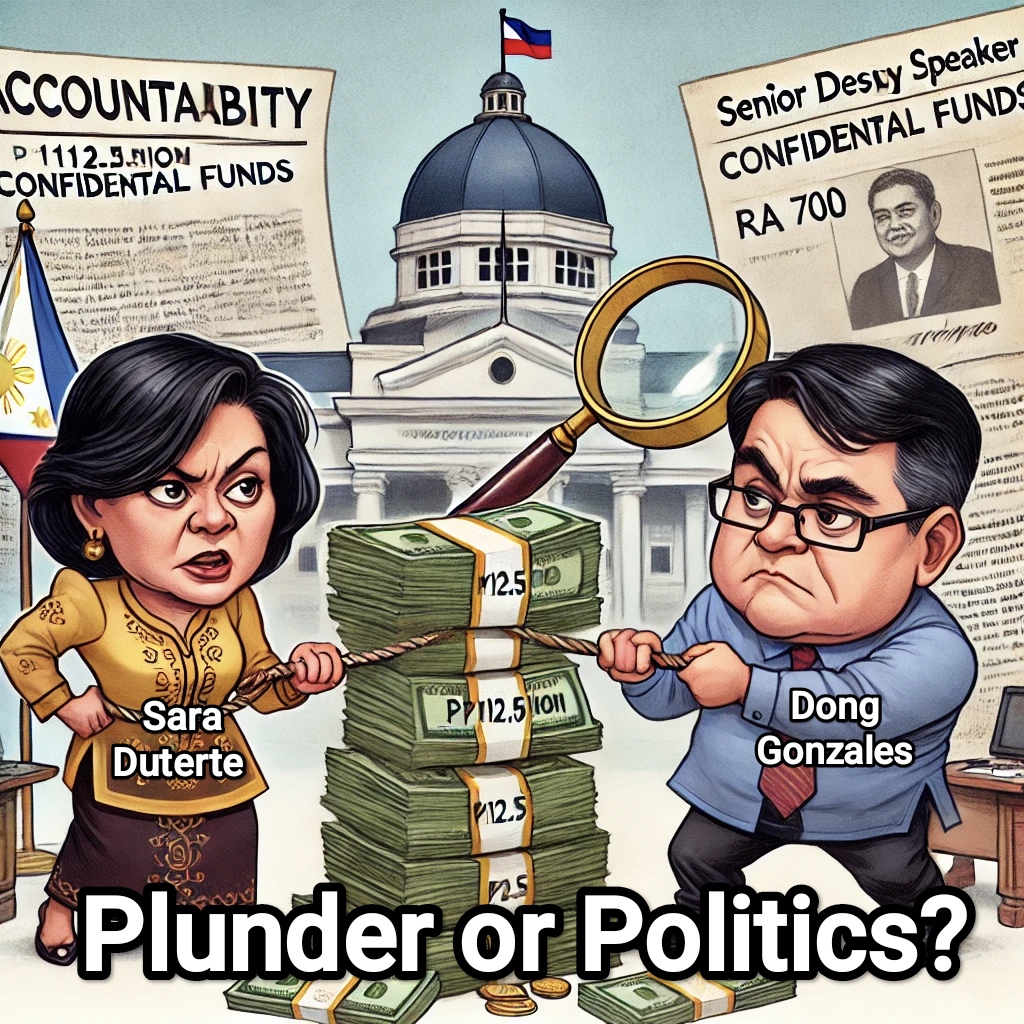
A Looming plunder case? The Philippine House of Representatives has put Vice President Sara Duterte under the spotlight, questioning over P112.5 million in cash advances made during her time as Education Secretary. With potential legal and ethical breaches at stake, lawmakers demand answers about the confidential funds—funds that reportedly bypassed standard documentation practices. Senior Deputy Speaker Aurelio Gonzales Jr. warns of serious consequences if Duterte cannot account for the expenditures. But the Vice President fires back, dismissing the scrutiny as a political maneuver and pledging to address it in due time. This analysis will dive into the legal and ethical tug-of-war shaping this high-stakes controversy.
The Underlying Dynamics: Legal and Political Dimensions of the Issue
The controversy began when Congress raised concerns over confidential funds distributed through three checks, each worth P37.5 million, to DepEd’s Special Disbursing Officer Edward Fajarda. Senior Deputy Speaker Gonzales has argued that these funds, being taxpayer money, must be judiciously accounted for. He warned that the lack of documentation raises the potential for a plunder charge, as the funds significantly exceed the P50 million threshold for plunder under Philippine law (RA 7080).
On the other hand, Vice President Duterte’s stance has been to assert that this scrutiny is more about politics than policy, declining to participate in what she regards as a biased investigation by the House. This statement suggests a nuanced interplay between Duterte’s political positioning and the gravity of the accusations, making the case particularly sensitive given her dual role as Vice President and former Education Secretary.
Gonzales’s Position: Legal Arguments and Evidence Presented
The main argument presented by Senior Deputy Speaker Gonzales rests on the apparent lack of transparency and potential misuse of public funds. Specifically, the documentation related to these funds has discrepancies—confidential funds were reportedly labeled as maintenance and other operating expenses. According to Gonzales, this mislabeling casts doubt on the funds’ intended use, a concern rooted in Section 2 of RA 6713, the Code of Conduct and Ethical Standards for Public Officials and Employees, which mandates transparency, integrity, and accountability.
Furthermore, Gonzales’ assertions draw upon substantive laws governing public funds, including Presidential Decree No. 1445, or the Government Auditing Code of the Philippines, which requires public officials to ensure proper documentation and accountability for all public expenditures. The Supreme Court in COA v. Rodriguez established that any lack of documentation for public spending implies a failure to meet the accountability standards for public office. This precedent could bolster Gonzales’ argument that DepEd’s failure to document the allocation of these funds constitutes a serious violation, potentially amounting to plunder if intent to misuse can be proven.
DepEd’s Response: Counter-arguments and Compliance Measures
In defense, DepEd officials, including Finance Undersecretary Annalyn Sevilla, stated that the cash advances followed standard procedures for disbursing confidential funds. Sevilla explained that while her office handled disbursements, they were not involved in the funds’ final utilization. This distinction raises questions regarding the agency’s role in overseeing the spending of confidential funds and the limitations of DepEd’s authority once funds are classified as “confidential” under RA 6975, the law governing confidential and intelligence funds.
Additionally, DepEd’s response to COA findings has emphasized its commitment to compliance. The agency has been actively engaged in consultations with COA to clarify audit findings, pledging to correct recording discrepancies and enhance transparency. Under Philippine audit laws, including Section 26 of RA 7227, agencies are given an opportunity to address audit findings before any adverse actions are taken. This due process framework supports DepEd’s position that it is cooperating in good faith, which could weigh favorably in assessing their compliance and adherence to accountability standards.
The Key Considerations: Analyzing the Evidence and Arguments
In terms of the legal advantage, Senior Deputy Speaker Gonzales may have a stronger case in emphasizing the statutory duty of accountability in managing public funds. The substantial amount involved, coupled with mislabeling and a lack of clear accounting, could suggest a failure to observe the duty of transparency mandated by RA 6713. Gonzales’ argument is further strengthened by the fact that plunder does not require immunity, and as a public official, Duterte could be held liable while in office, as clarified in the People v. Arroyo decision, which established that high-ranking officials, apart from the President, may be subject to criminal charges even while in office.
However, the DepEd’s procedural defenses also hold weight, particularly under COA’s audit guidelines, which allow agencies to clarify and rectify findings. Given that DepEd has undertaken steps to comply with COA recommendations and rectify recording errors, the agency’s cooperative stance could mitigate allegations of deliberate misuse. However, without clear documentation, their defense may appear insufficient against the backdrop of stringent accountability requirements.
Recommendations for Both Sides
For Senior Deputy Speaker Gonzales and the House of Representatives:
- Strengthen Documentation Requirements: Legislators should advocate for stronger policies requiring thorough documentation and accountability, especially for confidential and intelligence funds.
- Depoliticize the Inquiry: Avoid personal attacks and maintain a focus on institutional accountability to prevent accusations of politicizing the process.
- Collaborate with COA: Ensure that COA findings are independently verified and that audit processes remain transparent to uphold due process.
For Vice President Sara Duterte and DepEd:
- Increase Transparency: Consider voluntarily providing a breakdown of expenditures related to the confidential funds to address public concerns and demonstrate a commitment to transparency.
- Clarify Procedural Oversight: DepEd should establish clear protocols for tracking the use of confidential funds, ensuring alignment with auditing standards, and minimizing gaps in oversight.
- Engage with the Inquiry: Rather than dismissing the inquiry as political, addressing the allegations substantively could help clarify the department’s position and potentially defuse the situation.
Conclusion
As the dust settles over the P112.5 million controversy, one message remains clear: public trust is the currency of governance, and it’s earned through transparency. With the House championing accountability and DepEd asserting its compliance, both sides now carry the weight of expectation. Only by embracing a process rooted in integrity and due process can they ensure that this case serves not as a stain on public service but as a testament to its principles.

- ₱8B BBM Pork: CCTV for Every Captain’s Kumpare?

- ₱75 Million Heist: Cops Gone Full Bandit

- ₱6.7-Trillion Temptation: The Great Pork Zombie Revival and the “Collegial” Vote-Buying Circus

- ₱1.9 Billion for 382 Units and a Rooftop Pool: Poverty Solved, Next Problem Please

- ₱1.35 Trillion for Education: Bigger Budget, Same Old Thieves’ Banquet

- ₱1 Billion Congressional Seat? Sorry, Sold Out Na Raw — Si Bello Raw Ang Hindi Bumili

- “We Will Take Care of It”: Bersamin’s P52-Billion Love Letter to Corruption

- “Skewed Narrative”? More Like Skewered Taxpayers!

- “Scared to Sign Vouchers” Is Now Official GDP Policy – Welcome to the Philippines’ Permanent Paralysis Economy

- “Robbed by Restitution?” Curlee Discaya’s Tears Over Returning What He Never Earned

- “No Pressure” Luistro? The House Pork Bazaar Exposed
- “My Brother the President Is a Junkie”: A Marcos Family Reunion Special





 KWEBA ni BAROK
Leave a comment