By Louis ‘Barok‘ C. Biraogo — November 3, 2024
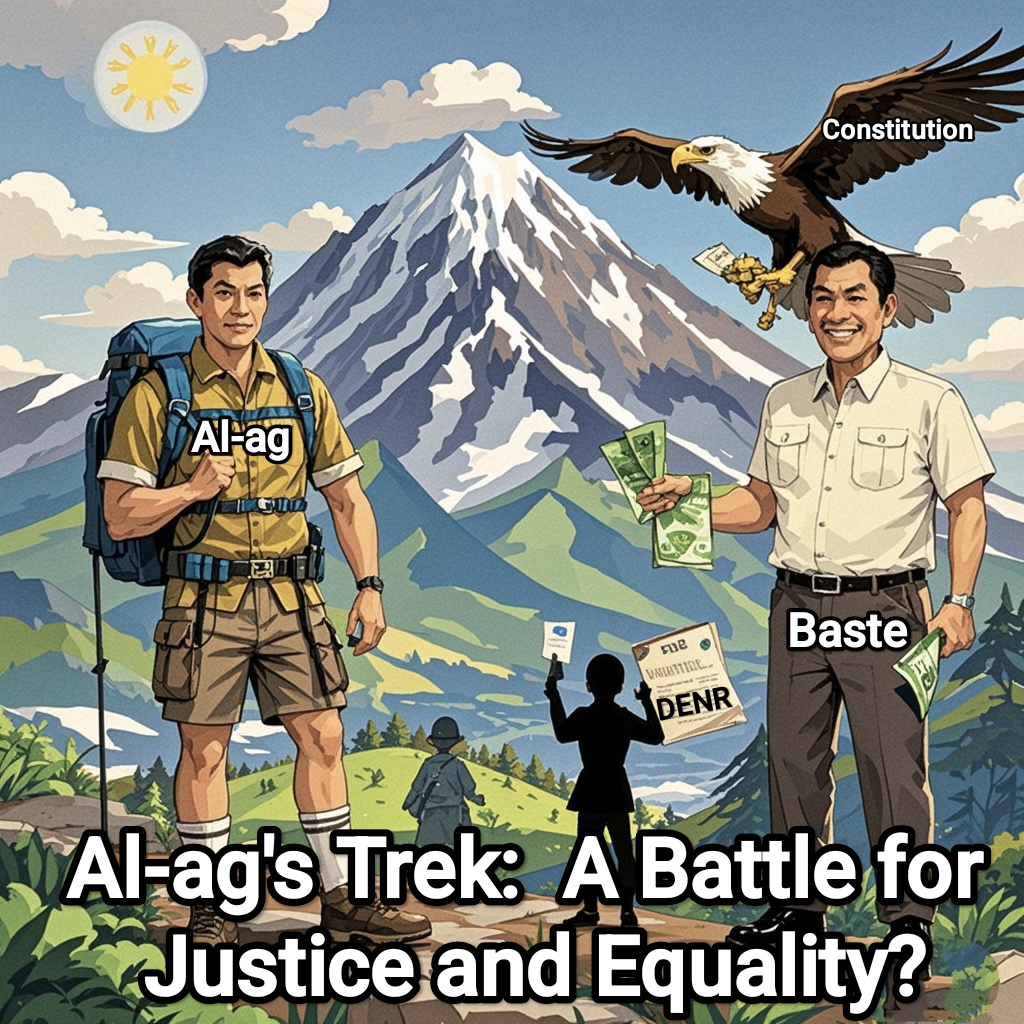
WHEN Davao City Councilor Bernie Al-ag set foot in the remote uplands of Barangay Tagurano, he likely didn’t expect his journey to trigger a political firestorm. Now, with the mid-term elections around the corner and Al-ag challenging Mayor Sebastian Duterte for the vice-mayorship, supporters claim that legal tactics have become political weapons. What’s at stake? Nothing less than the fundamental ideals of public accountability and equal rights in Philippine democracy.
Understanding the Issue: A Legal Perspective
Al-ag’s upland trek occurred in a Strict Protection Zone (SPZ) in Mt. Apo Natural Park, a heavily regulated area restricted by the Department of Environment and Natural Resources (DENR) for the protection of biodiversity. This restriction aligns with both the National Integrated Protected Areas System (NIPAS) Act and the Mount Apo Protected Area Act of 2003, which allow limited human access to SPZs for specific purposes like scientific research and cultural rituals, not tourism or casual consultation visits. By entering the SPZ, Al-ag potentially violated the terms of the DENR’s cease and desist orders, which have restricted entry into Tagurano since May 2024.
According to the DENR-Davao, penalties for unauthorized entry into an SPZ range from fines to imprisonment, a policy grounded in the statutory framework established to safeguard protected areas. The Mount Apo Protected Area Act, for instance, imposes fines of up to P200,000 for violations, underscoring the importance of stringent protection for biodiversity and local ecology. In this case, the DENR’s pending investigation seeks to determine whether Al-ag’s actions merit legal consequences and, if so, the degree of penalty warranted.
The Case Against Al-ag: Legal Arguments
- Breach of Environmental Regulations: The primary argument against Al-ag is that he trespassed in a legally protected SPZ without authorization, which appears to be a straightforward violation of the NIPAS Act and DENR policies. These laws are explicit in designating such zones as restricted, not merely for conservation purposes but also as part of an integrated environmental management approach.
- Public Accountability and Ethical Standards: The Code of Conduct and Ethical Standards for Public Officials and Employees (Republic Act No. 6713) states that public office is a public trust, and officials are expected to uphold the law with integrity. By bypassing the established protocols, Al-ag risks undermining the ethical principle of transparency and compliance expected of public officials. This statute highlights that any perceived privilege or disregard for regulations by public officials erodes public trust and invites scrutiny.
- Disregard for Community and Environmental Interests: Barangay officials and environmental groups have condemned Al-ag’s unapproved entry as disrespectful to both local ordinances and the environmental protocols intended to protect sensitive ecosystems. This violation reflects a disregard for the cooperative relationship between government, community, and environmental stewardship, weakening Al-ag’s standing as an advocate for sustainable tourism or local welfare.
- Absence of Notice or Formal Permission: The DENR investigation might emphasize that Al-ag failed to notify the barangay officials or obtain any formal approval. As a public official, Al-ag is expected to model lawful behavior, including the procedural respect due to regulatory bodies managing protected zones.
Al-ag’s Defense Strategy: Potential Legal Arguments
- Intent to Serve Constituents: Al-ag’s primary defense centers on his intent to consult residents facing economic hardship due to the SPZ’s closure, particularly those who depend on guiding and tourism for income. His legal team could argue that his actions were part of his duty to address constituent concerns, not a willful defiance of the law, and that this aligns with his constitutional mandate as a public servant.
- Lack of Malicious Intent or Prior Warning: Al-ag may argue that he did not enter with malicious intent or knowingly violate a law, especially as the cease and desist order explicitly references structures rather than individuals consulting with residents. This could be positioned as an unintentional lapse, warranting leniency or at most a minor sanction without harsher penalties.
- Equitable Treatment and Selective Enforcement: Al-ag’s defense could invoke the Equal Protection Clause of the Philippine Constitution, arguing that laws should be applied consistently and without political bias. His legal team may suggest that the timing of this investigation, amid an election cycle, raises questions about whether the law is being selectively applied, given the tensions between Al-ag and Duterte’s supporters. If political opponents are involved in publicizing the event, Al-ag’s team could claim political weaponization of environmental laws.
- Potential Need for Policy Clarification: Al-ag may also argue that the policies around SPZ activities lack clarity, particularly regarding local consultations by government officials. This ambiguity, he could claim, necessitates clearer guidelines, especially when balancing environmental protection with community needs.
The Verdict: Who Holds the Advantage?
The legal case against Al-ag appears stronger from a regulatory standpoint, given the clear restrictions on SPZ access under the NIPAS Act and Mount Apo Protected Area Act. His entry likely violated these statutory protections, placing the advantage with his opponents who can argue he failed to observe due process and respect SPZ regulations.
However, Al-ag’s defenses could gain traction in arguing that his actions aimed to address local hardships and that his entry was neither malicious nor exploitative. Furthermore, if Al-ag’s legal team successfully highlights procedural ambiguities or proves that enforcement actions against him are politically motivated, they could potentially mitigate any penalties.
Recommendations
- For Al-ag: Al-ag should cooperate fully with the DENR investigation, accepting accountability if deemed necessary while emphasizing his intent to advocate for affected communities. He should seek formal channels for future consultations with residents, aligning with environmental laws. His campaign can benefit from underscoring these efforts as genuine concern for his constituents rather than personal privilege.
- For DENR-Davao: The DENR should ensure a transparent investigation and clarify SPZ policies to address ambiguities around the activities permitted for public officials in protected zones. As environmental protection remains its priority, DENR can reinforce its commitment by conducting education campaigns in these areas to prevent future incidents.
- For Al-ag’s Political Opponents: To avoid perceived political exploitation, Al-ag’s opponents should advocate equally for environmental law enforcement across all public officials, regardless of political affiliations. This would underscore a principled commitment to both environmental preservation and the public trust, enhancing public confidence in governance.
- For Filipinos: This incident serves as a reminder of the need for vigilance in upholding both environmental protections and the integrity of public service. Filipinos should demand transparency and consistency in the application of laws to all, ensuring that public office remains a trusted institution rather than one wielded for political gain.
Al-ag’s journey from council chambers to the hills of Barangay Tagurano has exposed the cracks in Davao’s political and legal landscape. As local leaders navigate the competing demands of environmental responsibility and political duty, the challenge is clear: can laws adapt to local needs without bending to personal agendas?

- “Forthwith” to Farce: How the Senate is Killing Impeachment—And Why Enrile’s Right (Even If You Can’t Trust Him)

- “HINDI AKO NAG-RESIGN!”

- “I’m calling you from my new Globe SIM. Send load!”

- “Mahiya Naman Kayo!” Marcos’ Anti-Corruption Vow Faces a Flood of Doubt

- “Meow, I’m calling you from my new Globe SIM!”

- “No Special Jail for Crooks!” Boying Remulla Slams VIP Perks for Flood Scammers

- “PLUNDER IS OVERRATED”? TRY AGAIN — IT’S A CALCULATED KILL SHOT

- “Several Lifetimes,” Said Fajardo — Translation: “I’m Not Spending Even One More Day on This Circus”

- “Shimenet”: The Term That Broke the Internet and the Budget

- “We Did Not Yield”: Marcos’s Stand and the Soul of Filipino Sovereignty

- “We Gather Light to Scatter”: A Tribute to Edgardo Bautista Espiritu

- $150M for Kaufman to Spin a Sinking Narrative








 KWEBA ni BAROK
Leave a comment