By Louis ‘Barok’ C Biraogo — November 6, 2024
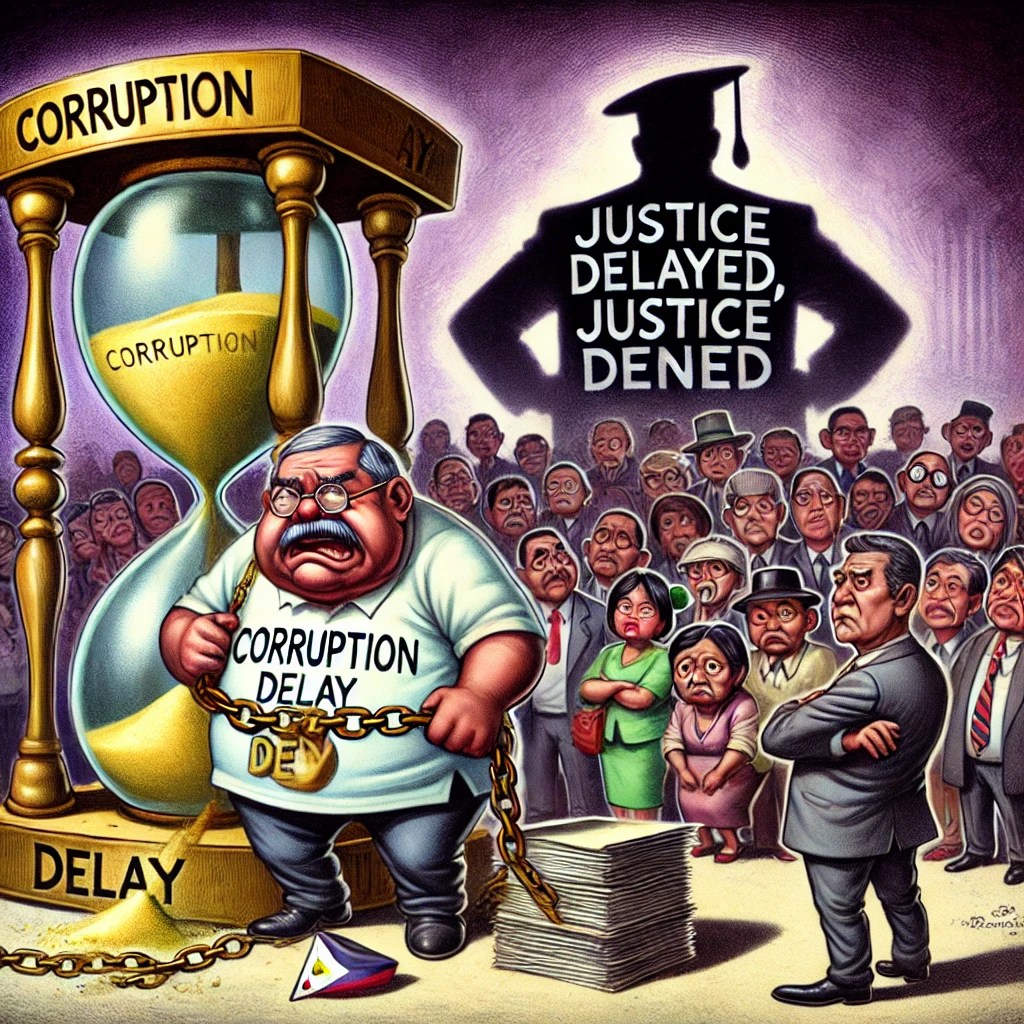
WHEN a seven-year court delay becomes the norm rather than the exception, is it any wonder that Filipinos are losing faith in their judiciary? In a striking case, the Supreme Court recently fined Judge Miguel Asuncion for dragging out a decision on a writ of preliminary injunction for nearly a decade. This controversy has reignited long-standing frustrations with a system that feels paralyzed by inefficiency and riddled with corruption—a system that too often leaves justice hanging in the balance.
For years, the judiciary has struggled to shake off accusations of corruption and inefficiency. Surveys consistently show that Filipinos feel let down by their courts, seeing them as beholden to power and privilege rather than to truth and fairness. Corruption isn’t just an occasional scandal; it’s a specter that lingers in courtrooms, influencing who wins cases, who loses them, and who can even afford to pursue justice. The perception that cases can be delayed, diverted, or outright dismissed through influence or cash is more than a whisper among Filipinos. And when cases do proceed, it’s often at a cost—financially and emotionally—that ordinary Filipinos struggle to bear. These barriers only further frustrate citizens, reinforcing the need for a judiciary that upholds justice, not power or money.
The case against Judge Asuncion captures this painful narrative. In 2016, Rolly Castillo and other stallholders from New Cubao Central Market found themselves forcibly evicted by a construction company, Princeville Construction and Development Corp. Seeking immediate relief, they turned to the court, asking for a WPI to halt the actions of the developer. Judge Asuncion, presiding over the case, ordered both sides to submit their positions. The plaintiffs promptly filed their memorandum; the construction company did not. Then silence followed—a silence that stretched on for seven years.
The facts of the case reveal not just a delay, but an abandonment of duty that the Supreme Court deemed inexcusable. Judge Asuncion claimed that the plaintiffs’ multiple motions prolonged the case and that his heavy workload, including duties as an executive judge, contributed to the delay. He cited the COVID-19 pandemic as another factor. But Castillo and his fellow petitioners argued they had filed additional motions only in desperation, as repeated pleas for resolution fell on deaf ears. The Supreme Court ruled unanimously, 15-0, that Asuncion had neglected his duty, ignoring a constitutional mandate requiring a ruling within three months on cases that demand urgency, such as WPIs.
The ruling sent a strong message, and the court did not mince words, saying, “The prayer for the issuance of a writ of preliminary injunction, by its nature, implies that it must be addressed urgently.” The court invoked Article VIII, Section 15 of the Constitution, which enshrines a citizen’s right to speedy and timely justice. By delaying, Asuncion had not merely overlooked a procedural matter—he had deprived citizens of the swift justice the Constitution guarantees.
This decision represents a rare moment of accountability within the judiciary, but it also raises troubling questions. If this case demanded seven years to even address a preliminary injunction, what hope do other litigants have, particularly those without resources or prominence? The backlog in the Philippine courts is already staggering, and every case that languishes there serves as a reminder of the system’s inefficacy. The unanimity among justices suggests that the highest court is no longer willing to tolerate such neglect. Yet, the real test will be whether this ruling can serve as a wake-up call to address the larger systemic issues.
Judge Asuncion’s defense, though rejected by the Supreme Court, reflects the real pressures many judges face. Court dockets are overcrowded, resources scarce, and demands on judges often unreasonable. Some would argue that unless the judiciary receives greater support and institutional reform, individual penalties like this fine do little to address the underlying causes of delay. Judicial inefficiencies do not occur in isolation—they are symptoms of a system stretched beyond its limits. Without increased funding, reduced caseloads, and better accountability measures, we risk seeing more cases like this one, where a citizen’s plea for help becomes just another file gathering dust in a clerk’s office.
As for the immediate impact, there is skepticism about whether this decision will produce significant change in a judiciary where the scales of justice seem perpetually tipped by power and money. While Judge Asuncion’s penalty may serve as a warning, it doesn’t guarantee that other judges will feel compelled to act differently. The rot runs deeper than one judge’s neglect; it’s embedded in the culture of a judiciary that has long tolerated delays, bribes, and the manipulation of process. Lasting reform will demand more than fines—it will require an overhaul of incentives, accountability mechanisms, and support structures for judges.
The question remains: will this case be remembered as a turning point, or will it simply fade into the background of countless judicial complaints? For citizens like Castillo, the hope is that this ruling is not just punishment for one judge, but a call to all those in the judiciary to remember their duty to the people they serve. A functional judiciary is not a luxury; it is a cornerstone of democracy and the final recourse for those who have been wronged.
The Supreme Court’s recent actions could be the beginning of long-awaited change, or they might simply echo the hollow gestures of the past. For now, the Filipino people wait—caught in a judicial maze that, rather than leading to justice, often circles back to disappointment. Until true reform arrives, justice in the Philippines remains, for many, an elusive promise rather than a reliable right.

- ₱75 Million Heist: Cops Gone Full Bandit

- ₱6.7-Trillion Temptation: The Great Pork Zombie Revival and the “Collegial” Vote-Buying Circus

- ₱1.9 Billion for 382 Units and a Rooftop Pool: Poverty Solved, Next Problem Please

- ₱1.35 Trillion for Education: Bigger Budget, Same Old Thieves’ Banquet

- ₱1 Billion Congressional Seat? Sorry, Sold Out Na Raw — Si Bello Raw Ang Hindi Bumili

- “We Will Take Care of It”: Bersamin’s P52-Billion Love Letter to Corruption

- “Skewed Narrative”? More Like Skewered Taxpayers!

- “Scared to Sign Vouchers” Is Now Official GDP Policy – Welcome to the Philippines’ Permanent Paralysis Economy

- “Robbed by Restitution?” Curlee Discaya’s Tears Over Returning What He Never Earned

- “No Pressure” Luistro? The House Pork Bazaar Exposed
- “My Brother the President Is a Junkie”: A Marcos Family Reunion Special

- “Mapipilitan Akong Gawing Zero”: The Day Senator Rodante Marcoleta Confessed to Perjury on National Television and Thought We’d Clap for the Creativity




 KWEBA ni BAROK
Leave a comment