
By Louis ‘Barok‘ C. Biraogo — November 7, 2024
THE world stands at the precipice of a new era as Donald Trump, the self-styled “promises made, promises kept” leader, returns to the Oval Office, once again steering the United States—the world’s most formidable economic and military power. Trump’s comeback brings with it the predictable and the radical, a mix of populist vows and sweeping promises that, while familiar, may drastically reshape America’s domestic landscape and international posture. To many, Trump’s return embodies the consolidation of an America-first doctrine, but its implications reach far beyond U.S. borders. Nations like the Philippines, China, and Russia will need to recalibrate their strategies as Trump’s policies come into sharper focus, especially in the high-stakes arenas of immigration, trade, environment, and foreign policy.
Immigration: The Echo of Walls and Borders
On the domestic front, Trump’s promise of mass deportations and a completed border wall evokes a hardline stance on immigration that will not only test his executive power but could upend the economic stability of certain sectors. His border policy is inextricably linked to his promise to reassert American sovereignty and protect “American jobs,” yet the logistical and legal challenges loom large. Previous attempts at such expansive deportation faced insurmountable legal hurdles, and economically, labor shortages could ripple through industries reliant on immigrant labor, leading to potentially slower growth. Trump’s hardline immigration policies could have significant implications for countries like the Philippines, home to many undocumented Filipinos living in the U.S.; his stance sends a clear message: America will not be the safety valve for migration.
Economy: Tax Cuts and Tariffs
On the economy, Trump’s arsenal includes an ambitious inflation-busting promise, sweeping tax cuts, and tariffs that could disrupt global trade. His plan to slash taxes on tipped income and Social Security payments resonates with voters, but such cuts could risk widening the national deficit. Trump’s proposed tariffs—especially a proposed 60% hike on Chinese imports—underscore his commitment to bring manufacturing jobs back home, even if it risks a trade war. For China, this tariff is nothing short of a gauntlet thrown, a sign that America’s economic wariness hasn’t cooled. U.S. allies, like the Philippines, may be forced into a precarious balancing act. Increased tariffs on China could strengthen regional manufacturing alternatives like the Philippines, but the risk of regional instability grows as America intensifies its economic struggle with China.
Environment: Drilling, Deregulation, and the Shadow of Climate Change
In environmental policy, Trump has promised an aggressive rollback on regulations to prioritize fossil fuels over renewables, calling to “drill, drill, drill.” His administration seeks to exploit the Arctic for oil drilling, arguing this will slash energy costs, though experts remain skeptical. Trump’s vision is clear: fossil fuel dominance and American energy independence. For allies like the Philippines, heavily affected by climate change, Trump’s rollback signals a retreat from environmental responsibility. With America pulling back on climate action, the Philippines, a nation already vulnerable to typhoons and rising sea levels, may be left without a key ally in global environmental efforts.
Foreign Policy: Redefining America’s Role
Trump’s foreign policy ambitions appear to promise less entanglement in overseas conflicts. His plan to end the Ukraine war in 24 hours by negotiating with Putin—a declaration critics say emboldens Moscow—underscores his commitment to isolationism. Yet, Trump’s stance could be perilous for global stability, signaling an America that’s perhaps willing to overlook Russian aggression if it ensures a quick peace. Russia and China, watching closely, may interpret Trump’s approach as an invitation to press their own agendas, making the security calculus in Eastern Europe and the Indo-Pacific suddenly more unpredictable.
In Asia, Trump’s pivot away from global intervention may embolden Chinese assertiveness in the South China Sea, directly impacting the Philippines, which relies on the U.S. for security guarantees. The two nations have enjoyed a military partnership, but as Trump distances America from costly entanglements, Manila may need to consider its options. A Trump administration that downgrades commitments in Asia could leave the Philippines vulnerable, its territorial disputes with China hanging in the balance.
Conclusion: The View from Manila
For the Philippines, Trump’s policies could offer both opportunity and risk. A reduction in U.S. involvement abroad might lead to a more independent foreign policy for Manila, one less reliant on American military aid and security. Yet, as Trump disengages, the Philippines may find itself in China’s shadow, without the unwavering U.S. backing that previous administrations offered. Economically, a trade conflict with China could benefit Philippine manufacturing, but at the potential cost of economic stability in the region.Trump’s victory may mark the dawn of a new global order—one that forces nations to recalibrate, reimagine, and ultimately stand on their own. For allies like the Philippines, the message is clear: America’s backing is no longer a given. As the U.S. turns inward, a world redefined by self-interest and shifting allegiances awaits, one in which stability will be hard-won and alliances all the more precious.
Trump’s victory may mark the dawn of a new global order—one that forces nations to recalibrate, reimagine, and ultimately stand on their own. For allies like the Philippines, the message is clear: America’s backing is no longer a given. As the U.S. turns inward, a world redefined by self-interest and shifting allegiances awaits, one in which stability will be hard-won and alliances all the more precious.

- ₱75 Million Heist: Cops Gone Full Bandit

- ₱6.7-Trillion Temptation: The Great Pork Zombie Revival and the “Collegial” Vote-Buying Circus

- ₱1.9 Billion for 382 Units and a Rooftop Pool: Poverty Solved, Next Problem Please

- ₱1.35 Trillion for Education: Bigger Budget, Same Old Thieves’ Banquet
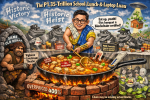
- ₱1 Billion Congressional Seat? Sorry, Sold Out Na Raw — Si Bello Raw Ang Hindi Bumili

- “We Will Take Care of It”: Bersamin’s P52-Billion Love Letter to Corruption

- “Skewed Narrative”? More Like Skewered Taxpayers!

- “Scared to Sign Vouchers” Is Now Official GDP Policy – Welcome to the Philippines’ Permanent Paralysis Economy
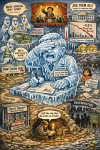
- “Robbed by Restitution?” Curlee Discaya’s Tears Over Returning What He Never Earned

- “My Brother the President Is a Junkie”: A Marcos Family Reunion Special

- “Mapipilitan Akong Gawing Zero”: The Day Senator Rodante Marcoleta Confessed to Perjury on National Television and Thought We’d Clap for the Creativity

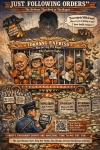
- “Just Following Orders” Is Dead: How the Hague Just Turned Tokhang’s Finest Into International Fugitives

 KWEBA ni BAROK
Leave a comment