By Louis ‘Barok‘ C. Biraogo — November 15, 2024
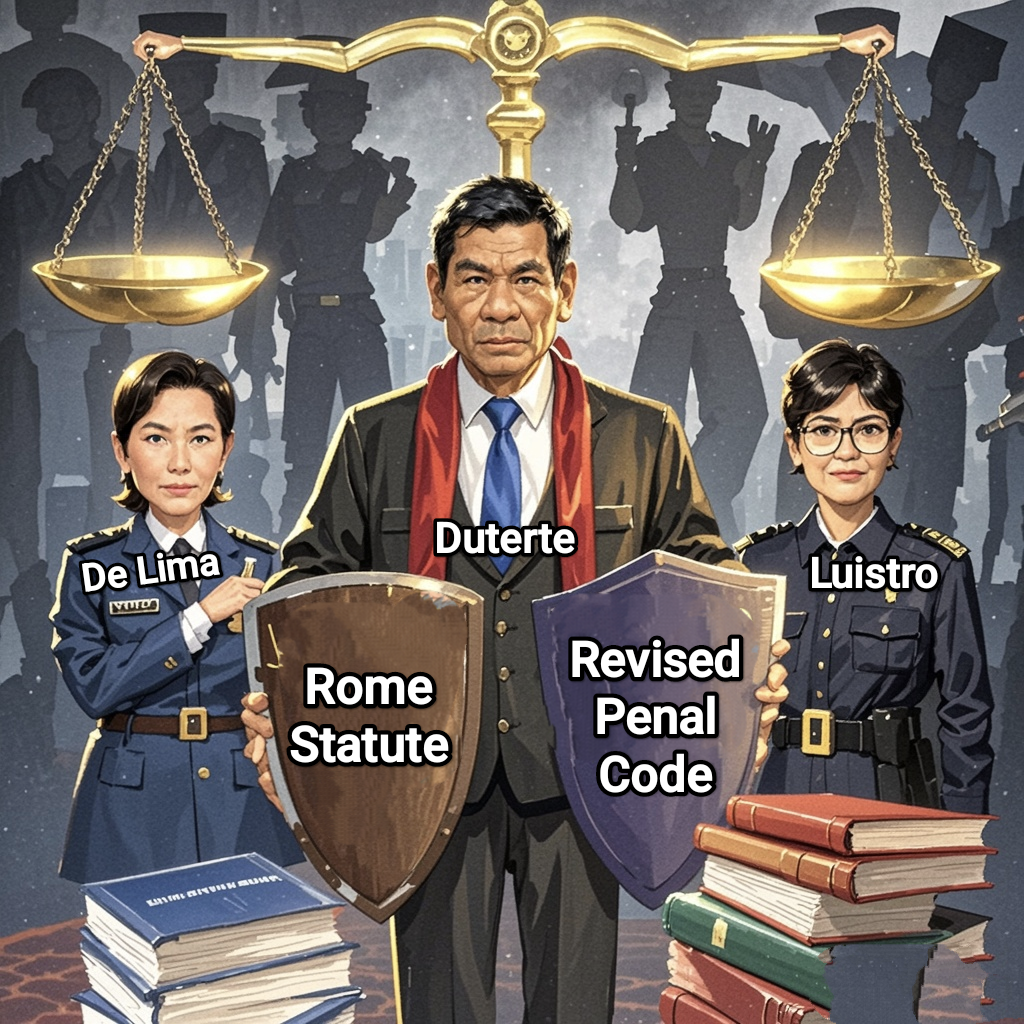
IN THE shadows of a brutal war on drugs, the Philippines stands divided: was Rodrigo Duterte a leader fighting crime, or a commander knowingly waging a bloody crusade? Now, as Representative Gerville “Jinky Bitrics” Luistro and former Justice Secretary Leila de Lima challenge his recent statements of ‘full responsibility,’ the stakes have escalated. Could Duterte’s words be a public admission of conspiracy and command responsibility for thousands of extrajudicial killings? This high-stakes clash exposes deep ethical and legal fault lines that could define his legacy—and reshape the nation’s future.
The Legal Acumen of Luistro and De Lima: A Closer Look
Representative Luistro and former Justice Secretary De Lima bring seasoned legal acumen to their claims. Luistro’s assertion regarding Duterte’s inducement aligns with her legislative and legal knowledge, illustrating an understanding of conspiracy as defined in the Revised Penal Code. De Lima, with a background as Justice Secretary, references international precedents and Philippine legal standards, making her argument both authoritative and legally grounded. Their competence allows them to navigate complex doctrines that encompass both Philippine law and international human rights standards, framing their case with significant expertise.
Conspiracy and Inducement under Philippine Law
Under Article 8 of the Philippine Revised Penal Code, conspiracy exists when two or more persons agree to commit a felony and decide to execute it. When a conspiracy exists, the act of one is the act of all. Luistro and De Lima argue Duterte acted as a “principal by inducement,” or a figure whose orders and encouragement led others to commit criminal acts under the war on drugs. The legal foundation here suggests that if Duterte’s statements were directives for police to “kill, kill, kill,” he could be considered a principal in a conspiracy. This framing relies on interpreting his public statements as direct orders, thus invoking liability by inducement.
The Legal Mind of Duterte: Unorthodox and Controversial
Duterte, a lawyer by training, is known for his unconventional approach to legal matters, frequently relying on populist rhetoric to assert his policies. His legal style during his presidency often involved public statements that suggested a disregard for procedural norms, including controversial remarks that seemingly encouraged police violence. By invoking the “presumption of regularity” in defense of law enforcement actions, Duterte has historically attempted to frame the drug war as legitimate. However, his consistent, self-imposed responsibility statements risk converting this “presumption of regularity” defense into a liability, as his repeated admissions could be viewed as extrajudicial confessions of his command over potentially criminal actions.
The Command Responsibility Doctrine: International Standards and Accountability
Command responsibility is a principle under international law that holds commanders liable for crimes committed by subordinates if they knew or should have known about these actions and failed to prevent them. In the context of Duterte’s drug war, De Lima asserts this principle by arguing that Duterte’s repeated orders created a culture of impunity, effectively sanctioning widespread extrajudicial killings. Command responsibility has been upheld in international tribunals, including the ICC, which could apply should the Philippines rejoin or another jurisdiction invoke universal jurisdiction for crimes against humanity.
The Legal Basis for Duterte’s Liability: A Closer Look
Luistro and de Lima’s assertions are backed by several legal foundations:
- Domestic Law on Conspiracy: The Revised Penal Code’s provisions on conspiracy, particularly conspiracy by inducement, directly apply to Duterte’s repeated orders and directives, which arguably constitute incitement to violence.
- Command Responsibility: Republic Act 9851 and relevant Supreme Court precedents affirm that leaders who allow illegal acts by subordinates can be held liable if they fail to prevent or correct such behavior.
- International Law: Duterte’s potential liability extends to international jurisdictions under the Rome Statute, which includes crimes against humanity and holds leaders accountable even after a state’s withdrawal from the ICC (as in the Philippines’ case in 2019). The principle of universal jurisdiction in some countries could also apply, allowing prosecution beyond Philippine borders.
- Precedent of Public Admissions: Duterte’s statements can be construed as an extrajudicial confession, which under Philippine law (People v. Bundalian, G.R. No. 129992), carries weight as admissible evidence in criminal cases.
The Legal Counterpoints: Arguments in Duterte’s Favor
- Presumption of Regularity: Duterte and his legal team could argue that presumption of regularity shields law enforcement actions conducted in line with their training, making it difficult to prove that his orders were criminal rather than policy directives.
- Lack of Direct Evidence: Defenders could contend that there is insufficient direct evidence linking Duterte’s statements to individual acts of violence, as most cases lack documented orders to kill, rendering proof of conspiracy by inducement challenging.
- Defense of Political Speech: Duterte’s team could argue that his statements were political expressions rather than legal orders, framed to appeal to public sentiment rather than explicitly incite unlawful action.
- Jurisdictional Challenges: The Philippines’ withdrawal from the ICC limits international oversight, and universal jurisdiction remains legally complex without cooperation from the Philippines or other countries.
Challenges in Prosecution
Prosecuting Duterte involves major obstacles:
- Political Influence: Duterte’s enduring popularity and influence in the Philippines present a significant hurdle. Legal teams pursuing action would need to galvanize public opinion, potentially engaging international human rights organizations to increase scrutiny.
- Jurisdictional Hurdles: Overcoming the ICC jurisdictional gap may require invoking universal jurisdiction in nations where it is applicable, or pressuring Philippine courts to consider domestic avenues for accountability.
- Lack of Direct Evidence: Without clear records linking Duterte’s statements directly to specific actions, gathering corroborative testimony and analyzing patterns may be essential. Witness protection programs and safe havens for whistleblowers could be established to support evidence collection.
Strategies to Overcome Obstacles
- Leverage Duterte’s Public Statements: Luistro and de Lima should highlight Duterte’s public admissions as evidence of inducement and intent.
- International Pressure: They can enlist support from international bodies, leveraging Duterte’s prior ICC involvement and advocating for universal jurisdiction.
- Pattern of Misconduct: Documenting Duterte’s behavior over decades, from Davao City to the presidency, can help frame the drug war as part of a broader pattern of state violence.
The Unbiased Assessment: A Balanced Perspective
While Luistro and de Lima present compelling arguments, Duterte’s defenses, particularly the presumption of regularity and political support, create substantial hurdles. Thus, while the legal principles may technically favor Luistro and de Lima, real-world execution heavily favors Duterte due to the inherent power dynamics and judiciary’s vulnerability to political influence.
Strategic Recommendations
For Luistro and de Lima:
- Focus on Systemic Evidence: Rather than individual cases, emphasize the widespread and systematic nature of the drug war.
- International Advocacy: Seek support from the international community to exert diplomatic pressure on the Philippines.
- Public Education: Continue educating Filipinos on the human rights abuses and legal principles involved to build public support.
For Duterte:
- Transparency in Defense: Proactively address public concerns by cooperating with investigatory bodies to retain a perception of accountability.
- Strategic Legal Defense: Utilize the presumption of regularity while maintaining a cooperative stance to build judicial favor.
For the Filipino People:
- Demand Transparency and Accountability: Advocate for judicial reform and independent investigation to promote accountability, regardless of political alignment.
- Strengthen Witness Protection: Supporting witness protection is crucial to ensure that those who come forward can do so without fear of retaliation.
More than a legal battle, this case is a defining moment for Philippine democracy, a powerful reminder that even the highest offices must answer to the people. Whatever the outcome, it will carve a new chapter in the country’s governance—a testament to the strength of its democratic ideals or the cost of forsaking them.

- ₱75 Million Heist: Cops Gone Full Bandit

- ₱6.7-Trillion Temptation: The Great Pork Zombie Revival and the “Collegial” Vote-Buying Circus

- ₱1.9 Billion for 382 Units and a Rooftop Pool: Poverty Solved, Next Problem Please

- ₱1.35 Trillion for Education: Bigger Budget, Same Old Thieves’ Banquet

- ₱1 Billion Congressional Seat? Sorry, Sold Out Na Raw — Si Bello Raw Ang Hindi Bumili

- “We Will Take Care of It”: Bersamin’s P52-Billion Love Letter to Corruption

- “Skewed Narrative”? More Like Skewered Taxpayers!

- “Scared to Sign Vouchers” Is Now Official GDP Policy – Welcome to the Philippines’ Permanent Paralysis Economy
- “Robbed by Restitution?” Curlee Discaya’s Tears Over Returning What He Never Earned

- “My Brother the President Is a Junkie”: A Marcos Family Reunion Special

- “Mapipilitan Akong Gawing Zero”: The Day Senator Rodante Marcoleta Confessed to Perjury on National Television and Thought We’d Clap for the Creativity

- “Just Following Orders” Is Dead: How the Hague Just Turned Tokhang’s Finest Into International Fugitives


 KWEBA ni BAROK
Leave a comment