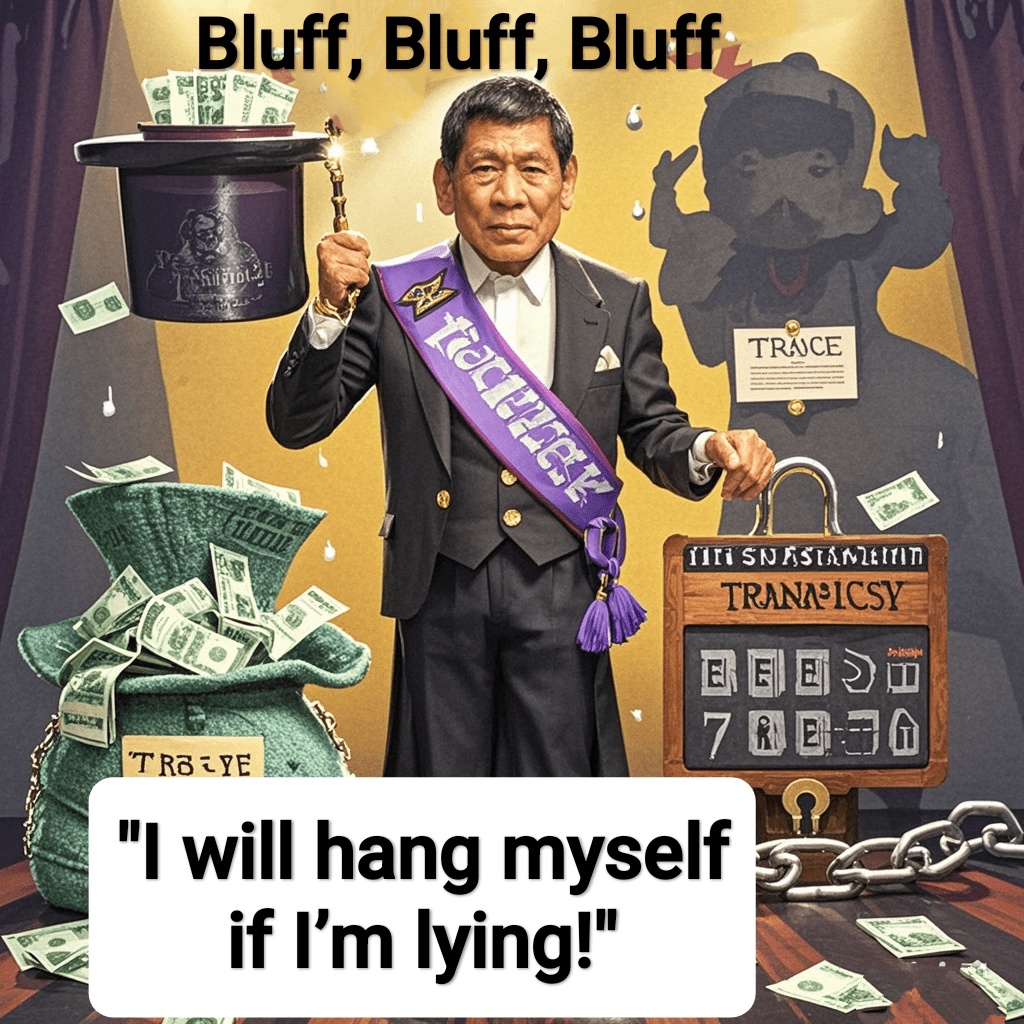
By Louis ‘Barok‘ C. Biraogo — November 16, 2024
RODRIGO Duterte built his legacy on audacity—yet the very audacity that shielded him in power now threatens to unravel him. Allegations of P2.4 billion in undisclosed bank accounts have turned the spotlight on the former president, raising explosive questions about his trustworthiness and the true cost of impunity in Philippine politics.
The Long-Standing Feud: A History of Animosity
The enmity between Duterte and his persistent critic, former Senator Antonio Trillanes IV, is as entrenched as it is personal. Trillanes has long accused Duterte of corruption and abuse of power, focusing heavily on the latter’s alleged unexplained wealth. Duterte, in turn, has dismissed Trillanes as a provocateur, even as their verbal sparring escalated into a symbol of broader political divisions in the country.
This animosity now frames the controversy over the bank waiver. Trillanes asserts that Duterte’s initial pledge to sign the waiver is yet another calculated bluff—a claim bolstered by Duterte’s sudden reversal and introduction of conditions. For a leader celebrated for his populist appeal and scorned for his disregard for institutional norms, the stakes are higher than ever.
The Duterte Style: Jokes, Bluffs, and the Real Agenda
Duterte’s political career has thrived on a unique brand of storytelling—an unpredictable blend of jokes, exaggerations, and outright contradictions. Whether threatening criminals with death or offering hyperbolic policy promises, his language often obfuscates the line between sincerity and spectacle.
In this instance, his dramatic vow to “hang himself” if wrongdoing were proven was vintage Duterte: theatrical and implausible. His subsequent shift to conditional promises, such as requiring his wife’s consent due to the account’s alleged conjugal nature, follows a familiar playbook of deflection and confusion. Trillanes’ rebuttal—that the joint account is with Duterte’s daughter, not his wife—only heightens the sense of misdirection.
The Quadcom’s Scrutiny and Public Perception
The Quadcom (House of Representatives’ Quadruple Committee) is intensifying scrutiny of Duterte’s record, from his controversial drug war to allegations of corruption. Meanwhile, public sentiment, once staunchly in his favor, appears to be shifting. Recent surveys reveal a decline in his approval ratings, suggesting that Filipinos are beginning to question the substance behind the spectacle.
Duterte’s handling of the bank waiver issue may accelerate this trend. For a leader who has long relied on his reputation for decisiveness and strength, perceived evasiveness could prove damaging.
Analyzing Duterte’s Bluff
Trillanes’ assertion that Duterte is bluffing finds support in key behavioral cues:
- Verbal Cues:
- Inconsistencies: Duterte’s initial, unconditional promise to sign the waiver contrasts sharply with his later introduction of conditions, such as involving Trillanes in self-harm.
- Evasive Language: His questioning of the investigation’s purpose and claims of spousal consent requirements indicate reluctance, not candor.
- Nonverbal Cues:
- Shifts in Body Language: Observers noted Duterte’s defensive posture and agitation during the hearings—classic signs of stress under scrutiny.
- Behavioral Analysis:
- Duterte’s dramatic shifts—from bold declarations of innocence to defensive caveats—suggest a strategic evasion rather than transparency.
The Duterte Defense: Counter-arguments Against Accusations
Despite Trillanes’ compelling assertions, Duterte’s defenders argue several plausible points:
- Legal and Privacy Issues: The invocation of joint account restrictions underscores legitimate procedural hurdles.
- Cultural Context: In a society where family and privacy are paramount, Duterte’s reluctance to unilaterally disclose joint finances may resonate with some Filipinos.
- Political Persecution: Duterte has framed the controversy as a political vendetta by Trillanes, appealing to his base’s suspicion of elites and opposition figures.
Repercussions of Backtracking
Duterte’s refusal to fulfill his promise has far-reaching implications:
- Erosion of Trust: Broken promises fuel public skepticism about his integrity, weakening his influence and credibility.
- Legal and Investigative Fallout: Refusal to cooperate could be interpreted as obstruction, intensifying scrutiny from domestic and international watchdogs.
- Polarization and Distrust: The controversy deepens political divisions, distracting from pressing national concerns.
Strategies to Mitigate Damage
To navigate this crisis, Duterte can adopt several approaches:
- Control the Narrative: Frame the issue as politically motivated while downplaying its significance.
- Legal Maneuvers: Highlight procedural barriers to disclosure, such as the need for joint consent.
- Deflect Attention: Shift public focus to other issues or new initiatives, leveraging his strong base of support.
Recommendations
- For Duterte: Embrace transparency and address public concerns directly. Limited disclosure—such as partial bank statements—might strike a balance.
- For Trillanes: Focus on evidence-based criticism, avoiding personal attacks that could alienate undecided observers.
- For the Quadcom: Maintain impartiality and ensure thorough, fair investigations to uphold institutional credibility.
- For Filipinos: Demand accountability while fostering unity, resisting the polarization that threatens democratic progress.
The Uncertain Future: A Nation at a Crossroads
The waiver controversy is more than a battle of wills between Duterte and Trillanes—it is a referendum on the Philippines’ commitment to transparency and justice. Duterte’s bluster may buy him time, but the erosion of trust will leave an indelible mark on his legacy. Filipinos must seize this moment to demand greater accountability from their leaders, setting a precedent for a more honest and equitable political system.

- ₱75 Million Heist: Cops Gone Full Bandit

- ₱6.7-Trillion Temptation: The Great Pork Zombie Revival and the “Collegial” Vote-Buying Circus

- ₱1.9 Billion for 382 Units and a Rooftop Pool: Poverty Solved, Next Problem Please

- ₱1.35 Trillion for Education: Bigger Budget, Same Old Thieves’ Banquet

- ₱1 Billion Congressional Seat? Sorry, Sold Out Na Raw — Si Bello Raw Ang Hindi Bumili

- “We Will Take Care of It”: Bersamin’s P52-Billion Love Letter to Corruption

- “Skewed Narrative”? More Like Skewered Taxpayers!

- “Scared to Sign Vouchers” Is Now Official GDP Policy – Welcome to the Philippines’ Permanent Paralysis Economy

- “Robbed by Restitution?” Curlee Discaya’s Tears Over Returning What He Never Earned
- “No Pressure” Luistro? The House Pork Bazaar Exposed
- “My Brother the President Is a Junkie”: A Marcos Family Reunion Special

- “Mapipilitan Akong Gawing Zero”: The Day Senator Rodante Marcoleta Confessed to Perjury on National Television and Thought We’d Clap for the Creativity

 KWEBA ni BAROK
Leave a comment