By Louis ‘Barok‘ C. Biraogo — November 16, 2024
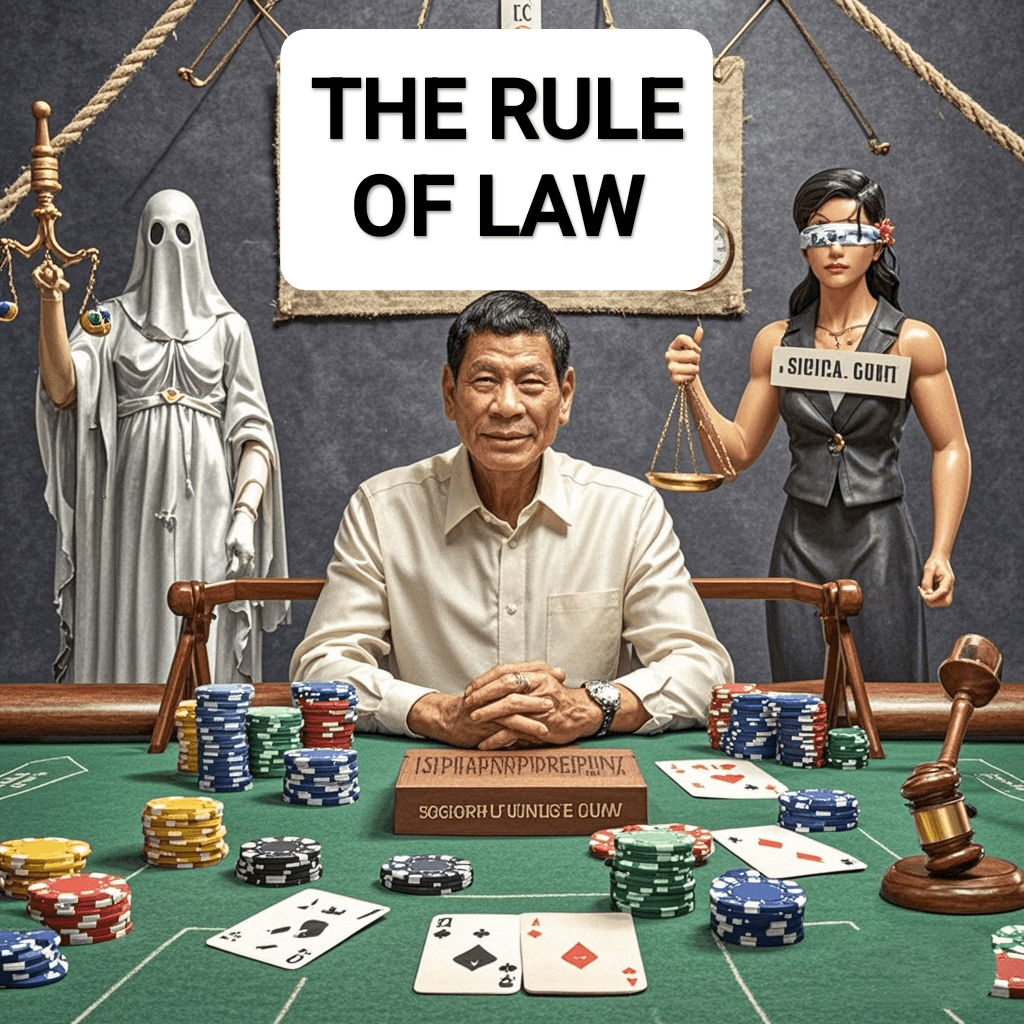
IS JUSTICE being served—or evaded? Former President Rodrigo Duterte’s insistence on a special Philippine court trial, instead of facing the International Criminal Court (ICC), has ignited a national and international debate. At the heart of the matter lies a pressing question: Can the rule of law survive such a high-profile gamble?
The Duterte Drug War: A Brief History and the ICC Challenge
Duterte’s “war on drugs,” initiated in 2016, was marked by widespread allegations of extrajudicial killings and human rights abuses. Official reports cite thousands of deaths, while independent organizations estimate even higher numbers. The ICC, citing crimes against humanity, opened an investigation into Duterte’s role in the killings, focusing on the period when the Philippines was a state party to the Rome Statute (2011–2019).
The Philippines’ withdrawal from the ICC in 2019, initiated by Duterte, does not negate the ICC’s jurisdiction over crimes committed while the country was still a member. This creates a tension between domestic sovereignty and international accountability. Recent statements from the Marcos administration—indicating they would cooperate with the ICC via Interpol if necessary—highlight Duterte’s precarious legal position.
Duterte’s Diminishing Influence: A Shift in the Political Landscape
Duterte’s call for a special court coincides with signs of his diminishing influence:
- Declining Popularity: Recent surveys reveal a significant drop in public approval for both former President Rodrigo Duterte and Vice President Sara Duterte, a sharp contrast to the soaring ratings they once enjoyed during Duterte’s presidency and, more recently, prior to their public clash with the Marcos administration.
- Weakening Alliances: Key political figures who supported Duterte, including members of his PDP-Laban party, have distanced themselves from his rhetoric, aligning more closely with President Marcos Jr.
- Failed Protest Rallies: Duterte’s recent attempts to rally public support have seen lackluster turnout, reflecting a diminished capacity to mobilize grassroots support.
- Isolation from the Current Administration: Marcos’ administration has taken a more neutral stance, neither fully endorsing nor overtly protecting Duterte from ICC scrutiny.
The Special Court Proposal
Duterte’s call for a special court is framed as a nationalist rejection of foreign interference. Legally, this proposal raises several critical questions:
Legal Arguments Supporting Duterte’s Position
- Sovereignty and National Pride: Duterte argues that his actions were in service of the nation and should be judged by Filipino courts. This aligns with Article VIII, Section 1 of the Philippine Constitution, which vests judicial power in Philippine courts.
- Domestic Remedies First: International law, including the ICC’s complementarity principle, prioritizes domestic legal systems for addressing crimes unless they are unwilling or unable to prosecute. Duterte could argue that the creation of a special court demonstrates willingness to address allegations domestically.
- Constitutional Basis for Special Courts: Article VIII, Section 5(5) grants Congress the power to define jurisdiction and create courts. Duterte’s proposal, if legislated, could align with this provision.
- Political Strategy: By advocating for a special court, Duterte shifts the focus to national institutions, leveraging patriotic sentiments and challenging critics to prove bias within the Philippines’ judiciary.
Legal Counterarguments
- Lack of Impartiality: A court created solely to try Duterte could be seen as inherently biased, violating the right to a fair trial under both Philippine and international law.
- Procedural Concerns: The absence of precedent for such a court raises questions about its constitutionality and potential conflicts with established judicial processes.
- Complementarity Challenge: The ICC might view a special court as a tactic to delay justice, rather than a genuine domestic remedy.
- Jurisdictional Conflicts: The ICC’s jurisdiction remains valid for crimes committed while the Philippines was a Rome Statute signatory. A special court might not preclude the ICC’s concurrent investigation.
Political Implications
Duterte’s proposal reflects both desperation and political calculation:
- Patriotism as Strategy: Positioning himself as a nationalist resisting foreign intervention, Duterte seeks to consolidate his base and regain public support.
- Pressure on Marcos Administration: By tying the special court to national sovereignty, Duterte indirectly challenges Marcos to take a definitive stance. Any failure to protect Duterte could alienate segments of their shared constituency.
- Risk of Undermining Judicial Credibility: Establishing a special court for Duterte risks being perceived as favoritism, potentially eroding public trust in the judiciary.
Recommendations
For Duterte
- Pursue Cooperation: Work within existing legal frameworks to demonstrate accountability without appearing obstructionist.
- Temper Rhetoric: Avoid inflammatory statements that could alienate potential allies or escalate tensions with the ICC.
For the Marcos Administration
- Maintain Neutrality: Avoid overt interference in the ICC process while ensuring domestic institutions function independently.
- Strengthen Domestic Legal Frameworks: Enhance the capacity of Philippine courts to address crimes against humanity, reinforcing the complementarity principle.
For the ICC
- Engage Diplomatically: Ensure the investigation proceeds transparently, addressing concerns about perceived biases.
- Prioritize Evidence: Demonstrate the validity of the case against Duterte through meticulous evidence collection.
For the Filipino People
- Demand Accountability: Advocate for transparency and justice, whether through domestic courts or international mechanisms.
- Monitor Judicial Processes: Ensure any special court, if created, adheres to principles of fairness and impartiality.
Conclusion
The stakes are immense: Duterte’s legal gambit could either reaffirm the Philippines’ commitment to justice or deepen its political divides. As the Marcos administration navigates this delicate balance and the ICC continues its scrutiny, one truth remains undeniable: the rule of law is not just a tool for accountability—it is the cornerstone of a nation’s hope and humanity. The future of Philippine justice depends on how this moment is resolved.

- “Forthwith” to Farce: How the Senate is Killing Impeachment—And Why Enrile’s Right (Even If You Can’t Trust Him)

- “HINDI AKO NAG-RESIGN!”

- “I’m calling you from my new Globe SIM. Send load!”

- “Mahiya Naman Kayo!” Marcos’ Anti-Corruption Vow Faces a Flood of Doubt

- “Meow, I’m calling you from my new Globe SIM!”

- “No Special Jail for Crooks!” Boying Remulla Slams VIP Perks for Flood Scammers

- “PLUNDER IS OVERRATED”? TRY AGAIN — IT’S A CALCULATED KILL SHOT

- “Several Lifetimes,” Said Fajardo — Translation: “I’m Not Spending Even One More Day on This Circus”

- “Shimenet”: The Term That Broke the Internet and the Budget

- “We Did Not Yield”: Marcos’s Stand and the Soul of Filipino Sovereignty

- “We Gather Light to Scatter”: A Tribute to Edgardo Bautista Espiritu

- $150M for Kaufman to Spin a Sinking Narrative

 KWEBA ni BAROK
Leave a comment