By Louis ‘Barok‘ C. Biraogo — November 18, 2024
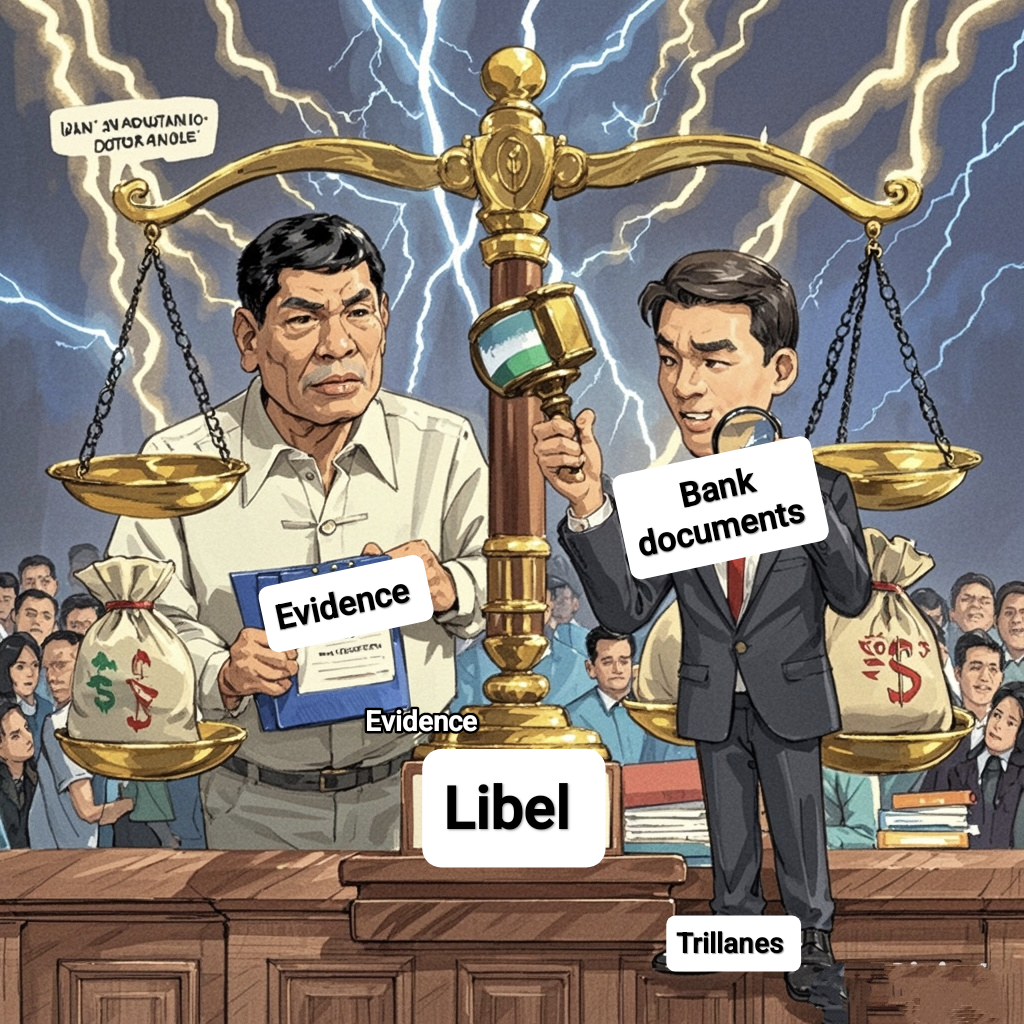
WHEN Rodrigo Duterte accused Antonio Trillanes IV of spinning lies for over a decade, he wasn’t just talking politics—he was preparing for war. At the heart of this explosive libel case lies a staggering claim: P2.4 billion secretly funneled into Duterte’s and Sara Duterte’s bank accounts. Trillanes insists he has proof. Duterte calls it fabrication. And the battle, fueled by deep-seated rivalry, is only getting started.
This controversy underscores critical issues in Philippine politics: accountability of public officials, limits of free speech, and the weaponization of libel to silence critics.
Legal Analysis of Duterte’s Libel Case
- Allegations and Elements of Libel
- Specific Allegations: Trillanes accused Duterte of accepting suspicious deposits, suggesting corruption. These allegations involve substantial sums and high-profile bank accounts, heightening their defamatory potential.
- Publication, Falsity, and Malice: Philippine libel law (Art. 353 of the Revised Penal Code) requires proof that defamatory statements were publicly made, false, and malicious. Duterte will need to establish that Trillanes acted with “actual malice,” knowing the claims were false or showing reckless disregard for their truth.
- Evidence Supporting Duterte’s Claim
- Bank Records: Authentic financial records could refute the alleged transactions. If the documents Trillanes presented are proven fake, this would strengthen Duterte’s case.
- Witness Testimony: Testimonies from bank officials and financial experts could confirm the nonexistence of the transactions.
- Motive and Context: Duterte may argue that Trillanes has a history of politically motivated attacks, bolstering a claim of malice.
- Ethical Standards and Relevant Laws
- The Code of Conduct for Public Officials (RA 6713) obliges officials to file truthful statements of assets. Duterte could use compliance with this law as a defense.
- Substantively, the Revised Penal Code and the Cybercrime Prevention Act cover libel in traditional and digital formats, respectively. Duterte could invoke these laws to target both verbal and online dissemination of Trillanes’s allegations.
- Pertinent Supreme Court Precedents
- In Yuchengco v. The Manila Chronicle, the Court highlighted the importance of clear and convincing evidence of malice in libel cases involving public figures. Duterte will need to meet this high evidentiary bar.
Legal Defense Strategies for Trillanes
- Truth as a Defense
- Trillanes can argue the truth of his claims by presenting corroborative evidence, including the contested bank records and testimonies from whistleblowers or investigators. Truth is an absolute defense under Philippine law.
- Public Interest and Fair Comment
- Exposing corruption is a matter of public interest. Trillanes could argue that his statements were made in good faith as part of a legitimate effort to hold public officials accountable, qualifying as fair comment.
- Lack of Malice
- Trillanes can assert he relied on credible sources and conducted due diligence before making his allegations. Demonstrating good faith and a lack of intent to defame would counter claims of malice.
- Relevant Laws and Precedents
- Philippine courts recognize a higher threshold for libel involving public figures to protect free speech. In Borjal v. Court of Appeals, the Court emphasized the need for public discourse to allow “breathing space” for criticism of public officials.
The Political Consequences: Implications for Duterte and Trillanes
- For Duterte: A successful libel case could restore his reputation among supporters and reinforce his narrative of victimization by political opponents. However, a loss risks exposing alleged financial irregularities and strengthening perceptions of authoritarianism.
- For Trillanes: Conviction could damage his credibility and limit his political influence. An acquittal, on the other hand, would solidify his standing as a watchdog or crusader against corruption and could reinvigorate his political career.
- For the Filipino Public: The case could deepen political polarization. A perception of judicial bias could erode trust in the legal system, while a fair trial could set important precedents for balancing free speech with accountability.
The Legal Battlefield: Who Has the Upper Hand?
While Duterte holds the initial advantage by choosing the forum and framing the narrative, the presumption of innocence ensures that Trillanes begins with a significant procedural safeguard. The burden of proving falsity and malice remains a steep challenge for Duterte, as he must overcome the presumption that Trillanes is innocent of any criminal intent. Trillanes, meanwhile, can lean on defenses such as truth, public interest, and the absence of malice. Given the high bar for proving “actual malice” against public figures and the contentious nature of the evidence, the presumption of innocence reinforces Trillanes’s position, especially if he can substantiate his claims.
Recommendations
- For Duterte
- Focus on presenting unequivocal evidence of falsity and malice to strengthen the libel claim. Avoid over-politicizing the case to mitigate public backlash.
2. For Trillanes
- Prepare a robust evidentiary defense, emphasizing truth and the public interest. Frame the case as a fight for transparency and democratic accountability.
3. For Filioinos
- Demand transparency and fairness in the proceedings. Use the case as an opportunity to engage in critical discussions about the limits of free speech and the need for accountability among public officials.
As this high-stakes showdown unfolds, the Philippines faces a defining moment. Will it demand transparency and accountability, or allow political theater to obscure the truth? The choice will shape not just the present, but the legacy we leave for future generations.

- “Forthwith” to Farce: How the Senate is Killing Impeachment—And Why Enrile’s Right (Even If You Can’t Trust Him)
- “HINDI AKO NAG-RESIGN!”

- “I’m calling you from my new Globe SIM. Send load!”

- “Mahiya Naman Kayo!” Marcos’ Anti-Corruption Vow Faces a Flood of Doubt

- “Meow, I’m calling you from my new Globe SIM!”

- “No Special Jail for Crooks!” Boying Remulla Slams VIP Perks for Flood Scammers
- “PLUNDER IS OVERRATED”? TRY AGAIN — IT’S A CALCULATED KILL SHOT

- “Several Lifetimes,” Said Fajardo — Translation: “I’m Not Spending Even One More Day on This Circus”

- “Shimenet”: The Term That Broke the Internet and the Budget

- “We Did Not Yield”: Marcos’s Stand and the Soul of Filipino Sovereignty

- “We Gather Light to Scatter”: A Tribute to Edgardo Bautista Espiritu

- $150M for Kaufman to Spin a Sinking Narrative



 KWEBA ni BAROK
Leave a comment