By Louis ‘Barok‘ C. Biraogo — November 22, 2024
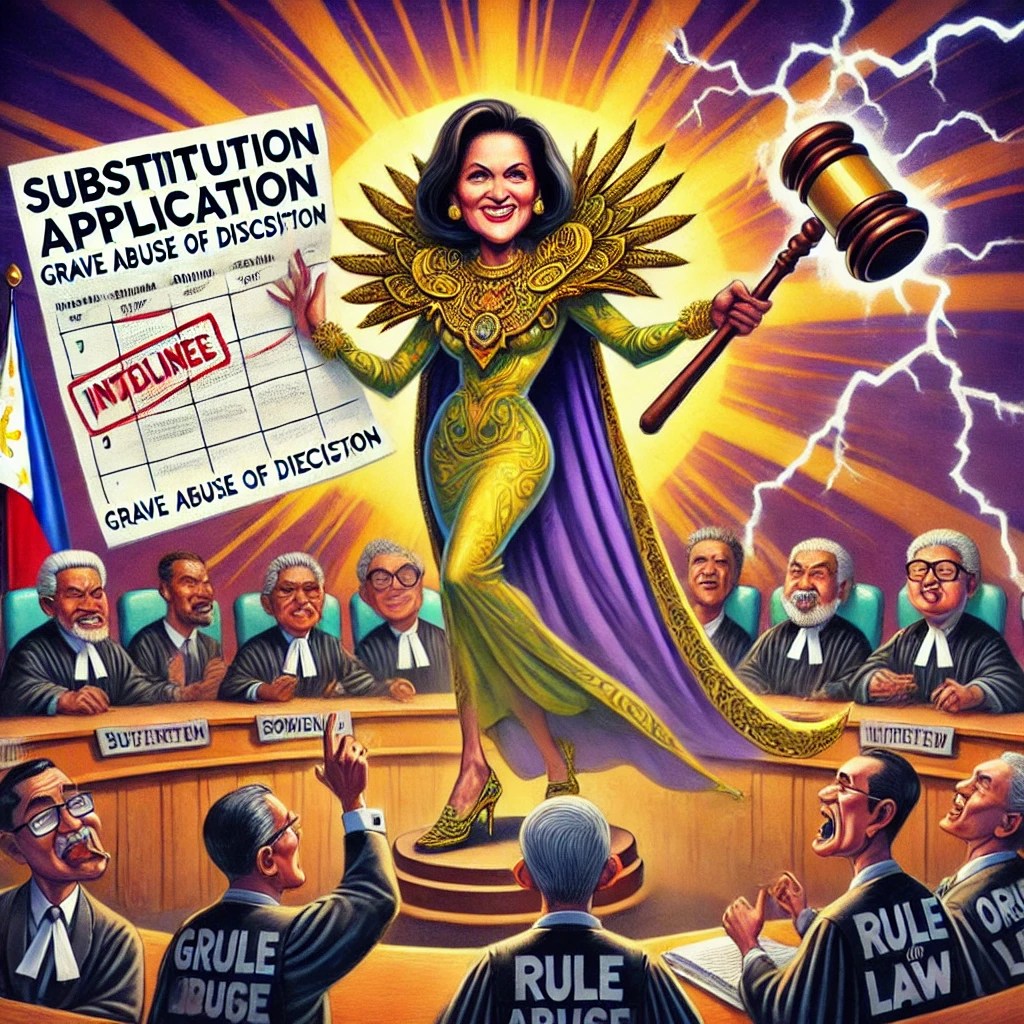
WHEN former Comelec Commissioner Rowena Guanzon took center stage as the first nominee of the P3PWD party-list, it wasn’t without controversy. Emerging from the shadows of the 2022 elections, her sudden substitution for the original nominees—just months after stepping down from Comelec—raised eyebrows and questions. And yet, with lightning speed, Comelec approved her appointment through Minute Resolution No. 22-0774. Was this politics as usual, or something more calculated?
The Duterte Youth party-list, led by Ronald Cardema, challenged this substitution, claiming it violated deadlines and ethical standards. The case culminated in a Supreme Court decision, dated August 20, 2022, declaring the substitution invalid and void for grave abuse of discretion.
The Protagonist and the Case: A Closer Look
Ma. Rowena Amelia Guanzon is a prominent legal figure and former Comelec Commissioner. Known for her outspoken nature, Guanzon’s tenure was marked by allegations of controversy, including accusations of partiality and abrasive behavior. While she played an active role in advocating for inclusivity and transparency, her actions—including campaigning for P3PWD while still a commissioner—raised ethical concerns.
The DUTERTE Youth party-list petitioned against Guanzon’s substitution, arguing that her actions constituted a conflict of interest, violated anti-graft laws, and undermined the integrity of the party-list system.
The Legal Framework: Arguments in Support of the Petition
The Duterte Youth party-list raised several key legal arguments:
- Violation of Deadlines:
Substitutions were governed by Comelec Resolution Nos. 9366 and 10690, which required withdrawals or substitutions to be filed before specific deadlines, including a hard cut-off at midday on Election Day. The P3PWD’s substitution filing occurred well after these deadlines, rendering it invalid.- Relevant Law: Section 8 of the Party-list System Act (RA 7941) permits substitutions but within specific timeframes.
- Precedent: In Banat vs. Comelec (G.R. No. 179271, 2009), the Supreme Court emphasized the need to adhere strictly to procedural rules to maintain electoral integrity.
- Conflict of Interest:
The petitioners argued that Guanzon’s recent tenure as a Comelec Commissioner, during which P3PWD’s accreditation was approved, created a conflict of interest under the Anti-Graft and Corrupt Practices Act (RA 3019) and Code of Conduct and Ethical Standards for Public Officials and Employees (RA 6713). - Deception of the Electorate:
By substituting unknown placeholder nominees with Guanzon post-election, the P3PWD undermined the electorate’s informed choice. This violated voters’ rights under Article V, Section 1 of the Constitution. - Grave Abuse of Discretion:
The Duterte Youth accused the Comelec of acting arbitrarily by approving the substitution just one day after the petition was filed.
The Defense Case: Guanzon’s Legal Arguments
Guanzon raised the following defenses:
- Substitution is Permissible:
Guanzon cited Section 8 of RA 7941, arguing that substitutions are allowed under the law in cases of withdrawal or incapacity. However, the Supreme Court clarified that while legal, substitutions must be the exception and must not undermine electoral transparency. - Timing of Substitution:
Guanzon claimed that the Comelec’s approval was proper and within its discretion. However, the Court disagreed, finding the substitution untimely and prejudicial to voter rights. - No Conflict of Interest:
Guanzon denied any conflict of interest, arguing that her role as a nominee was separate from her previous position as a Comelec Commissioner.
The Supreme Court’s Decision: A Landmark Ruling
The Supreme Court nullified Guanzon’s substitution, declaring that it violated electoral laws and undermined voter rights. The decision emphasized:
- Adherence to Deadlines:
Substitution rules exist to ensure orderly elections and informed voting. Allowing post-election substitutions circumvents this principle. - Grave Abuse of Discretion by Comelec:
The Comelec’s swift approval of Guanzon’s substitution without adherence to legal deadlines constituted grave abuse of discretion. - Transparency and Voter Rights:
The Court underscored the electorate’s right to make informed choices, highlighting that substitutions after elections deceive voters.
The Consequences: Political and Legal Implications
The ruling has profound implications for the Philippine party-list system:
- Reinforcement of Rules: The decision reinforces existing regulations on substitutions, curbing manipulative practices like placeholder nominees.
- Transparency in Elections: It underscores the importance of presenting genuine nominees pre-election, safeguarding voters’ informed choices.
- Strengthened Legal Framework: The ruling clarifies Comelec’s role and limits discretion to ensure fairness.
Recommendations
- For Guanzon: Uphold accountability by refraining from practices that blur ethical lines. Advocate for reforms to address ambiguities in party-list laws.
- For Comelec: Strengthen oversight mechanisms and enforce substitution deadlines rigorously to deter future abuses.
- For Party-Lists: Commit to transparency and nominate genuine representatives from the outset.
- For Filipinos: Demand accountability from public officials and participate actively in safeguarding electoral integrity.
This ruling isn’t just about addressing past controversies—it’s about shaping the future of Philippine democracy. By fortifying the pillars of integrity and transparency, it paves the way for an electoral process that Filipinos can finally trust and defend.

- “Forthwith” to Farce: How the Senate is Killing Impeachment—And Why Enrile’s Right (Even If You Can’t Trust Him)

- “HINDI AKO NAG-RESIGN!”

- “I’m calling you from my new Globe SIM. Send load!”

- “Mahiya Naman Kayo!” Marcos’ Anti-Corruption Vow Faces a Flood of Doubt

- “Meow, I’m calling you from my new Globe SIM!”

- “No Special Jail for Crooks!” Boying Remulla Slams VIP Perks for Flood Scammers

- “PLUNDER IS OVERRATED”? TRY AGAIN — IT’S A CALCULATED KILL SHOT

- “Several Lifetimes,” Said Fajardo — Translation: “I’m Not Spending Even One More Day on This Circus”

- “Shimenet”: The Term That Broke the Internet and the Budget

- “We Did Not Yield”: Marcos’s Stand and the Soul of Filipino Sovereignty

- “We Gather Light to Scatter”: A Tribute to Edgardo Bautista Espiritu

- $150M for Kaufman to Spin a Sinking Narrative






 KWEBA ni BAROK
Leave a comment