By Louis ‘Barok‘ C Biraogo — December 9, 2024
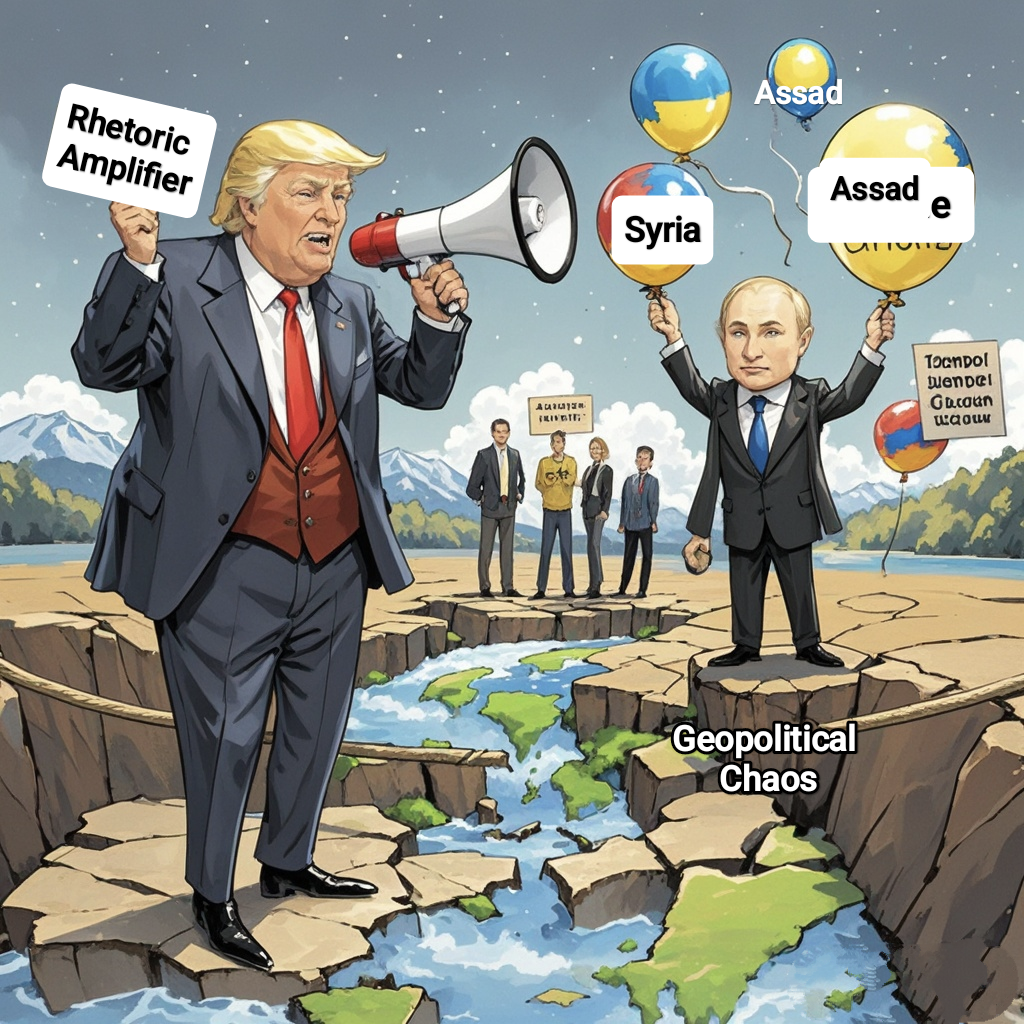
FOR years, Syria was the crown jewel in Vladimir Putin’s Middle Eastern strategy, a testament to Russia’s return as a global force. But now, the sudden collapse of Bashar al-Assad’s regime in Damascus has shattered that illusion, leaving Moscow scrambling to salvage its image. What was once celebrated as a geopolitical masterstroke now teeters on the edge of catastrophe, exposing the risks of tying Russia’s fortunes to an embattled dictator.
Meanwhile, Donald Trump has framed the downfall of Assad and Russia’s shifting priorities as evidence of the Kremlin’s weakness—a narrative that intertwines Russia’s strained position in Syria with its costly war in Ukraine. But does this interpretation hold up under scrutiny? Let’s delve into the layers of this controversy, analyzing Trump’s assertions, their counterarguments, and the broader implications for Syria, Russia, and the international order.
Trump’s Rhetoric: A Mix of Reality and Hyperbole
Trump’s claims paint a picture of a weakened Russia, an abandoned Syria, and an unnecessary, prolonged war in Ukraine. He attributes Assad’s fall to Moscow’s loss of interest in protecting him, driven by its focus on the Ukraine conflict, and suggests Iran’s regional influence is similarly declining due to Israeli military successes.
The Trump Perspective: Rationale Supporting lHis Views
- Resource Diversion: Russia’s preoccupation with the Ukraine war has undeniably stretched its military and financial resources. Reports of strained logistics and losses on the battlefield make it plausible that Syria became a secondary priority.
- Economic Strain: Sanctions and war expenses have weakened Russia’s economy, undermining its ability to sustain expensive foreign commitments like Syria.
- Shifting Regional Dynamics: Israel’s military actions against Iranian interests, coupled with the Arab normalization agreements under the Abraham Accords, have pressured Iran, limiting its capacity to bolster Assad’s regime.
- Desire for Peace in Ukraine: Trump’s call for negotiations echoes the growing fatigue among global powers over an intractable and bloody conflict.
The Case Against Trump: Challenging His Assertions
- Assad’s Status: Despite reports of his flight to Moscow, there is no definitive evidence that Assad has been permanently ousted or abandoned by Russia. Instead, Moscow appears to be negotiating with opposition groups to maintain its military foothold in Syria.
- Strategic Interests: Syria remains critical for Russia, not just for its Mediterranean naval base at Tartous but as a symbol of its influence in the Middle East. Even in crisis, Russia has shown no intent to fully withdraw.
- Oversimplification of Conflicts: Trump’s assertion that the Ukraine war “never should have started” ignores its deep historical and geopolitical roots, oversimplifying a complex conflict into a matter of choice.
- Lack of Evidence: Trump’s tendency to make sweeping statements without evidence—such as claiming 600,000 Russian soldiers are dead or wounded—undermines his credibility.
Beyond the Headlines: Exploring the Complexities of Syria and Ukraine
While the link between Syria’s collapse and the Ukraine war is compelling, other factors must be considered:
- Internal Syrian Dynamics: Assad’s government has long faced opposition from various factions. Russia’s military support did not resolve Syria’s underlying social, economic, and sectarian divides. His fall may have been inevitable, irrespective of external distractions.
- Western and Regional Pressures: U.S. and European sanctions, coupled with increased engagement by Turkey, Israel, and Gulf states, have eroded Assad’s grip on power.
- Geopolitical Precedents: History suggests that overextension often precedes the decline of great powers. Russia’s simultaneous entanglements in Ukraine and Syria mirror historical examples of imperial overstretch.
The Uncertain Future: Analyzing the Potential Outcomes of the Russia-Ukraine War and Syria
- Russia-Ukraine War:
- Short-Term: The war is unlikely to end quickly. Both sides remain entrenched, and negotiations seem improbable without significant territorial concessions or a dramatic shift in battlefield dynamics.
- Long-Term: Russia’s ability to sustain the conflict will hinge on its economy and military resilience. Ukraine’s Western support remains critical but could waver with prolonged stalemates.
- Syria’s Immediate Future:
- Russian Influence: Moscow will likely pivot to securing its military assets in Tartous and Hmeimim, regardless of Assad’s fate.
- Regional Reconfiguration: Syrian opposition factions, supported by regional players like Turkey, may attempt to stabilize their control. However, the absence of cohesive leadership risks prolonging instability.
Recommendations for Key Actors
- Donald Trump: If he seeks to broker peace in Ukraine, he must avoid empty rhetoric and work with international stakeholders to present viable, detailed negotiation frameworks. A balanced approach is essential to avoid further alienating allies.
- Vladimir Putin: Russia must recalibrate its ambitions. Prioritizing a political settlement in Syria and de-escalating the Ukraine conflict could mitigate economic and military exhaustion, preserving its strategic interests.
- Syria’s Opposition and Remaining Power Centers: Stability will depend on inclusive governance and rebuilding international trust. Negotiating with regional powers and ensuring humanitarian aid are critical steps forward.
- Ukraine: President Zelensky must leverage international support to negotiate from a position of strength, emphasizing reconstruction aid and long-term security guarantees.
Conclusion: A World in Transition
The fall of Assad marks a turning point, not just for Syria or Russia, but for a world grappling with the shifting sands of power. Whether this moment ushers in peace or perpetuates chaos will depend on the choices made by global leaders today. History reminds us: when power vacuums form, they rarely invite stability—they demand it.

- ₱75 Million Heist: Cops Gone Full Bandit

- ₱6.7-Trillion Temptation: The Great Pork Zombie Revival and the “Collegial” Vote-Buying Circus

- ₱1.9 Billion for 382 Units and a Rooftop Pool: Poverty Solved, Next Problem Please

- ₱1.35 Trillion for Education: Bigger Budget, Same Old Thieves’ Banquet

- ₱1 Billion Congressional Seat? Sorry, Sold Out Na Raw — Si Bello Raw Ang Hindi Bumili

- “We Will Take Care of It”: Bersamin’s P52-Billion Love Letter to Corruption

- “Skewed Narrative”? More Like Skewered Taxpayers!

- “Scared to Sign Vouchers” Is Now Official GDP Policy – Welcome to the Philippines’ Permanent Paralysis Economy

- “Robbed by Restitution?” Curlee Discaya’s Tears Over Returning What He Never Earned

- “No Pressure” Luistro? The House Pork Bazaar Exposed

- “My Brother the President Is a Junkie”: A Marcos Family Reunion Special

- “Mapipilitan Akong Gawing Zero”: The Day Senator Rodante Marcoleta Confessed to Perjury on National Television and Thought We’d Clap for the Creativity




 KWEBA ni BAROK
Leave a comment