By Louis ‘Barok‘ C. Biraogo — December 13, 2024
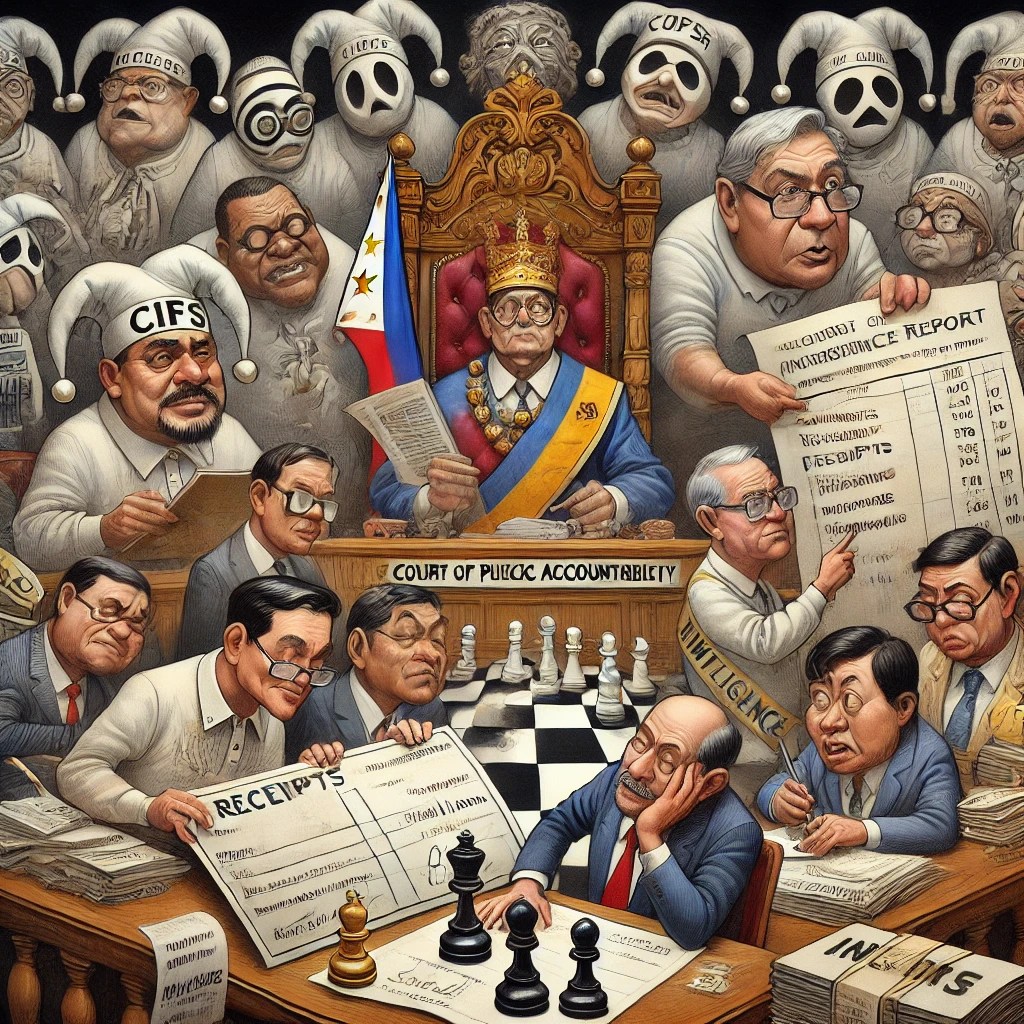
ARE confidential and intelligence funds (CIFs) the ultimate blank check for power? Representative Joel Chua’s claim that a lack of Commission on Audit (COA) flags means no need for legislative oversight sparks a debate that cuts to the heart of constitutional accountability and ethical governance.
The debate over the President’s P4.57 billion CIFs versus the Vice President’s flagged expenditures underscores critical issues about transparency, accountability, and the balance of powers in the Philippine government. This commentary dissects the legal framework and implications of Rep. Chua’s position while contextualizing the unique nature of CIFs.
The CIF Controversy: A Contextual Perspective
The controversy stems from the distinction between the COA’s findings on the confidential funds of the Office of the President (OP) and the Office of the Vice President (OVP). While the COA flagged irregularities in the OVP’s CIFs, including improper documentation and questionable expenditures, the President’s CIFs remained unflagged. This clean audit led Rep. Chua to argue against the need for an inquiry into the President’s CIFs, citing national security and COA’s unremarkable findings.
Conversely, scrutiny of OVP funds revealed glaring issues, such as the use of pseudonyms in receipts and questionable categorization of expenditures. Critics argue that the absence of COA flags for the President’s CIFs does not preclude legislative oversight, especially given the inherent opacity of such funds.
The Legal Implications of Rep. Chua’s Assertion: A Comprehensive Analysis
The Role of COA Audits in Legislative Oversight
Rep. Chua’s reliance on COA’s findings as a basis to avoid investigation misinterprets the interplay between COA audits and congressional oversight. COA’s mandate is limited to assessing compliance with financial regulations and auditing standards; it does not evaluate the broader appropriateness or efficiency of expenditures. This is particularly pertinent for CIFs, where documentation often relies on agency certifications rather than comprehensive disclosures.
The Philippine Constitution vests Congress with the “power of the purse” and the authority to investigate public expenditures. Article VI, Section 22 underscores the legislature’s responsibility to ensure that all public funds, including CIFs, are utilized properly. This authority is independent of COA findings and serves as a vital check against executive overreach.
Legal Framework for CIF Oversight
The 2015 Joint Circular No. 2015-01 governs CIF utilization, setting parameters for confidentiality and documentation. While the circular protects sensitive information, it does not shield CIFs from accountability. Instead, it establishes safeguards to ensure proper use, such as sealed records and certifications. These mechanisms aim to balance confidentiality with accountability, but they do not preclude inquiries into potential misuse.
Rep. Chua’s argument also overlooks Supreme Court jurisprudence emphasizing the legislature’s role in ensuring fiscal accountability. In Arnault v. Nazareno (1950), the Court upheld Congress’s right to investigate public funds, irrespective of COA findings, as a fundamental aspect of checks and balances. This precedent underscores that legislative scrutiny is essential even in cases involving sensitive expenditures.
National Security as a Justification
While the President’s CIFs are linked to national security, this justification cannot shield them from oversight. The principle of accountability applies universally, even to funds used for intelligence purposes. Legislative committees can conduct closed-door hearings or require classified briefings to address national security concerns while maintaining accountability. A lack of COA flags should not translate into a carte blanche for unchecked spending.
Comparative Analysis: President’s vs. Vice President’s CIFs
1. Legal Frameworks
- Both offices are bound by Joint Circular No. 2015-01 and COA’s audit guidelines. However, the President’s CIFs are often justified under the broader national security mandate as Commander-in-Chief, while the Vice President’s funds lack this inherent linkage, making deviations from allowable categories more conspicuous.
- The OVP’s CIF usage is also subject to stricter scrutiny due to its civilian nature, as highlighted by COA’s disallowance of improper expenditures.
2. Transparency Mechanisms
- The President’s CIFs benefit from greater discretion due to their security implications, but this discretion does not exempt them from oversight. Conversely, the OVP, lacking a direct national security role, is expected to adhere to stricter transparency and documentation standards.
- Both offices must certify CIF expenditures, but the absence of specific COA disallowances for the President’s funds underscores the need for legislative inquiry to address potential gaps in accountability.
Impact on Good Governance
Rep. Chua’s position, if left unchallenged, could undermine public trust in government institutions. It risks creating a precedent where the absence of COA flags becomes a shield against scrutiny, weakening legislative oversight. Conversely, a robust investigation into all CIFs would reinforce transparency, uphold accountability, and bolster the integrity of public institutions.
Recommendations
- To Rep. Chua and the Committee:
- Expand the investigation to include the President’s CIFs, ensuring adherence to closed-door protocols for sensitive matters.
- Mandate stricter compliance with Joint Circular No. 2015-01 across all agencies.
- To COA:
- Enhance auditing mechanisms for CIFs, including independent verification of certifications.
- Develop a protocol for conducting real-time audits of CIF expenditures.
- To All Government Agencies:
- Institute stricter documentation and reporting standards for CIFs.
- Conduct internal reviews to ensure compliance with transparency requirements.
- To Filipinos:
- Demand greater transparency and accountability from public officials.
- Advocate for reforms to strengthen legislative and audit oversight mechanisms.
Conclusion
Rep. Chua’s assertion reflects a narrow interpretation of COA’s role and undermines the broader accountability mechanisms enshrined in Philippine law. Legislative oversight of CIFs is not only a constitutional mandate but a cornerstone of good governance. By ensuring transparency and accountability in the use of CIFs, the government can uphold public trust and strengthen democratic institutions.

- “Forthwith” to Farce: How the Senate is Killing Impeachment—And Why Enrile’s Right (Even If You Can’t Trust Him)

- “HINDI AKO NAG-RESIGN!”

- “I’m calling you from my new Globe SIM. Send load!”

- “Mahiya Naman Kayo!” Marcos’ Anti-Corruption Vow Faces a Flood of Doubt

- “Meow, I’m calling you from my new Globe SIM!”

- “No Special Jail for Crooks!” Boying Remulla Slams VIP Perks for Flood Scammers

- “PLUNDER IS OVERRATED”? TRY AGAIN — IT’S A CALCULATED KILL SHOT

- “Several Lifetimes,” Said Fajardo — Translation: “I’m Not Spending Even One More Day on This Circus”

- “Shimenet”: The Term That Broke the Internet and the Budget

- “We Did Not Yield”: Marcos’s Stand and the Soul of Filipino Sovereignty

- “We Gather Light to Scatter”: A Tribute to Edgardo Bautista Espiritu

- $150M for Kaufman to Spin a Sinking Narrative







 KWEBA ni BAROK
Leave a comment