By Louis ‘Barok’ C. Biraogo — December 17, 2024
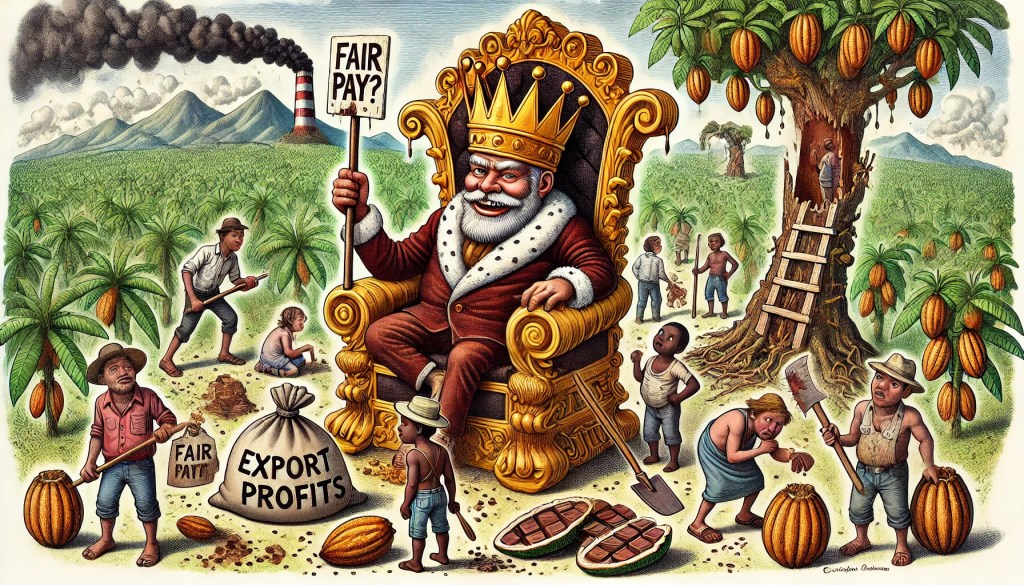
BENEATH the fertile soil of Davao’s vast chocolate plantations lies a bitter truth. While the Department of Agriculture-Davao Region (DA-Davao) proudly proclaims that Davao churns out 80% of the Philippines’ cacao, this sweet success masks a less palatable reality: economic instability, environmental concerns, and farmers fighting silent battles to keep their livelihoods alive.
The Davao Region’s dominance in cacao production is indisputable. Stretching across fertile lands bathed in the golden promise of regular rainfall, the region produces 8,000 of the 10,759 metric tons of cacao grown in the entire country. Such dominance has earned it the enviable title of the “Cacao Capital of the Philippines”. But for every ton of cacao produced, for every peso of export potential realized, there lies an intricate web of consequences—both seen and unseen—that demands careful scrutiny.
ECONOMIC: A Cacao Paradox
On paper, the economic benefits are compelling. With export markets beckoning, Davao’s cacao industry feeds a growing demand for premium chocolate. Smallholder farmers, processors, exporters, and traders form a thriving economic ecosystem, supporting employment and contributing to national GDP. Indeed, the global demand for cacao, estimated to hit over $14 billion in 2027, places Davao at the forefront of a potentially lucrative trade.
But therein lies the paradox. Despite its dominance, farmers remain trapped in poverty. Yields hover at a dismal 0.5 to 0.8 kilograms per tree—far from the desired 2.5 kilograms. The international cacao market is unforgiving; price volatility forces farmers to teeter on the edge of financial ruin. As the likes of multinational companies reap windfalls from high-priced chocolate products, the very hands that grow cacao—smallholders, tenants, and aging farmers—barely earn enough to survive. Cacao farming, for many, is no golden ticket but rather a cycle of toil, debt, and diminishing hope.
SOCIAL: The Silent Struggles of the Forgotten
Cacao is both a livelihood and a legacy in Davao. Smallholder farmers cultivate their fields as did their forebears, yet poverty’s grip tightens with each passing season. The aging farming population reflects a broader crisis: younger generations shun the grueling, uncertain life of cacao cultivation for urban opportunities. The void they leave behind weakens the industry’s future.
Women, too, play an often invisible yet critical role in cacao farming. They labor in post-harvest processing—fermentation, drying, sorting—tasks vital to cacao quality but rarely compensated fairly. Indigenous communities, stewards of ancestral lands, are sidelined as commercial interests encroach upon territories traditionally held sacred.
Yes, cacao can reduce poverty and spur community development—but only if systemic inequalities are addressed. Without equitable distribution of resources, training, and market access, the industry risks perpetuating rural marginalization under the guise of progress.
ENVIRONMENTAL: The Unseen Cost of Sweetness
Davao’s fertile lands make it a natural cradle for cacao, yet this blessing risks becoming a curse. Cacao farming, driven by commercial demand, contributes to deforestation. Farmers, lured by quick profits, often clear vast tracts of forest instead of adopting sustainable agroforestry systems. The result? Irreplaceable biodiversity loss and weakened ecosystems.
Pesticides and chemical fertilizers compound the damage. Organochlorines, remnants of outdated farming practices, seep into water systems, endangering aquatic life and human health. Climate change looms as the industry’s silent adversary; irregular rainfall and rising temperatures threaten Davao’s so-called “perfect” conditions for cacao. Without sustainability measures, this environmental destruction will outpace any economic gains, leaving a scarred landscape where once the sweet promise of cacao thrived.
POLITICAL: Policy at the Crossroads
The government has been quick to brand Davao’s cacao dominance as a success story—a beacon for regional development. Programs by the Department of Agriculture (DA) and the Department of Trade and Industry (DTI) offer financial support, training, and market linkages. Yet the implementation often falls short of addressing cacao farmers’ long-term needs.
The lack of consistent monitoring, limited access to quality planting materials, and inadequate post-harvest facilities expose gaps in policy. Political will must evolve beyond rhetoric. Regional development plans should prioritize infrastructure—roads, transportation, processing hubs—that bring cacao farmers closer to markets. Trade negotiations must secure better terms for Filipino cacao on the global stage. For Davao to realize its full potential, governance must shift from short-term productivity targets to long-term sustainability.
TECHNOLOGY: A Double-Edged Sword
Technology holds the key to transforming Davao’s cacao industry. Precision agriculture, high-yield cacao clones, and digital marketing platforms can elevate productivity and market access. Innovations in post-harvest processing—fermentation and drying techniques—could improve the value of Davao’s cacao beans, attracting premium buyers.
Yet challenges remain. The upfront cost of technology is prohibitive for many smallholder farmers. Without proper training, technological adoption risks further widening the gap between well-resourced commercial growers and struggling farmers. The promise of innovation must be inclusive, ensuring that no farmer is left behind in this march toward modernity.
THE SWEET SPOT: BALANCING PROMISE AND PERIL
Davao’s cacao dominance is a narrative of both triumph and peril. On one hand, it positions the Philippines as a rising player in the global cacao trade; on the other, it exposes deep economic, environmental, and social fissures that cannot be ignored.
To maximize the promise of cacao while mitigating its risks, a multi-pronged strategy must emerge:
- Sustainability First: Prioritize agroforestry systems and sustainable farming practices to protect Davao’s environment for future generations.
- Empower Smallholder Farmers: Address poverty through fair trade practices, access to financing, and consistent technical support.
- Invest in Infrastructure and Innovation: Develop processing facilities, improve transportation networks, and fund accessible, farmer-centered technologies.
- Inclusive Governance: Bridge the gaps between policy, implementation, and farmers’ realities, ensuring equitable resource allocation and long-term support.
Davao, with its cacao-covered hills, stands at a crossroads. The promise of prosperity is tantalizing, but the price of inaction is steep. If the government, industry players, and communities fail to strike the right balance, the region’s dominance may fade like unsweetened chocolate—leaving a bitter taste of what could have been.
The next time you savor a piece of chocolate, remember this: it carries the sweat of Davao’s farmers, the richness of its soil, and the weight of sacrifices made unseen. Sweet success must not come at a bitter cost. It’s time we demand a future where sustainability and justice are not afterthoughts, but priorities on every plate and in every bite.

- “Forthwith” to Farce: How the Senate is Killing Impeachment—And Why Enrile’s Right (Even If You Can’t Trust Him)
- “HINDI AKO NAG-RESIGN!”

- “I’m calling you from my new Globe SIM. Send load!”

- “Mahiya Naman Kayo!” Marcos’ Anti-Corruption Vow Faces a Flood of Doubt

- “Meow, I’m calling you from my new Globe SIM!”

- “No Special Jail for Crooks!” Boying Remulla Slams VIP Perks for Flood Scammers

- “PLUNDER IS OVERRATED”? TRY AGAIN — IT’S A CALCULATED KILL SHOT

- “Several Lifetimes,” Said Fajardo — Translation: “I’m Not Spending Even One More Day on This Circus”

- “Shimenet”: The Term That Broke the Internet and the Budget

- “We Did Not Yield”: Marcos’s Stand and the Soul of Filipino Sovereignty

- “We Gather Light to Scatter”: A Tribute to Edgardo Bautista Espiritu

- $150M for Kaufman to Spin a Sinking Narrative



 KWEBA ni BAROK
Leave a comment