By Louis ‘Barok‘ C. Biraogo — December 20, 2024
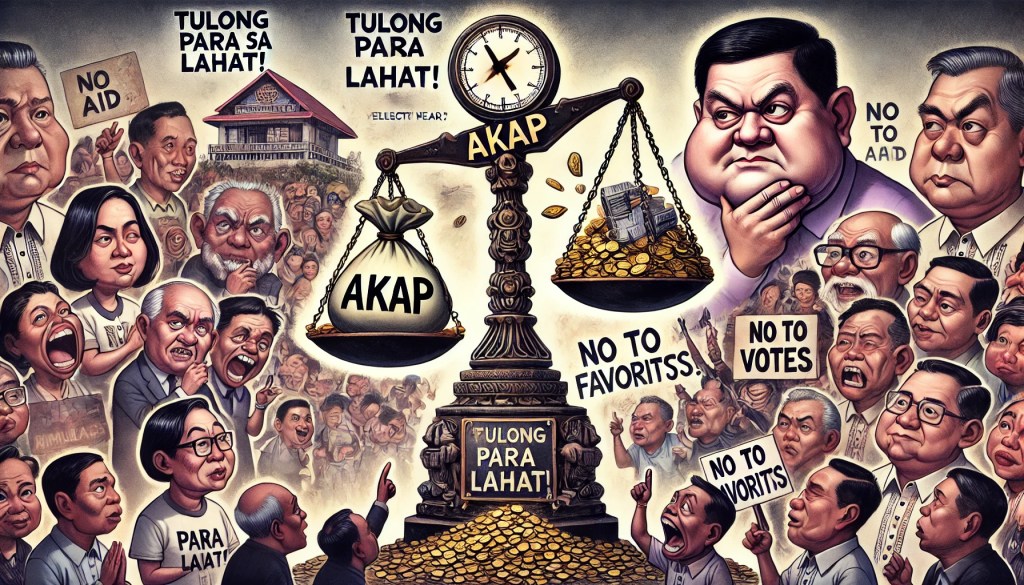
WHAT if a single decision could mean the difference between survival and surrender for millions of Filipinos? When the Bicameral Conference Committee reinstated funding for the Ayuda sa Kapos ang Kita Program (AKAP), it raised questions far deeper than budgets. Is this a beacon of hope or a cunning political ploy? The truth lies somewhere in the murky intersection of compassion, ambition, and a system straining at its seams.
AKAP, a cash assistance program targeting minimum wage earners, reappears on the national stage at a critical juncture. Inflation bites harder into household budgets, leaving even middle-class families teetering. The justification is clear: provide a safety net for those hovering above poverty but perilously close to falling in. But beneath this ostensibly noble intent lies a tangled web of doubts and critiques.
The Political Undertones
First, consider the timing. With elections on the horizon, critics argue that AKAP’s reinstatement is less about alleviating economic pain and more about political mileage. Opposition voices decry it as a thinly veiled vote-buying mechanism. Indeed, the program’s initial exclusion from the executive branch’s budget—and its phoenix-like rise through legislative maneuvering—raises eyebrows.
Moreover, the familial rift between Speaker Martin Romualdez, the program’s champion, and Senator Imee Marcos, a staunch critic, underscores a broader narrative: political rivalry can shape public policy as much as economic necessity. If AKAP is to escape the shadow of partisanship, it must prove its worth through measurable impact and unimpeachable integrity.
The AKAP Program’s Design: A Balancing Act of Accountability and Effectiveness
AKAP’s design includes laudable mechanisms: strict eligibility criteria, a dual distribution strategy involving the Department of Social Welfare and Development (DSWD) and local government units (LGUs), and required audits. Beneficiaries—minimum wage earners, informal workers, and the “near poor”—are identified through meticulous documentation. But these layers of bureaucracy may be AKAP’s Achilles’ heel.
Distribution hinges on social worker assessments and inter-agency coordination, which, in the Philippines, often translate to delays and inefficiencies. Moreover, the risk of political interference looms large. Memorandums of agreement with LGUs, while intended to clarify fund usage, could open doors to favoritism.
Transparency is the linchpin. Public disclosure of beneficiaries and independent oversight must become non-negotiable to stave off corruption. Yet, even the most robust frameworks can falter without sufficient political will—a commodity often in short supply.
Challenges and Concerns: A Broader Critique of the AKAP Program
Even as AKAP promises to shield vulnerable Filipinos from inflation’s worst effects, its broader efficacy is in question. Cash assistance, while immediately helpful, is no substitute for systemic solutions to poverty. Skeptics highlight the stark trade-offs: funding AKAP while slashing budgets for education, healthcare, and other long-term investments feels like plugging leaks in a dam while ignoring its crumbling foundation.
The program’s narrow focus on minimum wage earners also raises equity concerns. What of the chronically unemployed or those in rural areas where wages fall below urban standards? Critics argue AKAP’s targeting, while clear on paper, may miss the mark in practice.
The Path to Sustainability: Recommendations and Implication
To transform AKAP into a genuine force for good, several steps are essential:
- Independent Audits and Public Scrutiny: Enlist the Commission on Audit or third-party watchdogs to oversee fund allocation. Transparency platforms enabling citizens to track disbursements can deter misuse.
- Inclusive Design: Expand eligibility criteria to cover ultra-poor households and integrate AKAP into broader poverty alleviation frameworks, including skills training and job creation.
- Performance-Based Funding: Tie future allocations to measurable outcomes—number of beneficiaries, impact on economic resilience, and success in reducing poverty thresholds.
- Local Partnerships: Empower LGUs while enforcing strict accountability through agreements that mandate transparent reporting.
- Public Awareness: Launch campaigns to educate citizens on the program’s objectives, reducing susceptibility to political manipulation.
The Road Ahead
The story of AKAP is not merely about pesos and policies; it is a litmus test for the Philippine government’s commitment to its people. Will the program rise above its controversies to become a beacon of hope, or will it succumb to the pitfalls of politicking and inefficiency?
The stakes are immense. For millions of Filipinos, AKAP represents more than cash aid—it’s a lifeline in turbulent times. The question is whether the government can summon the courage, integrity, and vision to make it so. For now, the jury is out, and the clock is ticking.

- ₱75 Million Heist: Cops Gone Full Bandit

- ₱6.7-Trillion Temptation: The Great Pork Zombie Revival and the “Collegial” Vote-Buying Circus

- ₱1.9 Billion for 382 Units and a Rooftop Pool: Poverty Solved, Next Problem Please

- ₱1.35 Trillion for Education: Bigger Budget, Same Old Thieves’ Banquet

- ₱1 Billion Congressional Seat? Sorry, Sold Out Na Raw — Si Bello Raw Ang Hindi Bumili

- “We Will Take Care of It”: Bersamin’s P52-Billion Love Letter to Corruption

- “Skewed Narrative”? More Like Skewered Taxpayers!

- “Scared to Sign Vouchers” Is Now Official GDP Policy – Welcome to the Philippines’ Permanent Paralysis Economy

- “Robbed by Restitution?” Curlee Discaya’s Tears Over Returning What He Never Earned

- “My Brother the President Is a Junkie”: A Marcos Family Reunion Special

- “Mapipilitan Akong Gawing Zero”: The Day Senator Rodante Marcoleta Confessed to Perjury on National Television and Thought We’d Clap for the Creativity

- “Just Following Orders” Is Dead: How the Hague Just Turned Tokhang’s Finest Into International Fugitives






 KWEBA ni BAROK
Leave a comment