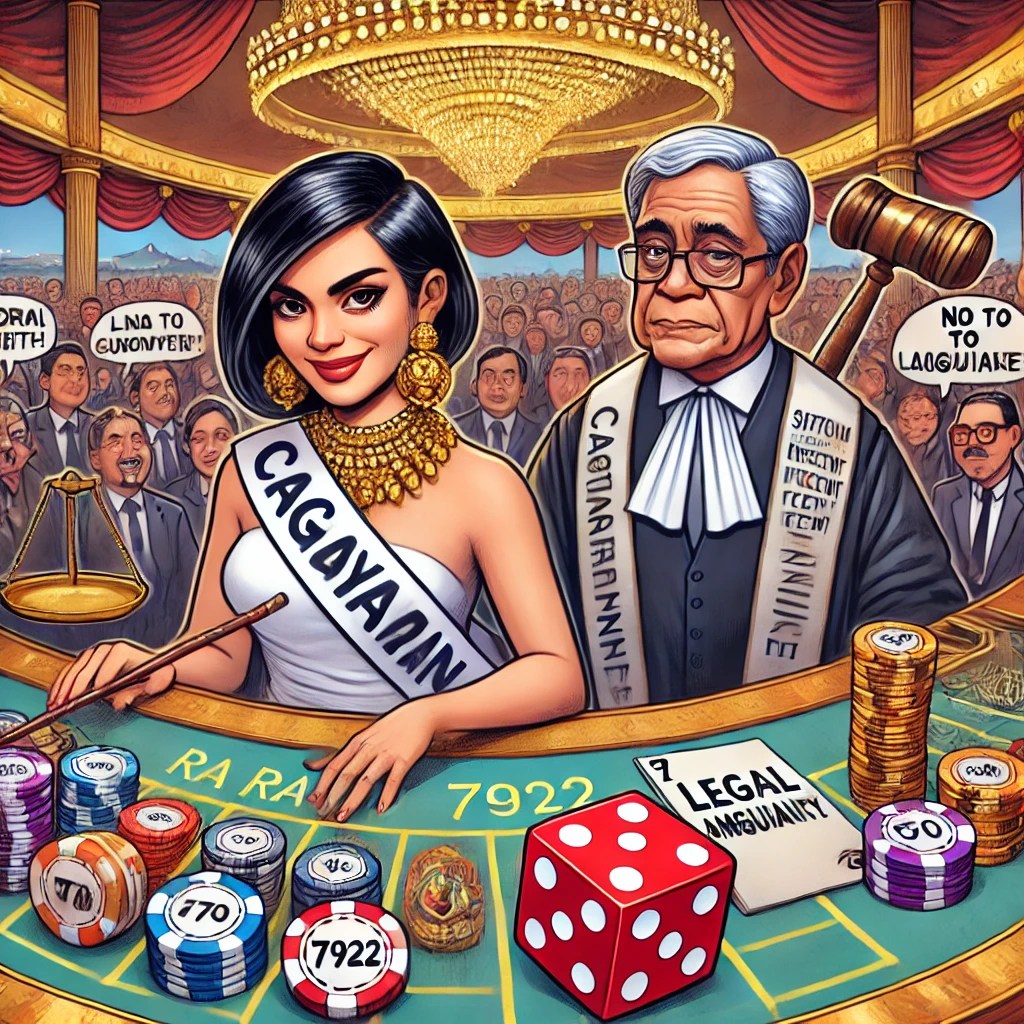
By Louis ‘Barok‘ C. Biraogo — January 3, 2025
DEFYING the President’s mandate, the Cagayan Economic Zone Authority (Ceza) boldly claims immunity from Executive Order No. 74’s sweeping ban on Philippine Offshore Gaming Operators (Pogos). At the heart of this audacious stance lies a legal labyrinth carved by Republic Act No. 7922. But does Ceza’s claim hold water—or is it gambling with the law? This analysis unpacks the stakes for the iGaming industry and beyond.
Ceza’s Argument for Exemption
Ceza’s administrator, Katrina Ponce Enrile, emphasizes that its licensees:
- Operate outside the Philippines and are prohibited from soliciting bets domestically.
- Function as service providers, distinct from Pogos that accept bets.
- Operate under RA 7922, granting Ceza the authority to independently regulate gaming within its zone.
Enrile further highlighted Ceza’s clean record, free of crimes like human trafficking or scams, which have marred Pogo operations. This, she argues, demonstrates Ceza’s responsible oversight and distinguishes its operations from those under the Philippine Amusement and Gaming Corporation (Pagcor).
The Legal Foundation: Understanding the Laws Behind Ceza’s Exemption Claim
Executive Order No. 74
EO 74, issued in November 2024, mandates a total ban on Pogo operations within the Philippines. It applies broadly to online gaming entities without explicitly distinguishing between Pagcor-regulated Pogos and Ceza’s licensees.
Republic Act No. 7922
RA 7922, enacted in 1995, empowers Ceza to regulate economic activities, including gambling, within the Cagayan Special Economic Zone and Freeport. This law provides Ceza with autonomy from Pagcor and other regulatory bodies.
Points of Conflict
- Scope of EO 74: While EO 74 targets Pogos, its application to Ceza’s licensees hinges on whether iGaming entities operating outside Philippine territory are included.
- Legislative vs. Executive Power: RA 7922 is a legislative act, while EO 74 is an executive directive. The dispute raises questions about whether an executive order can override a statute.
- Due Process: Ceza’s claim of being unfairly included in EO 74’s ambit, despite its operational distinctions, raises due process concerns.
Relevant Supreme Court Precedents
The Philippine Supreme Court has consistently upheld:
- Presidential Control: As chief executive, the President exercises control over all executive agencies, including Ceza. (See David v. Macapagal-Arroyo, G.R. No. 171396, May 3, 2006).
- Statutory Primacy: An executive order cannot amend or supersede a legislative act unless expressly authorized by law. (See Benzon v. Secretary of Justice, G.R. No. 168785, June 27, 2006).
These precedents indicate that while the President’s authority is broad, it is not absolute, especially when legislative powers are involved.
Ceza’s Exemption: A Clash of Legal Perspectives
In Favor of Exemption:
- Legislative Mandate: RA 7922 grants Ceza independent regulatory authority.
- Distinct Operations: Ceza’s licensees differ fundamentally from Pogos in scope and operational nature.
- Economic Benefits: Exempting Ceza could attract foreign investment and maintain jobs within the economic zone.
Against Exemption:
- Unified Ban: The government argues that EO 74’s broad scope applies to all forms of online gaming, regardless of licensing framework.
- Presidential Control: As an executive agency, Ceza is subject to directives from the President.
- Potential Loopholes: Granting exemptions could undermine the government’s crackdown on illicit activities linked to online gaming.
A Legal and Economic Crossroads: The Implications of Ceza’s Exemption Dispute
- Separation of Powers: The case underscores the tension between executive orders and legislative acts, potentially setting a precedent for future conflicts.
- Regulatory Clarity: A ruling in Ceza’s favor could spur calls for clearer legislation on the regulation of online gaming.
- Economic Impact: The outcome could either bolster Ceza’s role in the iGaming sector or lead to the sector’s decline in the Philippines, with significant implications for jobs and revenue.
Recommendations
For Ceza
- Legal Compliance: Ensure alignment with EO 74 while seeking judicial clarification on the scope of RA 7922.
- Enhanced Transparency: Publicly share data on its licensees’ operations to distinguish them from Pogos and demonstrate adherence to lawful practices.
- Engage Stakeholders: Work with government agencies to co-develop a regulatory framework that safeguards Ceza’s operational independence while addressing national concerns.
For the Government
- Clarify EO 74’s Scope: Issue explicit guidelines to resolve ambiguities about the application of the ban in economic zones.
- Engage Ceza Constructively: Collaborate with Ceza to identify mechanisms that prevent misuse of its gaming licenses while supporting its economic mandate.
- Strengthen Oversight: Establish clear checks and balances to regulate gaming operations effectively across all jurisdictions.
For Filipinos
- Advocate for Transparency: Demand accountability from both Ceza and the government to ensure that public interest is prioritized.
- Promote Economic Balance: Support initiatives that foster economic growth while safeguarding against social risks linked to gaming operations.
- Stay Informed: Follow developments in this legal battle to understand its implications for the economy, governance, and law enforcement.
Conclusion
The Ceza-EO 74 dispute encapsulates broader issues in governance, regulation, and economic policy. While Ceza makes a compelling case for its exemption based on operational distinctions and its legislative mandate, the government’s stance highlights the importance of uniform enforcement to curb criminal activities.
The outcome of this battle will ripple far beyond Ceza and the iGaming industry, redefining the boundaries of executive power and legislative authority in the Philippines. As the legal dust settles, one thing is clear: the stakes extend to every corner of policy, law, and business, shaping the nation’s governance for years to come.

- ₱75 Million Heist: Cops Gone Full Bandit

- ₱6.7-Trillion Temptation: The Great Pork Zombie Revival and the “Collegial” Vote-Buying Circus

- ₱1.9 Billion for 382 Units and a Rooftop Pool: Poverty Solved, Next Problem Please

- ₱1.35 Trillion for Education: Bigger Budget, Same Old Thieves’ Banquet

- ₱1 Billion Congressional Seat? Sorry, Sold Out Na Raw — Si Bello Raw Ang Hindi Bumili

- “We Will Take Care of It”: Bersamin’s P52-Billion Love Letter to Corruption

- “Skewed Narrative”? More Like Skewered Taxpayers!

- “Scared to Sign Vouchers” Is Now Official GDP Policy – Welcome to the Philippines’ Permanent Paralysis Economy
- “Robbed by Restitution?” Curlee Discaya’s Tears Over Returning What He Never Earned

- “No Pressure” Luistro? The House Pork Bazaar Exposed
- “My Brother the President Is a Junkie”: A Marcos Family Reunion Special

- “Mapipilitan Akong Gawing Zero”: The Day Senator Rodante Marcoleta Confessed to Perjury on National Television and Thought We’d Clap for the Creativity


 KWEBA ni BAROK
Leave a comment