By Louis ‘Barok‘ C. Biraogo — January 4, 2025
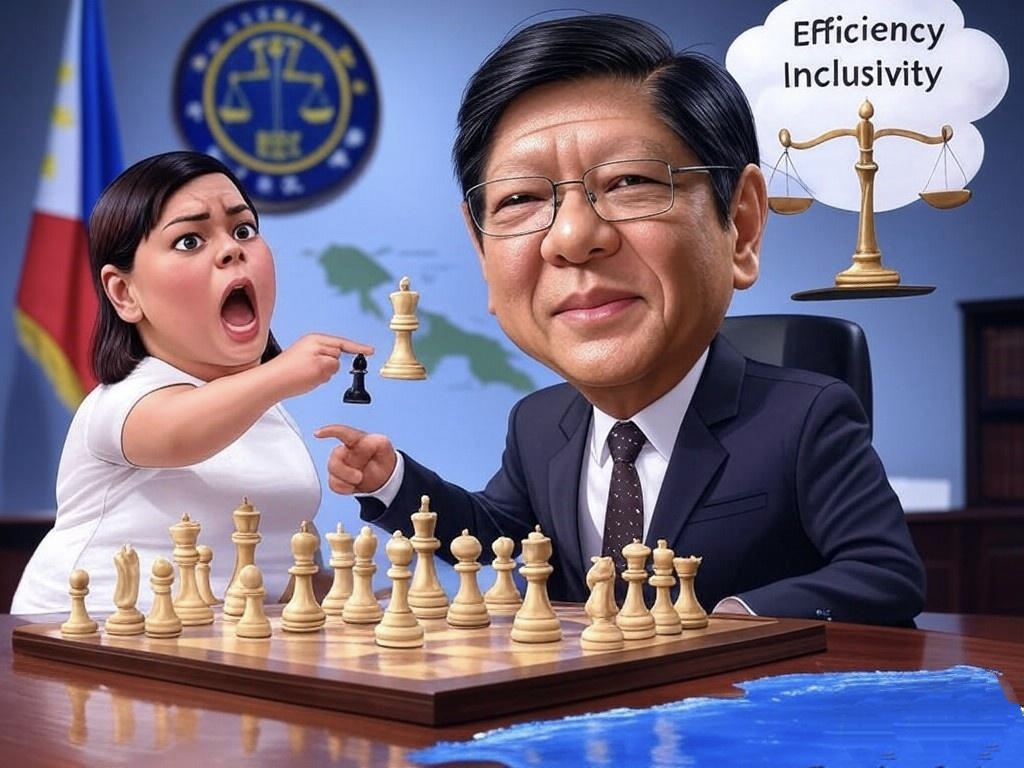
WITH a sweeping reorganization of the National Security Council (NSC), President Ferdinand ‘Bongbong’ Marcos Jr. has stirred the pot of Philippine politics. The exclusion of the Vice President and former presidents from the council raises eyebrows—and alarm bells. Is this a move toward a more focused NSC, or does it risk further polarizing an already fractured political landscape?
The NSC in Perspective: Its Role and Evolution in the Context of Philippine Politics
Since its establishment in 1950, the NSC has been the Philippines’ primary body for deliberating and coordinating national security policies. Traditionally, its composition has reflected a blend of continuity, inclusivity, and expertise, with members ranging from the President to key legislative leaders, Cabinet officials, and even former presidents. Including past presidents and the Vice President symbolized the NSC’s broader role as a unifying force above partisan politics, drawing on diverse perspectives to address national security challenges.
Marcos’s reorganization, encapsulated in Executive Order No. 81, discards this tradition, prioritizing what he describes as a “resilient and focused” council. The exclusion of Vice President Sara Duterte and past presidents has reignited debates about the balance between efficiency and inclusivity in national security governance.
The NSC Debate: A Clash of Perspectives on the Role of the Vice President and Past Presidents
Inclusion as a Bridge
Supporters of the traditional NSC structure argue that figures like the Vice President and past presidents bring invaluable experience and continuity to the council. The Vice President, constitutionally the successor to the President, plays a pivotal role in ensuring stability during crises. Similarly, former presidents offer institutional memory and insights from their tenure, providing a broader context for decisions. Their exclusion, critics warn, risks narrowing the range of perspectives on critical issues.
Exclusion as Strategy
On the other hand, the administration defends the move as a step toward streamlining the NSC. Critics of inclusion argue that figures like the Vice President, especially in politically charged climates, may serve as potential sources of discord rather than cohesion. The exclusion of Sara Duterte—against the backdrop of her incendiary remarks and growing impeachment woes—could be framed as prioritizing stability over political theater.
The Philippines on the World Stage: A Geopolitical Analysis of Marcos’s NSC Reorganization
The reorganization also has implications for the Philippines’ foreign policy, particularly its delicate balancing act between the United States and China. Historically, the Duterte administration leaned toward China, a stance that drew sharp criticism. By removing Sara Duterte, daughter of former President Rodrigo Duterte, Marcos may be signaling a subtle recalibration of this approach.
China’s assertiveness in the South China Sea remains a cornerstone of Philippine security concerns, and Marcos’s recent moves suggest a desire to strengthen alliances with the West while navigating the complexities of regional power dynamics. The streamlined NSC could reflect a shift in priorities, focusing on military modernization and partnerships rather than the conciliatory stance associated with the Dutertes.
The Political Maneuvering: Marcos’s NSC Reorganization and its Potential Consequences for Philippine Politics
Domestically, the reorganization has profound ramifications. Marcos’s consolidation of power within the NSC is a masterstroke of political strategy, effectively sidelining rivals like Duterte and reasserting his dominance over the national security agenda. The timing—on the cusp of the midterm elections—underscores its political undertones. By reshaping the NSC’s membership, Marcos not only consolidates authority but also signals to the electorate that his administration prioritizes governance over political infighting.
However, this gambit is not without risks. Critics have framed the move as undemocratic, potentially alienating segments of the electorate who view the Vice President’s exclusion as undermining institutional checks and balances. For a nation still grappling with the legacy of authoritarianism, this perception could reverberate into the 2028 presidential race.
2. The Political Legacy: Marcos’s NSC Reorganization and its Potential Consequences for Philippine Politics
Looking ahead, the reorganization could redefine the dynamics of Philippine governance. By centralizing decision-making power within the NSC, Marcos strengthens the presidency but at the potential cost of institutional inclusivity. If successful, this move could serve as a model for future administrations, emphasizing streamlined governance over traditional norms of representation.
However, the long-term consequences depend on the outcomes of this reorganization. If it enhances the NSC’s efficiency in addressing pressing security challenges—such as terrorism, cyberattacks, and regional tensions—it could validate Marcos’s approach. If it exacerbates political divisions or undermines public trust, it may haunt his presidency and reshape the nation’s democratic trajectory.
Conclusion
Marcos’s decision to reorganize the NSC represents a high-stakes gamble that intertwines national security with political strategy. It is a move as much about consolidating power as it is about addressing evolving security threats. In a nation where politics and governance are inseparable, the implications of this decision will ripple far beyond the NSC’s walls, shaping the Philippines’ domestic and geopolitical future in ways both predictable and unforeseen.
As the world watches, history begins to write its verdict.
- ₱75 Million Heist: Cops Gone Full Bandit

- ₱6.7-Trillion Temptation: The Great Pork Zombie Revival and the “Collegial” Vote-Buying Circus

- ₱1.9 Billion for 382 Units and a Rooftop Pool: Poverty Solved, Next Problem Please

- ₱1.35 Trillion for Education: Bigger Budget, Same Old Thieves’ Banquet
- ₱1 Billion Congressional Seat? Sorry, Sold Out Na Raw — Si Bello Raw Ang Hindi Bumili

- “We Will Take Care of It”: Bersamin’s P52-Billion Love Letter to Corruption

- “Skewed Narrative”? More Like Skewered Taxpayers!

- “Scared to Sign Vouchers” Is Now Official GDP Policy – Welcome to the Philippines’ Permanent Paralysis Economy
- “Robbed by Restitution?” Curlee Discaya’s Tears Over Returning What He Never Earned

- “No Pressure” Luistro? The House Pork Bazaar Exposed
- “My Brother the President Is a Junkie”: A Marcos Family Reunion Special

- “Mapipilitan Akong Gawing Zero”: The Day Senator Rodante Marcoleta Confessed to Perjury on National Television and Thought We’d Clap for the Creativity


 KWEBA ni BAROK
Leave a comment