By Louis ‘Barok‘ C. Biraogo — January 7, 2025
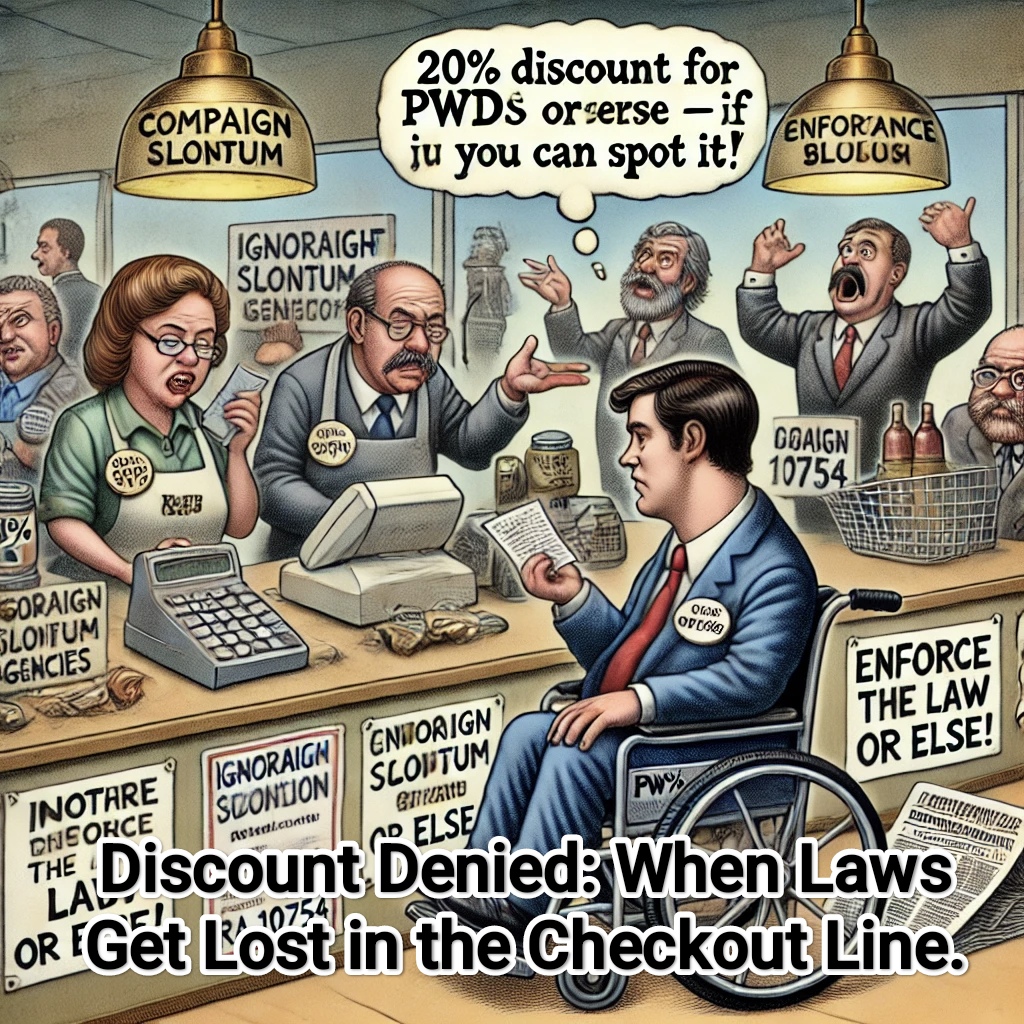
BENEATH the promise of discounts and exemptions lies a hard truth: many Persons with Disabilities (PWDs) are still fighting for their rights at checkout counters. As former Senator Kiko Pangilinan and House Speaker Martin Romualdez push for stricter enforcement, the spotlight turns to a law that seems better on paper than in practice. This analysis unravels the legal, logistical, and ethical threads of an issue that demands urgent attention.
The Call for Compliance: Dissecting Pangilinan’s Statement on Enforcing the 20% Discount for PWDs
Legal Provisions Cited
Pangilinan’s focus on Rule IV, Section 6 of the Implementing Rules and Regulations (IRR) of Republic Act No. 10754 underscores the legal obligation of establishments to display visible signage informing PWDs of their entitlement to a 20% discount and VAT exemption. This provision is aimed at ensuring accessibility and awareness.
Key Arguments and Implications
Pangilinan argues that non-compliance with signage requirements hinders PWDs from fully realizing their rights under the law. His call to penalize violators highlights the need for accountability and robust enforcement mechanisms. If implemented effectively, stricter enforcement could:
- Improve PWD access to financial relief, especially critical amidst rising prices.
- Signal to businesses the importance of legal compliance, fostering a culture of inclusivity.
However, heightened enforcement may impose additional costs on small and medium enterprises, necessitating a balanced approach that considers both the rights of PWDs and the operational realities of businesses.
Romualdez’s Proactive Approach: The House Speaker’s Prior Call for Legislative Action and Investigation
Romualdez’s directive for a motu proprio investigation by the House of Representatives, issued prior to the recent controversy, signals legislative intent to address widespread non-compliance. This move has significant implications:
- Legislative Oversight: Enhancing the monitoring of the law’s implementation.
- Public Accountability: Raising awareness of PWD rights and holding businesses accountable.
- Policy Reforms: Identifying gaps in existing enforcement mechanisms and recommending improvements.
The investigation could lead to clearer guidelines and stronger penalties, thereby deterring violations and ensuring better protection for PWDs.
Legal Framework Governing the Discount
Key Provisions of RA 10754
- Discounts and Exemptions: PWDs are entitled to a 20% discount and VAT exemption on specified goods and services.
- Signage Requirement: Establishments must display notices informing PWDs of their entitlements.
Relevant Implementing Rules and Regulations (IRR)
- Rule IV, Section 6: Mandates the placement of signages in conspicuous areas.
- Rule III: Outlines roles of agencies like the Department of Social Welfare and Development (DSWD) and the National Council on Disability Affairs (NCDA) in enforcement.
Relevant Supreme Court Precedents
- Valmonte v. Belmonte emphasizes the right to information, applicable to ensuring PWDs are informed of their benefits.
- People v. Sandiganbayan holds public officials accountable for neglect of duty, relevant to non-compliance by agencies.
The Enforcement Gap: Analyzing the Challenges Facing the Implementation of the Discount Law
- Compliance Issues
- Lack of Awareness: Many businesses are unaware of the signage requirement or deliberately ignore it.
- Costs of Compliance: Smaller establishments may find the installation of signages burdensome.
- Weak Enforcement Mechanisms
- Agencies like the NCDA and DSWD may lack the resources and capacity to ensure widespread compliance.
- Ineffective inter-agency collaboration.
- Local government units (LGUs) are often inconsistent in enforcing the law.
- Insufficient Penalties for Non-Compliance
- Fines: PHP 50,000–200,000.
- Imprisonment: 6 months to 6 years.
- Revocation of business permits.
- While penalties exist, their deterrent effect is limited by weak enforcement, highlighting the need for consistent action.
- Fines: PHP 50,000–200,000.
- Agency Responsibility and Accountability
- Non-Compliance by Agencies: Neglect of duty by agencies like DSWD and NCDA undermines the law’s implementation.
- Repercussions: Agencies may face administrative or legal sanctions under the Code of Conduct and Ethical Standards for Public Officials and Employees.
- Non-Compliance by Agencies: Neglect of duty by agencies like DSWD and NCDA undermines the law’s implementation.
- Barriers to Filing Complaints
- PWDs may face logistical challenges, including lack of documentation, unclear processes, or fear of retaliation.
The Path to Compliance: Exploring Strategies for Improving Enforcement of the Discount Laws
Simplifying Complaint Filing
- Streamlined Processes: Create standardized complaint forms and online portals for filing grievances.
- Awareness Campaigns: Inform PWDs about their rights and how to report violations.
Strengthening Enforcement Mechanisms
- Inter-Agency Coordination: Foster collaboration between the DSWD, NCDA, and LGUs for consistent enforcement.
- Capacity Building: Allocate resources for training enforcement personnel and monitoring compliance.
Public Awareness Campaigns
- Outreach Programs: Launch campaigns targeting both PWDs and businesses, emphasizing the importance of compliance.
- Educational Materials: Develop accessible materials explaining the law and its benefits.
The Enforcement Conundrum: Examining the Arguments for and Against Stricter Implementation of the Discount Laws
Arguments for Stricter Enforcement
- Protects vulnerable populations by ensuring access to discounts and exemptions.
- Promotes inclusivity and equality.
- Establishes accountability among businesses and government agencies.
Potential Drawbacks
- Financial burden on small businesses.
- Businesses may pass on costs to consumers through price adjustments.
- Risk of bureaucratic inefficiencies in enforcement.
Recommendations
- For Government Agencies:
- Enhance training for personnel involved in monitoring compliance.
- Increase funding for enforcement activities.
- For Businesses:
- Provide clear guidelines and conduct workshops to educate business owners about their obligations.
- Incentivize compliance through tax benefits or public recognition.
- For Congress:
- Amend RA 10754 to streamline enforcement provisions and enhance penalties for repeated violations.
- Establish a centralized body to oversee implementation and monitor compliance.
- For Civil Society:
- Advocate for stronger enforcement and provide support for filing complaints.
- Collaborate with government agencies to conduct public awareness campaigns.
Conclusion
Ensuring the 20% discount and VAT exemption for PWDs and seniors isn’t just about compliance—it’s about dignity and equality. Stricter enforcement, smarter mechanisms, and collective action are the keys to turning legal promises into lived realities. The time to act is now because no law should leave the people it’s meant to protect waiting in line for justice.

- “Forthwith” to Farce: How the Senate is Killing Impeachment—And Why Enrile’s Right (Even If You Can’t Trust Him)

- “HINDI AKO NAG-RESIGN!”

- “I’m calling you from my new Globe SIM. Send load!”

- “Mahiya Naman Kayo!” Marcos’ Anti-Corruption Vow Faces a Flood of Doubt

- “Meow, I’m calling you from my new Globe SIM!”

- “No Special Jail for Crooks!” Boying Remulla Slams VIP Perks for Flood Scammers

- “PLUNDER IS OVERRATED”? TRY AGAIN — IT’S A CALCULATED KILL SHOT

- “Several Lifetimes,” Said Fajardo — Translation: “I’m Not Spending Even One More Day on This Circus”

- “Shimenet”: The Term That Broke the Internet and the Budget

- “We Did Not Yield”: Marcos’s Stand and the Soul of Filipino Sovereignty

- “We Gather Light to Scatter”: A Tribute to Edgardo Bautista Espiritu

- $150M for Kaufman to Spin a Sinking Narrative




 KWEBA ni BAROK
Leave a comment