By Louis ‘Barok‘ C. Biraogo — January 9, 2025
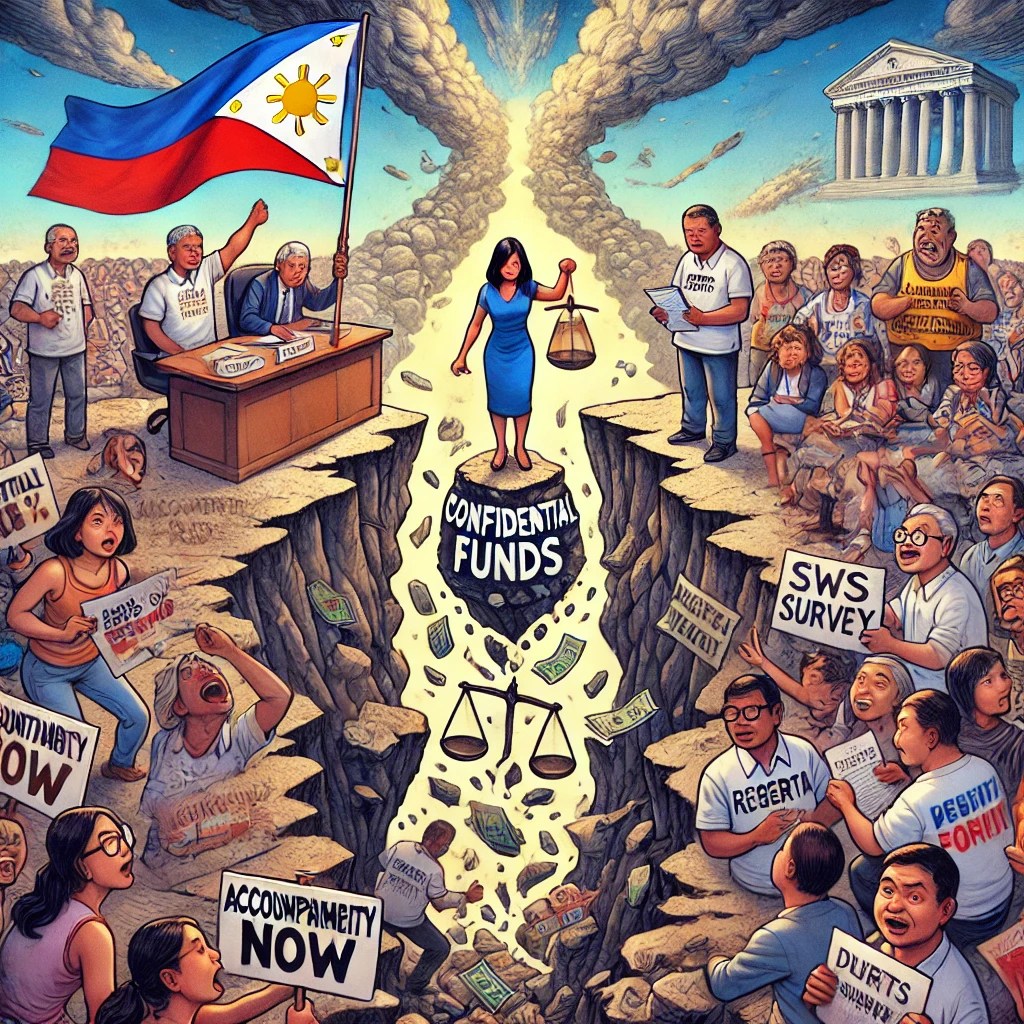
A STORM is brewing in Philippine politics, and its epicenter is Vice President Sara Duterte. The latest Social Weather Stations (SWS) survey shows 41% of Filipinos supporting her impeachment and 35% opposing it—a nation split down the middle. But these numbers tell more than just a story of division; they reveal deep fault lines in regional loyalties, class struggles, and the power struggle between the Duterte and Marcos camps. This analysis unravels the seismic implications of this political moment.
The Duterte Impeachment: Why the Support?
The significant support for VP Duterte’s impeachment reflects growing dissatisfaction, particularly in light of allegations involving misuse of confidential and intelligence funds and other controversies. The survey highlights several key drivers of this sentiment:
- Transparency Concerns: Nearly half (46%) of respondents cited her failure to explain confidential fund spending as their top reason for supporting impeachment. This suggests a burgeoning public demand for accountability, particularly from high-ranking officials.
- Ethical Leadership: Allegations ranging from ill-gotten wealth to extrajudicial killings have created an image problem for Duterte. These issues resonate with a populace increasingly wary of unchecked power and impunity.
- Geopolitical Sensitivities: Criticism of her tepid response to China’s actions in the West Philippine Sea has further alienated some voters, particularly among nationalist-leaning sectors.
Regional Divide: A Fractured Consensus
The regional breakdown of the survey points to a stark divide:
- Balance Luzon (50%) and NCR (45%): These areas show strong support for impeachment, likely reflecting urban and middle-class frustration with governance issues.
- Mindanao (22%): Duterte’s home region remains her stronghold, with 56% opposing impeachment. This underscores the enduring loyalty of her base, likely tied to regional pride and a sense of political identity.
- Visayas (40%): Falling between the extremes, this region represents a swing demographic that could shift depending on how the impeachment narrative unfolds.
The regional disparities highlight the fragmented nature of Philippine politics, where allegiances are shaped by local contexts as much as national issues.
Socioeconomic Factors: Divergent Realities
Support for impeachment is highest among the ABC socioeconomic class (50%), likely due to greater access to information and higher expectations for governance. Meanwhile, the lower D (41%) and E (37%) classes exhibit more tempered support, possibly reflecting economic pragmatism or limited engagement with national politics. This divergence underscores the challenge of crafting a unified national narrative amid varying levels of political awareness and trust.
Political Impacts of the Impeachment Process
1. Exacerbated Tensions
The impeachment process threatens to deepen the rift between VP Duterte and the Marcos administration. With both camps already locked in a cold war, the trial could escalate into open political warfare, paralyzing governance and fracturing coalitions.
2. Factionalism within the Ruling Party
The ruling coalition, already strained, risks imploding as lawmakers take sides. This could erode party discipline, weaken legislative priorities, and create opportunities for opposition forces to exploit divisions.
3. Unpredictable Outcomes
The impeachment process is fraught with uncertainty:
- Successful Impeachment: Duterte’s removal would consolidate Marcos’ power but could provoke unrest among her Mindanao base.
- Failed Impeachment: A failure would embolden Duterte, weaken Marcos’ authority, and deepen public cynicism toward political institutions.
- Stalemate or Crisis: A drawn-out process could lead to gridlock or even a constitutional crisis, undermining investor confidence and governance stability.
4. New Political Alliances
The impeachment could catalyze the formation of new alliances, as lawmakers and interest groups jockey for position. This realignment could alter the balance of power ahead of the 2028 elections.
5. Emergence of New Leaders
The political turmoil may pave the way for fresh faces to step into the spotlight, offering alternative visions for governance. This presents both a challenge and an opportunity for the nation’s political evolution.
Impact on the 2028 Elections
The impeachment battle will likely polarize the electorate, framing the 2028 elections as a referendum on Duterte’s legacy and the Marcos administration’s governance. This polarization could galvanize both progressives and loyalists, reshaping voter preferences and potentially introducing new political forces into the fray.
Recommendations
- Promote Transparency: Both camps must prioritize transparency and accountability to rebuild public trust.
- Encourage Dialogue: Stakeholders should engage in constructive dialogue to prevent further political fragmentation.
- Protect Institutions: Safeguard democratic institutions from being weaponized for political gain, ensuring the impeachment process adheres strictly to constitutional norms.
- Engage the Public: Strengthen civic education and public engagement to foster informed participation in political processes.
Conclusion: A Nation on the Brink
The SWS survey is more than a barometer of public opinion; it is a reflection of a nation grappling with the legacies of dynastic politics, the challenges of governance, and the aspirations for a better future. As the impeachment process unfolds, the Philippines stands at a crossroads. The decisions made in the coming months will shape not only the fate of Sara Duterte but the trajectory of Philippine democracy itself.

- “Forthwith” to Farce: How the Senate is Killing Impeachment—And Why Enrile’s Right (Even If You Can’t Trust Him)
- “HINDI AKO NAG-RESIGN!”

- “I’m calling you from my new Globe SIM. Send load!”

- “Mahiya Naman Kayo!” Marcos’ Anti-Corruption Vow Faces a Flood of Doubt

- “Meow, I’m calling you from my new Globe SIM!”

- “No Special Jail for Crooks!” Boying Remulla Slams VIP Perks for Flood Scammers

- “PLUNDER IS OVERRATED”? TRY AGAIN — IT’S A CALCULATED KILL SHOT

- “Several Lifetimes,” Said Fajardo — Translation: “I’m Not Spending Even One More Day on This Circus”

- “Shimenet”: The Term That Broke the Internet and the Budget

- “We Did Not Yield”: Marcos’s Stand and the Soul of Filipino Sovereignty

- “We Gather Light to Scatter”: A Tribute to Edgardo Bautista Espiritu

- $150M for Kaufman to Spin a Sinking Narrative


 KWEBA ni BAROK
Leave a comment