By Louis ‘Barok‘ C. Biraogo — January 12, 2025
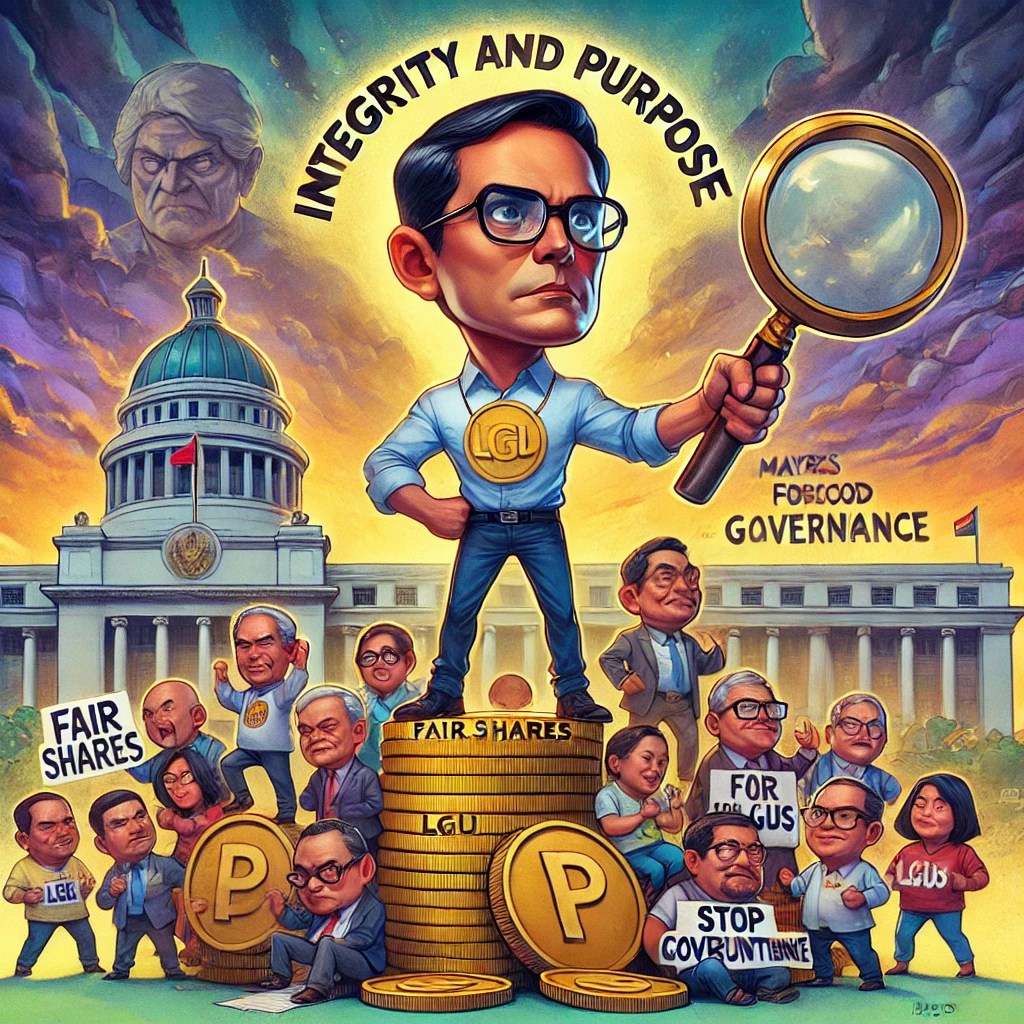
BILLIONS of pesos meant for local government units (LGUs) are still out of reach, despite the Mandanas-Garcia ruling affirming their 40% share of national tax revenues. Baguio City Mayor Benjamin Magalong, a vocal advocate for transparency and accountability, is leading the charge to correct this imbalance through the Mayors for Good Governance (M4GG) movement.
The Discrepancy: Numbers That Don’t Add Up
At the heart of Mayor Magalong’s advocacy is a stark discrepancy. Based on M4GG’s calculations, LGUs are receiving only 31% of their rightful share, a significant shortfall that could amount to billions of pesos annually. This shortfall disproportionately affects smaller, third- to fifth-class municipalities that lack the political clout to secure supplemental congressional funding. For these communities, every peso matters. Roads remain unpaved, classrooms are overcrowded, and basic health services go underfunded. Magalong’s challenge to the Department of Finance (DOF) to provide a clear accounting of these funds is not just a bureaucratic concern—it’s a lifeline for countless underserved Filipinos.
A Proactive Call for Transparency
Magalong’s insistence on dialogue with DOF Secretary Ralph Recto underscores his commitment to transparency. Unlike leaders content with perfunctory answers, he demands clarity on how these allocations are computed. His leadership within M4GG—an alliance of over 100 mayors united against corruption—has galvanized a broader push for accountability. Magalong and his peers are not merely asking for more money; they are asking for fairness, for an assurance that public funds are managed and distributed as the law intends.
Good Governance as a Foundation for Development
Magalong’s advocacy reflects his deeper commitment to good governance, a principle enshrined in M4GG’s manifesto. Ensuring the proper allocation of LGU funds is not just an administrative issue; it’s a cornerstone of democratic governance. When LGUs are adequately funded, they can fulfill their devolved responsibilities—from health services to infrastructure development—paving the way for equitable national growth. By holding the national government accountable, Magalong is also challenging a culture of complacency and corruption that has long plagued the Philippines.
The Context of Debt and Corruption
Magalong’s fight for LGU funding takes place against the backdrop of the Philippines’ ballooning national debt, projected to reach ₱17.35 trillion in 2025. The sheer scale of debt servicing—₱877 billion allocated in the 2025 budget—has constrained the government’s fiscal space, leaving less room for essential services. Yet, as Magalong points out, these fiscal pressures are exacerbated by systemic corruption. Billions that should fund local development are instead siphoned off by unscrupulous officials. His crusade is as much about fair fiscal policies as it is about rooting out the corruption that undermines them.
Leadership Rooted in Principles
Magalong’s principled leadership provides a blueprint for others in public service. By prioritizing transparency, accountability, and citizen welfare, he exemplifies the transformative potential of good governance. His actions remind us that democracy thrives not on lofty rhetoric but on leaders willing to confront inequities head-on. His advocacy also underscores a simple truth: that empowering LGUs empowers communities, and by extension, the nation as a whole.
A National Imperative
Mayor Magalong’s fight for the rightful share of LGUs is not a niche issue—it’s a matter of national significance. When local governments are shortchanged, the people they serve bear the brunt. Conversely, when LGUs are fully funded and transparent, they become engines of growth, innovation, and public trust.
In a time when division often overshadows progress, Mayor Magalong offers a rare glimpse of what is possible when leadership is built on integrity and purpose. His fight for transparency and fairness is more than a political battle—it is a movement that could redefine governance for millions of Filipinos. The stakes are undeniable, but so is the promise of a better future.

- ₱75 Million Heist: Cops Gone Full Bandit

- ₱6.7-Trillion Temptation: The Great Pork Zombie Revival and the “Collegial” Vote-Buying Circus

- ₱1.9 Billion for 382 Units and a Rooftop Pool: Poverty Solved, Next Problem Please

- ₱1.35 Trillion for Education: Bigger Budget, Same Old Thieves’ Banquet

- ₱1 Billion Congressional Seat? Sorry, Sold Out Na Raw — Si Bello Raw Ang Hindi Bumili

- “We Will Take Care of It”: Bersamin’s P52-Billion Love Letter to Corruption

- “Skewed Narrative”? More Like Skewered Taxpayers!

- “Scared to Sign Vouchers” Is Now Official GDP Policy – Welcome to the Philippines’ Permanent Paralysis Economy
- “Robbed by Restitution?” Curlee Discaya’s Tears Over Returning What He Never Earned

- “No Pressure” Luistro? The House Pork Bazaar Exposed
- “My Brother the President Is a Junkie”: A Marcos Family Reunion Special

- “Mapipilitan Akong Gawing Zero”: The Day Senator Rodante Marcoleta Confessed to Perjury on National Television and Thought We’d Clap for the Creativity


 KWEBA ni BAROK
Leave a comment