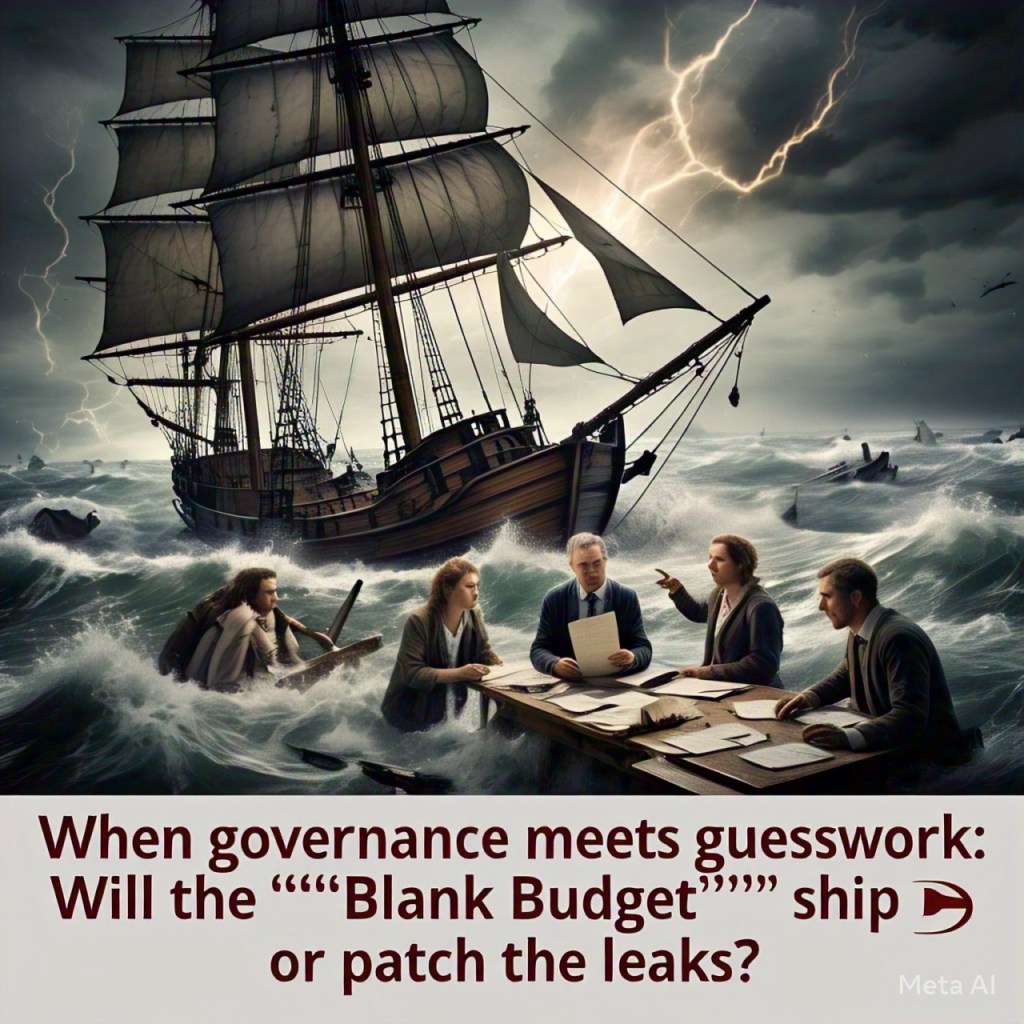
Analyzing the Controversy Surrounding the 2025 Philippine National Budget
By Louis ‘Barok‘ C. Biraogo — January 23, 2025
IS THE 2025 General Appropriations Act a bold step forward or a constitutional crisis waiting to happen? Claims of ‘blank entries’ have ignited a firestorm of debate, challenging the ethical and legal foundations of Philippine governance. Let’s unravel the truth behind this fiscal controversy and what it means for the nation’s future.
The Blank Entry Issue: Analyzing the Key Concerns and Potential Consequences
Allegations by Former President Rodrigo Duterte and Rep. Isidro Ungab
- Core Claim: The bicameral conference committee report and final GAA allegedly contain blank entries, allowing the executive branch to fill in the gaps post-ratification.
- Legal Foundation: Article VI, Section 24 of the Philippine Constitution states that all appropriation bills must originate in the House of Representatives. Allowing blanks undermines this principle, as it may grant the executive undue discretion.
- Potential Implications:
- Constitutional Violation: Filling blank entries post-approval may amount to unconstitutional delegation of legislative power to the executive.
- Transparency Issues: Blank entries obscure how public funds will be allocated, raising concerns of potential corruption and lack of accountability.
- Judicial Challenge: Ungab plans to bring the issue to the Supreme Court, arguing that the presence of blanks undermines legislative supremacy.
The Other Side of the Story: Counterarguments to Claims of Blank Entries
1. Statements by Rep. Paolo Ortega and Senate President Francis Escudero
- Core Counterargument: Claims of blank entries are unfounded and politically motivated, potentially aimed at restoring the reduced confidential funds for Vice President Sara Duterte’s office.
- Key Points:
- The GAA underwent a constitutional and transparent process, as attested by key legislators.
- The bicameral conference committee report signed by lawmakers did not contain blank entries.
- Allegations stem from confusion over preliminary working drafts, not the final GAA.
2. Practical Defense by the Executive Branch
- The executive may argue that the GAA still satisfies the origination clause as it was initiated and approved by Congress, with blanks (if present) representing legislative intent.
- Filling in blanks could be framed as administrative implementation rather than legislative overreach.
The Constitutional Questions: Examining the Potential Legal Ramifications
1. Origination Clause
- Provision: Article VI, Section 24 ensures appropriation bills originate from the House of Representatives.
- Issue: Blank entries undermine this clause by allowing the executive to determine appropriations, effectively bypassing Congress’s constitutional role.
2. Separation of Powers
- Principle: Legislative power is vested exclusively in Congress, while the executive implements laws.
- Conflict: Allowing the President to fill in blanks may constitute an unconstitutional delegation of legislative authority, as the executive would effectively legislate appropriations.
3. Supreme Court Precedents
- Relevant cases, such as Araullo v. Aquino (2014) (striking down the Disbursement Acceleration Program for unconstitutional fund realignment), emphasize the importance of legislative control over appropriations.
- If challenged, the Court may interpret blanks as a failure of Congress to fully exercise its legislative function, rendering the GAA vulnerable to judicial invalidation.
The Legal Battleground: Weighing the Strengths and Weaknesses of Each Side
Claimants (Duterte & Ungab)
- Strengths:
- Strong constitutional basis: Origination clause and separation of powers.
- Highlights potential for executive overreach.
- Weaknesses:
- Evidence relies on drafts or unclear documentation.
- Final GAA appears complete according to key lawmakers.
Defenders (Ortega et al.)
- Strengths:
- Denial supported by multiple legislators and Senate President.
- Emphasis on procedural transparency.
- Weaknesses:
- Political motivations cited may not fully address the substance of legal claims.
The Legal Verdict: Who Has the Advantage in the Blank Entry Dispute?
The claimants’ side (Duterte and Ungab) has a stronger constitutional argument if evidence of blank entries in the final GAA is substantiated. The separation of powers and origination clause are clear safeguards against executive overreach. However, absent clear evidence, the defenders’ position (Ortega et al.), emphasizing procedural transparency and political motivations, is more persuasive at present.
The Supreme Court’s interpretation will be pivotal in resolving this issue, shaping the future of fiscal governance and the balance of powers in the Philippines.
Recommendations
1. For Congress
- Ensure all stages of the budget process are fully documented and accessible to the public.
- Clarify the status of all drafts to avoid confusion between working versions (GAB) and final versions (GAA).
- Conduct an independent audit to verify the absence of blanks in the final GAA.
2. For the Executive Branch
- Refrain from interpreting or implementing potential blank entries without Congressional clarification.
- Collaborate with Congress to address ambiguities, reinforcing checks and balances.
3. For the Supreme Court (if challenged)
- Expedite resolution of the case to prevent delays in government operations.
- Issue guidelines to strengthen budgetary processes and prevent recurrence of similar issues.
4. For the Public and Civil Society
- Advocate for transparency in the budget process by demanding accessible publication of the GAA.
- Monitor legislative and executive actions to ensure public funds are allocated responsibly.
Conclusion
The controversy over ‘blank entries’ is a stark reminder that governance thrives on transparency and adherence to the Constitution. As we navigate this challenge, let it serve as a lesson: the strength of a democracy lies not in its laws alone but in the collective commitment to uphold them. This is not just about fixing a budget—it’s about fortifying the trust that binds a nation together.

- ₱75 Million Heist: Cops Gone Full Bandit

- ₱6.7-Trillion Temptation: The Great Pork Zombie Revival and the “Collegial” Vote-Buying Circus

- ₱1.9 Billion for 382 Units and a Rooftop Pool: Poverty Solved, Next Problem Please

- ₱1.35 Trillion for Education: Bigger Budget, Same Old Thieves’ Banquet

- ₱1 Billion Congressional Seat? Sorry, Sold Out Na Raw — Si Bello Raw Ang Hindi Bumili

- “We Will Take Care of It”: Bersamin’s P52-Billion Love Letter to Corruption

- “Skewed Narrative”? More Like Skewered Taxpayers!

- “Scared to Sign Vouchers” Is Now Official GDP Policy – Welcome to the Philippines’ Permanent Paralysis Economy
- “Robbed by Restitution?” Curlee Discaya’s Tears Over Returning What He Never Earned
- “My Brother the President Is a Junkie”: A Marcos Family Reunion Special

- “Mapipilitan Akong Gawing Zero”: The Day Senator Rodante Marcoleta Confessed to Perjury on National Television and Thought We’d Clap for the Creativity
- “Just Following Orders” Is Dead: How the Hague Just Turned Tokhang’s Finest Into International Fugitives

 KWEBA ni BAROK
Leave a comment