By Louis ‘Barok‘ C. Biraogo — January 23, 2025
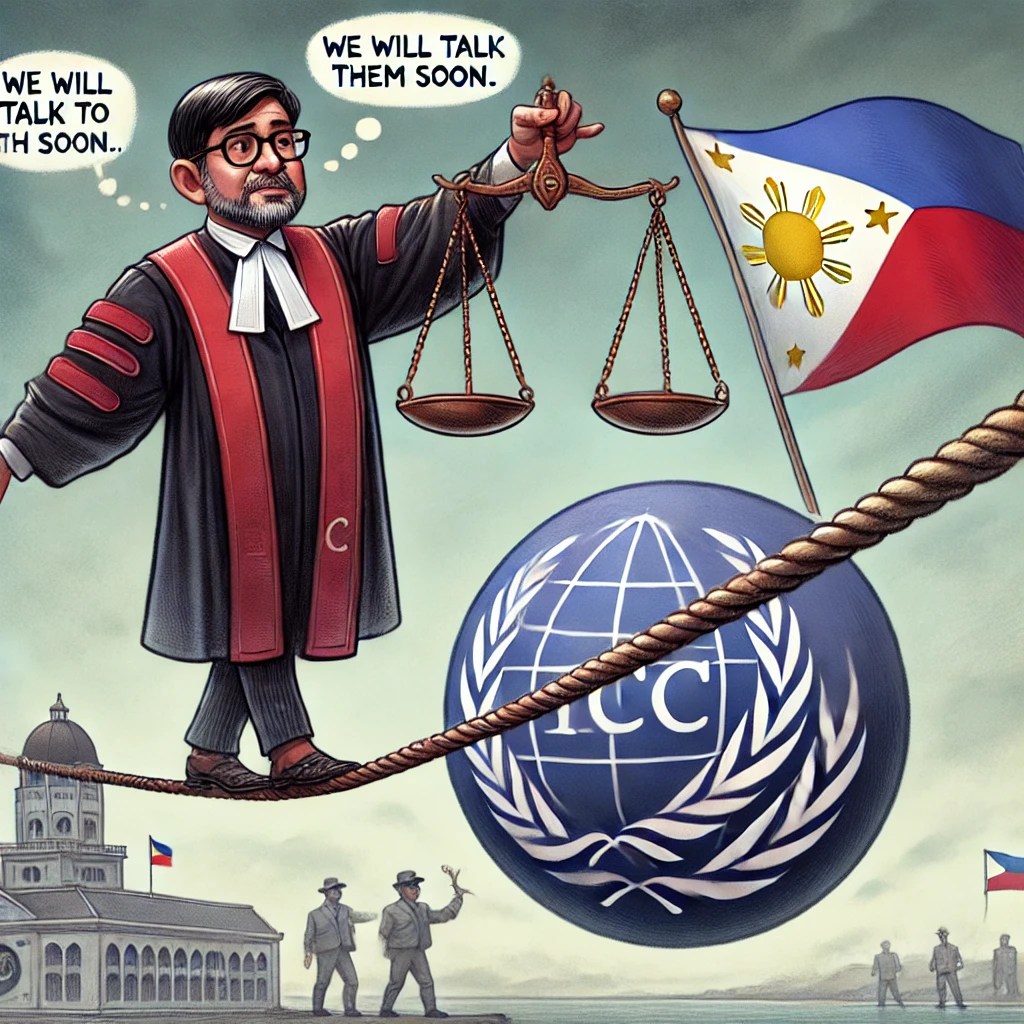
JUSTICE Secretary Jesus Crispin Remulla’s latest statements hint at a monumental shift: the Philippines might cooperate with the International Criminal Court (ICC) in its probe into the ‘war on drugs.’ For a country that once stood firmly against foreign intervention in its domestic affairs, this opening raises more questions than it answers—will this pivot be enough to balance the nation’s internal and international pressures?
Under Duterte, the “war on drugs” was a cornerstone of governance, an iron-fisted approach that won votes but exacted a staggering toll. Official figures cite 6,200 deaths in anti-drug operations, but rights groups contend the real count is far higher, with countless killings in impoverished neighborhoods bearing the hallmarks of state complicity. The ICC investigation, which began in earnest after Duterte’s withdrawal from the Rome Statute in 2019, has loomed as both a symbol of international accountability and a flashpoint for Philippine sovereignty.
Now, Remulla’s comments indicate a departure from the uncompromising rejection of ICC jurisdiction seen in the past. “We will talk to them soon,” he said, underscoring the possibility of “well-defined” collaboration while emphasizing the need to “draw lines properly.” This blend of openness and caution reflects a government carefully navigating a fraught political landscape.
The shift has drawn ire from Duterte loyalists, with Salvador Panelo, the former presidential legal counsel, accusing Remulla of undermining President Ferdinand “Bongbong” Marcos Jr.’s supposed stance against ICC cooperation. Yet Marcos himself has signaled a more nuanced position, suggesting that the government would not obstruct an investigation if Duterte chose to engage with it. This delicate balancing act mirrors broader trends in Philippine governance under Marcos: a bid to distance his administration from the polarizing legacies of his predecessor while avoiding outright disavowal.
Critics argue that even limited cooperation with the ICC risks compromising national sovereignty. But such critiques often ring hollow in a context where the domestic justice system has faltered. The Philippine government’s investigation into drug-related killings has yielded minimal progress despite mounting evidence of systematic abuses. For many, the ICC represents not an intrusion but a lifeline—an acknowledgment that justice delayed is, indeed, justice denied.
Remulla’s pragmatic approach also hints at the broader calculus facing the Philippines. With its reputation on the line amid global scrutiny, the government must weigh the risks of stonewalling against the benefits of engaging with an international tribunal. Limited cooperation could allow the country to shape the narrative, signaling a commitment to accountability while retaining some control over the process. Such a move might also soothe tensions with Western allies and international human rights organizations, whose criticisms have complicated the Philippines’ diplomatic relationships.
This moment is as much about history as it is about the future. The ICC’s work, should it proceed, will dig into one of the most controversial chapters in Philippine history. Duterte himself, ever the provocateur, has alternately dared and dismissed the court, even taunting it to “hurry up.” But the stakes are profound: if indicted, Duterte could become the first Asian leader tried at The Hague.
Still, Remulla’s overtures are unlikely to translate into a full embrace of the ICC. The government appears to be testing the waters, exploring the boundaries of cooperation without committing to rejoining the Rome Statute or fully conceding jurisdiction. This ambiguity is both a strength and a risk. It allows for flexibility but leaves unanswered questions about the sincerity of the government’s commitment to justice.
A pivotal moment hangs heavy in the air as the Philippines teeters on the precipice of change. The legacy of the “war on drugs” demands reckoning—not merely for its victims but for the country’s moral standing in the world. Justice, in whatever form it takes, will not erase the past, but it may offer a path forward. Secretary Remulla’s statements may well be the first cautious step along that path.
Ultimately, the choice for the Philippines isn’t just whether to engage with the ICC—it’s whether it can face its darkest chapters and rise above them. True progress requires more than just legal cooperation; it demands a reckoning with the past that clears the path for a better tomorrow.

- ₱75 Million Heist: Cops Gone Full Bandit

- ₱6.7-Trillion Temptation: The Great Pork Zombie Revival and the “Collegial” Vote-Buying Circus

- ₱1.9 Billion for 382 Units and a Rooftop Pool: Poverty Solved, Next Problem Please

- ₱1.35 Trillion for Education: Bigger Budget, Same Old Thieves’ Banquet

- ₱1 Billion Congressional Seat? Sorry, Sold Out Na Raw — Si Bello Raw Ang Hindi Bumili

- “We Will Take Care of It”: Bersamin’s P52-Billion Love Letter to Corruption

- “Skewed Narrative”? More Like Skewered Taxpayers!

- “Scared to Sign Vouchers” Is Now Official GDP Policy – Welcome to the Philippines’ Permanent Paralysis Economy
- “Robbed by Restitution?” Curlee Discaya’s Tears Over Returning What He Never Earned
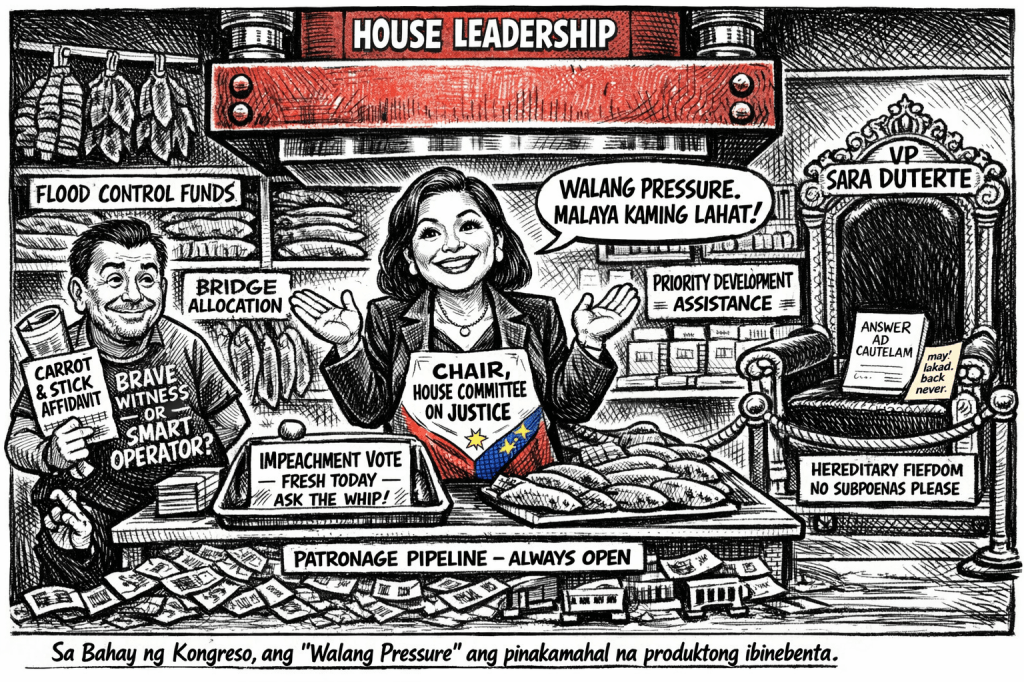
- “No Pressure” Luistro? The House Pork Bazaar Exposed
- “My Brother the President Is a Junkie”: A Marcos Family Reunion Special

- “Mapipilitan Akong Gawing Zero”: The Day Senator Rodante Marcoleta Confessed to Perjury on National Television and Thought We’d Clap for the Creativity




 KWEBA ni BAROK
Leave a comment