
By Louis ‘Barok‘ C Biraogo — January 24, 2025
WHEN a single legislator takes on the entire government over the 2025 General Appropriations Act (GAA), the stakes couldn’t be higher. Rep. Isidro Ungab’s bold challenge before the Supreme Court has ignited a fiery debate about the limits of legislative power, constitutional integrity, and the very future of Philippine budget laws. What’s at stake isn’t just money—it’s the rule of law itself.
Ungab’s Legal Playbook: Challenging the 2025 Budget on Constitutional Grounds
- Violation of the Constitutional Mandate on Budgetary Priority for Education
- Argument: The 2025 GAA includes a P12-billion budget cut for the Department of Education (DepEd), which Ungab and other critics argue violates Article XIV, Section 5(5) of the 1987 Constitution, mandating that education be given the highest budgetary priority.
- Legal Basis:
- Article XIV, Section 5(5): “The State shall assign the highest budgetary priority to education.”
- Supreme Court Precedent: In Philippine Constitution Association v. Enriquez (1994), the Court emphasized that constitutional mandates on budgetary priorities must be strictly observed.
- Supporting Evidence: Critics argue that the DepEd budget cut undermines this constitutional mandate, especially if other education-related allocations (e.g., state universities) do not sufficiently compensate for the reduction.
- Alleged Irregularities in the Bicameral Conference Committee Process
- Argument: Ungab alleges that the bicameral conference committee report contained “blanks,” raising questions about the legitimacy of the process and the final GAA.
- Legal Basis:
- Article VI, Section 26(2): “No bill passed by either House shall become a law unless it has passed three readings on separate days, and printed copies thereof in its final form have been distributed to its Members three days before its passage.”
- Doctrine of Enrolled Bill: While the Supreme Court generally respects the enrolled bill as conclusive of its validity (Astorga v. Villegas, 1974), Ungab could argue that the presence of blanks in the bicam report undermines the integrity of the legislative process.
- Supporting Evidence: Public budget analyst Zy-za Suzara confirmed that the bicam report contained blanks, which were later filled in the final GAA. Ungab could argue that this process lacked transparency and violated constitutional safeguards.
- Lack of Transparency in the Bicam Process
- Argument: The bicameral conference committee process, often conducted behind closed doors, lacks transparency and accountability, violating the public’s right to information under Article III, Section 7 of the Constitution.
- Legal Basis:
- Article III, Section 7: “The right of the people to information on matters of public concern shall be recognized.”
- Supreme Court Precedent: In Legaspi v. Civil Service Commission (1987), the Court upheld the public’s right to access information on government transactions.
- Supporting Evidence: The bicam process is widely criticized for its opacity, allowing lawmakers to make significant amendments without public scrutiny.
- Potential Violation of the Principle of Checks and Balances
- Argument: If the blanks in the bicam report were filled without proper congressional oversight, it could constitute an unconstitutional delegation of legislative power to the executive branch.
- Legal Basis:
- Article VI, Section 1: “Legislative power shall be vested in the Congress of the Philippines.”
- Supreme Court Precedent: In Abakada Guro Party List v. Ermita (2005), the Court struck down provisions of the Expanded Value-Added Tax Law for violating the non-delegation doctrine.
- Supporting Evidence: Ungab could argue that the filling of blanks in the bicam report without clear congressional authorization undermines the separation of powers.
Why the Government Might Prevail: Key Counterarguments to Ungab’s Challenge
- Presumption of Regularity in the Enrolled Bill
- Argument: The Supreme Court has consistently upheld the enrolled bill doctrine, which presumes that the final version of a law signed by the President is valid and constitutional.
- Legal Basis:
- Enrolled Bill Doctrine: In Astorga v. Villegas (1974), the Court ruled that the enrolled bill is conclusive of its validity, and courts cannot inquire into the legislative process that led to its passage.
- Supporting Evidence: Senate President Francis Escudero and Sen. Imee Marcos have confirmed that the final GAA signed by President Marcos contains no blank entries.
- No Evidence of Irregularities in the Final GAA
- Argument: While the bicam report may have contained blanks, there is no evidence that the final GAA was irregularly filled or that the amounts appropriated were inconsistent with congressional intent.
- Legal Basis:
- Presumption of Regularity: Government actions are presumed regular and lawful unless proven otherwise (People v. Temporada, 2008).
- Supporting Evidence: The Department of Budget and Management (DBM) has published the final GAA, which includes all appropriations without blanks.
- Education Budget Cuts Do Not Violate the Constitution
- Argument: The government argues that while the DepEd budget was cut, overall education spending (including state universities and colleges) still meets the constitutional requirement of being the highest budgetary priority.
- Legal Basis:
- Article XIV, Section 5(5): The Constitution does not specify how the “highest budgetary priority” should be calculated, leaving room for interpretation.
- Supporting Evidence: The government could present data showing that total education-related allocations remain the highest in the 2025 GAA.
The Legal Showdown: Who’s Likely to Prevail in the 2025 Budget Battle?
Ungab’s Strengths:
- The presence of blanks in the bicam report raises legitimate concerns about transparency and due process.
- The DepEd budget cut could be framed as a violation of the constitutional mandate on education.
- The opaque bicam process undermines public trust and could be challenged under the right to information
Government’s Strengths:
- The enrolled bill doctrine strongly favors the validity of the final GAA.
- There is no concrete evidence of irregularities in the final GAA.
- The government’s interpretation of the education budget could withstand constitutional scrutiny.
Verdict:
The government has the upper hand due to the enrolled bill doctrine and the lack of evidence of irregularities in the final GAA. However, Ungab’s challenge could succeed if he can prove that the bicam process violated constitutional safeguards or that the education budget cuts are unconstitutional.
Recommendations
For Rep. Isidro Ungab:
- Focus on proving that the bicam process violated constitutional safeguards, such as the right to information and the non-delegation doctrine.
- Present evidence showing that the DepEd budget cut undermines the constitutional mandate on education.
- Advocate for greater transparency in the bicam process, using the case as a platform for legislative reform.
For the Government:
- Defend the enrolled bill doctrine and emphasize the presumption of regularity in the final GAA.
- Provide data showing that overall education spending meets the constitutional requirement.
- Address public concerns about the bicam process by committing to greater transparency in future budget deliberations.
Conclusion
The 2025 GAA controversy highlights the tension between constitutional mandates, legislative processes, and public accountability. While the government has strong legal defenses, Ungab’s challenge could catalyze much-needed reforms in the budget process. Ultimately, the Supreme Court’s decision will hinge on whether the alleged irregularities in the bicam report undermine the validity of the final GAA and whether the education budget cuts violate the Constitution.
This case underscores the importance of transparency and accountability in budget legislation—a cornerstone of democratic governance that must be upheld at all costs.

- ₱75 Million Heist: Cops Gone Full Bandit

- ₱6.7-Trillion Temptation: The Great Pork Zombie Revival and the “Collegial” Vote-Buying Circus

- ₱1.9 Billion for 382 Units and a Rooftop Pool: Poverty Solved, Next Problem Please

- ₱1.35 Trillion for Education: Bigger Budget, Same Old Thieves’ Banquet

- ₱1 Billion Congressional Seat? Sorry, Sold Out Na Raw — Si Bello Raw Ang Hindi Bumili

- “We Will Take Care of It”: Bersamin’s P52-Billion Love Letter to Corruption
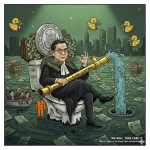
- “Skewed Narrative”? More Like Skewered Taxpayers!

- “Scared to Sign Vouchers” Is Now Official GDP Policy – Welcome to the Philippines’ Permanent Paralysis Economy
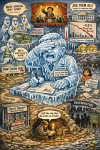
- “Robbed by Restitution?” Curlee Discaya’s Tears Over Returning What He Never Earned
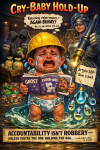
- “My Brother the President Is a Junkie”: A Marcos Family Reunion Special

- “Mapipilitan Akong Gawing Zero”: The Day Senator Rodante Marcoleta Confessed to Perjury on National Television and Thought We’d Clap for the Creativity
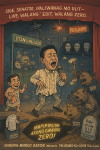
- “Just Following Orders” Is Dead: How the Hague Just Turned Tokhang’s Finest Into International Fugitives


 KWEBA ni BAROK
Leave a comment