By Louis ‘Barok‘ C. Biraogo -+ January 28, 2025
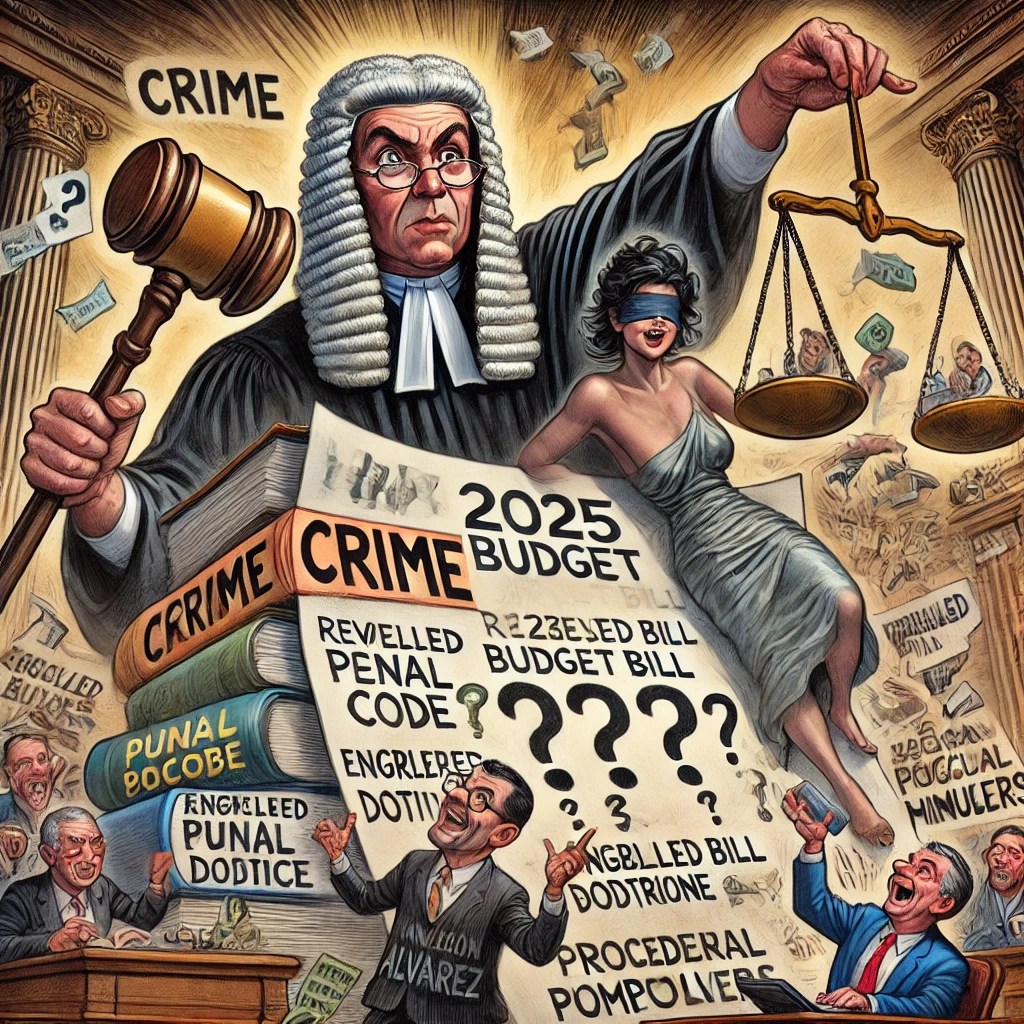
THE Philippine Congress is no stranger to controversy, but the recent uproar over blank items in the 2025 budget bill has sparked a heated debate that cuts to the heart of legislative integrity, public trust, and the rule of law. At the center of the storm are two lawmakers: Davao del Norte 1st District Rep. Pantaleon Alvarez, who claims the blanks constitute a crime, and Marikina 2nd District Rep. Stella Quimbo, who insists they were merely procedural placeholders. The stakes are high, as the controversy touches on the sanctity of the legislative process, the power of the purse, and the public’s faith in government.
Blanks, Blame, and Backlash: The Genesis of a Legislative Firestorm
The controversy began when Rep. Alvarez accused Congress of approving a bicameral conference committee report on the 2025 budget that contained blank items. These blanks, he argued, were later filled in without congressional approval, potentially violating Article 171 of the Revised Penal Code, which criminalizes the falsification of public documents. Alvarez contends that the power of the purse lies solely with Congress, and any unauthorized insertions undermine this constitutional mandate.
Rep. Quimbo, however, offers a different narrative. She acknowledges the presence of blanks but insists they were for computational purposes and that the allocations had already been decided by the bicameral committee before ratification. According to Quimbo, the technical staff’s role in filling in the blanks was purely ministerial—akin to a “calculator activity”—and did not constitute unauthorized tampering.
The Department of Budget and Management (DBM) has since confirmed that the final General Appropriations Act (GAA) contains no blank items, suggesting that the blanks in the bicameral report were resolved before the bill became law. Nevertheless, Alvarez’s allegations have ignited a broader debate about transparency, accountability, and the potential for abuse in the legislative process.
Crime or Calculation? The Legal Tightrope of Blank Budget Items
At the heart of this controversy is a legal question: Do the blank items in the bicameral report amount to falsification of public documents, as Alvarez claims, or were they merely ministerial corrections, as Quimbo asserts?
Alvarez’s argument hinges on Article 171 of the Revised Penal Code, which defines falsification as the act of making untruthful statements in a public document. He contends that filling in the blanks after ratification constitutes an unauthorized insertion, as the figures were not approved by the plenary. This, he argues, is a crime punishable by imprisonment.
However, Quimbo counters that the blanks were filled in by technical staff under the authority of the bicameral committee, which had already decided on the allocations. She emphasizes that such corrections are ministerial in nature and do not require further congressional approval.
The legal framework supporting Quimbo’s position includes the enrolled bill doctrine, established in Astorga v. Villegas (1967) and reaffirmed in Philippine Veterans Bank v. CA (1998). This doctrine holds that once a bill is signed by the president, it is presumed to be the authentic expression of Congress’s will, and courts cannot inquire into the legislative process to determine its validity. In this case, the final GAA, signed by the president, contains no blanks, suggesting that the bicameral report’s blanks were resolved before enactment.
While Alvarez’s concerns about potential abuse are valid, his legal argument faces significant hurdles. The blanks in the bicameral report do not appear in the final GAA, and the technical staff’s actions appear to fall within the scope of ministerial corrections authorized by law.
Ethical and Procedural Implications: A Crisis of Trust
Even if the blanks do not constitute a crime, their presence raises serious ethical and procedural concerns. Transparency and accountability are cornerstones of democratic governance, and the public has a right to know how taxpayer funds are allocated. The presence of blanks in a critical legislative document undermines this transparency and erodes public trust.
Alvarez’s allegations, while legally tenuous, highlight a troubling possibility: that the blanks could be exploited for unauthorized insertions. This fear is not unfounded, given past controversies over pork barrel funds and other forms of legislative malfeasance. The public’s skepticism is further fueled by the fact that the blanks were only disclosed after the bill’s ratification, leaving little room for scrutiny.
Quimbo’s explanation—that the blanks were for computational purposes—may be legally defensible, but it does little to assuage public concerns. The legislative process must not only be fair but also appear fair. The presence of blanks, even if innocuous, creates an impression of opacity and invites suspicion.
Fact-Checking and Evidence: Separating Fact from Fiction
A closer examination of the facts reveals a more nuanced picture. The blanks were present in the bicameral conference committee report, not the final GAA. The DBM has confirmed that the final GAA contains no blank items, and the technical staff’s authority to make ministerial corrections is enshrined in law.
This distinction is crucial. The bicameral report is an intermediate document, subject to further refinement before becoming law. The final GAA, signed by the president, is the authoritative document, and its legitimacy is beyond dispute.
Alvarez’s claim that the blanks were filled in after ratification is not supported by the evidence. The allocations were decided by the bicameral committee before ratification, and the technical staff’s role was limited to implementing these decisions.
Strength in Substance: Assessing the Stronger Position
While Alvarez’s concerns about transparency and accountability are valid, his legal argument is weaker than Quimbo’s. The blanks in the bicameral report do not appear in the final GAA, and the technical staff’s actions were authorized and ministerial in nature. The enrolled bill doctrine further supports the legitimacy of the final GAA.
Quimbo’s explanation is more consistent with the facts and the legal framework. However, her defense does not fully address the ethical concerns raised by the blanks. The legislative process must prioritize transparency to maintain public trust, and the presence of blanks, even if resolved, undermines this principle.
Beyond the Blanks: Why Transparency Must Define the Future
The controversy over the blank items in the 2025 budget bill is a cautionary tale about the importance of transparency and accountability in the legislative process. While Rep. Alvarez’s allegations of criminal conduct may be overstated, his concerns about potential abuse are not without merit.
Rep. Quimbo’s explanation, while legally sound, highlights the need for greater clarity and openness in the budget process. The public’s trust in government depends on the integrity of its institutions, and even the appearance of impropriety can have far-reaching consequences.
Moving forward, Congress must take steps to ensure that the budget process is not only fair but also transparent. This includes providing clear explanations for procedural anomalies, such as blank items, and ensuring that all decisions are subject to public scrutiny. Only then can the public be confident that their representatives are acting in their best interests.
In the end, the blank budget controversy is not just about legal technicalities or procedural minutiae. It is about the integrity of the legislative process and the public’s faith in democracy. And that is something worth fighting for.

- “Forthwith” to Farce: How the Senate is Killing Impeachment—And Why Enrile’s Right (Even If You Can’t Trust Him)
- “HINDI AKO NAG-RESIGN!”

- “I’m calling you from my new Globe SIM. Send load!”

- “Mahiya Naman Kayo!” Marcos’ Anti-Corruption Vow Faces a Flood of Doubt

- “Meow, I’m calling you from my new Globe SIM!”

- “No Special Jail for Crooks!” Boying Remulla Slams VIP Perks for Flood Scammers
- “PLUNDER IS OVERRATED”? TRY AGAIN — IT’S A CALCULATED KILL SHOT

- “Several Lifetimes,” Said Fajardo — Translation: “I’m Not Spending Even One More Day on This Circus”
- “Shimenet”: The Term That Broke the Internet and the Budget
- “We Did Not Yield”: Marcos’s Stand and the Soul of Filipino Sovereignty

- “We Gather Light to Scatter”: A Tribute to Edgardo Bautista Espiritu

- $150M for Kaufman to Spin a Sinking Narrative


 KWEBA ni BAROK
Leave a comment