By Louis ‘Barok‘ C. Biraogo — January 29, 2025
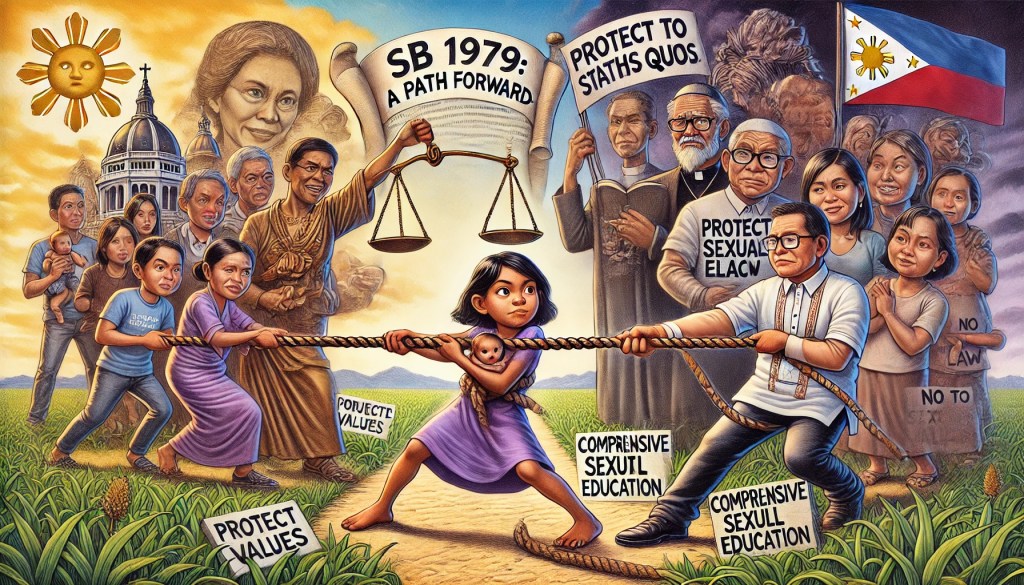
IMAGINE being 14 years old, in the Philippines, and told your life is already set—because you’re pregnant. This heartbreaking reality is becoming all too common, as adolescent pregnancies surge to alarming levels, sparking a heated national debate. At the forefront is Senate Bill 1979, the Adolescent Pregnancy Prevention Bill, spearheaded by Senator Risa Hontiveros and vehemently opposed by Health Secretary Ted Herbosa. But beyond the legislation lies a deeper struggle—one that challenges the nation’s values, its future, and its willingness to confront a growing crisis head-on.
The Battle Lines: Progressives and Conservatives in a Fight for the Future
Senator Hontiveros argues that the Adolescent Pregnancy Prevention Bill is not just necessary but urgent. She frames it as a reinforcement of the existing Responsible Parenthood and Reproductive Health Law (RPRH Law), which has been in place since 2012 but has failed to stem the tide of adolescent pregnancies. Hontiveros points to the data: in 2020, 2,113 babies were born to mothers under 15; by 2022, that number had surged to 3,135. These are not just statistics—they represent young girls whose lives are irrevocably altered, often trapped in cycles of poverty and limited opportunity.
Hontiveros’s bill seeks to address this by mandating Comprehensive Sexual Education (CSE) and ensuring adolescents have access to information and services to protect their health. “They need proper information and service,” she insists, “on top of what was stated in the RPRH. They should not be denied the opportunity to protect their health.”
Health Secretary Herbosa, however, sees no need for a new law. He argues that the existing RPRH Law, if properly implemented, is sufficient. “We already have the Reproductive Health Law,” he says, “and we don’t need another law. What’s important is educating our citizens that the real problems are unplanned pregnancies and the rising maternal deaths due to childbirth.” Herbosa’s stance reflects a pragmatic approach but raises questions: if the RPRH Law has been in place for over a decade, why has it failed to curb adolescent pregnancies?
Faith, Fear, and Resistance: The Forces Behind the Opposition
The controversy over SB 1979 is not just a policy debate—it is a cultural battleground. Conservative groups, including the Catholic Church and Project Dalisay, have vehemently opposed the bill, particularly its provisions on CSE. They argue that the bill introduces “inappropriate concepts” such as masturbation, sexual rights, and gender fluidity to young children. Former Supreme Court Chief Justice Maria Lourdes Sereno, a prominent voice in Project Dalisay, claims that the bill’s reference to “international standards” opens the door to curricula that normalize behaviors they find morally objectionable.
These concerns reached the highest levels of government, with President Ferdinand “Bongbong” Marcos Jr. initially supporting the need to address teenage pregnancy but later expressing shock and outrage over what he called “absurdities” in the bill. “You will teach four-year-olds how to masturbate,” he declared. “That every child has the right to try different sexualities. This is ridiculous. It is abhorrent.”
Hontiveros has vehemently denied these claims, calling them “outright fabrications.” She filed a substitute bill removing the phrase “guided by international standards” and limiting CSE to adolescents aged 10 and above. Yet, the damage was done. Several senators withdrew their support, and the bill’s passage now hangs in the balance.
The Price of Inaction: How Filipino Youth Pay the Ultimate Cost
Behind the political maneuvering and ideological clashes lies a stark reality: the Philippines is failing its young people. Adolescent pregnancy is not just a public health issue; it is a social and economic crisis. Young mothers are more likely to drop out of school, face complications during childbirth, and struggle to provide for their children. The ripple effects are felt across generations, perpetuating cycles of poverty and inequality.
The opposition to SB 1979 often frames the issue in moral terms, but what of the morality of allowing thousands of young girls to face the consequences of unplanned pregnancies without the tools to protect themselves? What of the morality of prioritizing ideological purity over evidence-based solutions?
A Path Forward
The controversy over SB 1979 reveals deep divides in Philippine society, but it also offers an opportunity for dialogue and compromise. Hontiveros’s substitute bill, which addresses many of the concerns raised by critics, is a step in the right direction. It limits CSE to older adolescents, ensures academic and religious freedom, and removes contentious language about international standards.
To move forward, stakeholders must prioritize the well-being of adolescents over partisan interests. Policymakers should engage with conservative groups to address their concerns while emphasizing the urgency of the issue. Advocacy groups must continue to push for evidence-based policies, grounded in data and compassion. And the public must demand action from their leaders, holding them accountable for the futures of the next generation.
The Philippines faces a stark choice, its path forward fraught with consequence. Will it choose unity over division, compassion over ideology, and action over apathy? The fate of Senate Bill 1979 is more than a legislative decision—it is a reflection of the nation’s moral compass and its willingness to fight for the dignity and dreams of its youth. In the years to come, history will ask: Did we rise to the challenge? The answer is ours to write.

- ₱75 Million Heist: Cops Gone Full Bandit

- ₱6.7-Trillion Temptation: The Great Pork Zombie Revival and the “Collegial” Vote-Buying Circus

- ₱1.9 Billion for 382 Units and a Rooftop Pool: Poverty Solved, Next Problem Please

- ₱1.35 Trillion for Education: Bigger Budget, Same Old Thieves’ Banquet

- ₱1 Billion Congressional Seat? Sorry, Sold Out Na Raw — Si Bello Raw Ang Hindi Bumili

- “We Will Take Care of It”: Bersamin’s P52-Billion Love Letter to Corruption

- “Skewed Narrative”? More Like Skewered Taxpayers!

- “Scared to Sign Vouchers” Is Now Official GDP Policy – Welcome to the Philippines’ Permanent Paralysis Economy
- “Robbed by Restitution?” Curlee Discaya’s Tears Over Returning What He Never Earned

- “No Pressure” Luistro? The House Pork Bazaar Exposed
- “My Brother the President Is a Junkie”: A Marcos Family Reunion Special

- “Mapipilitan Akong Gawing Zero”: The Day Senator Rodante Marcoleta Confessed to Perjury on National Television and Thought We’d Clap for the Creativity




 KWEBA ni BAROK
Leave a comment