By Louis ‘Barok‘ C. Biraogo — January 31, 2025
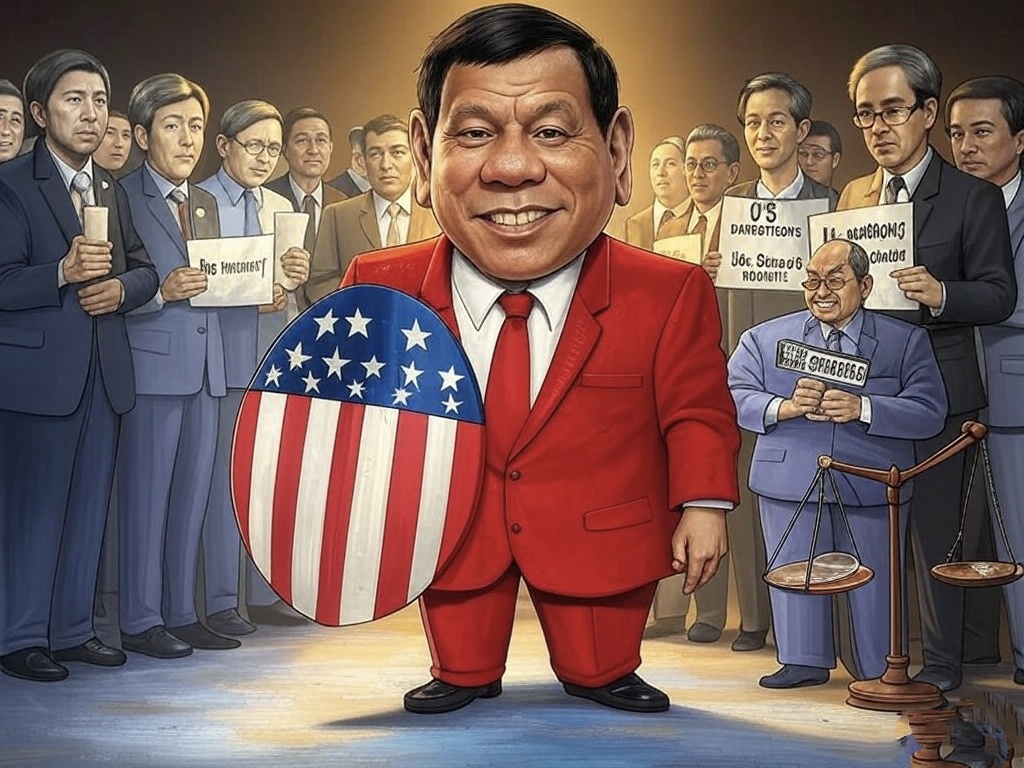
IN THE slums of Manila, thousands of families still mourn loved ones lost to Rodrigo Duterte’s brutal drug war. Now, a controversial US sanctions bill threatens to silence the last hope for justice—not just for Filipinos, but for victims of atrocities worldwide.
The US bill seeking to sanction the International Criminal Court (ICC) has sparked a firestorm of debate, with critics warning that its broad language could have far-reaching consequences for international justice. While the bill’s immediate target is the ICC’s investigation into Israeli Prime Minister Benjamin Netanyahu, its ripple effects could shield Duterte from accountability and undermine the global fight against impunity. Here’s how this controversial legislation could reshape the landscape of human rights and international law.
The Chilling Effect on the ICC’s Investigation into Duterte’s Drug War
The bill’s sweeping language threatens to paralyze human rights organizations and their ability to cooperate with the ICC. By sanctioning anyone who “aids” the ICC in investigating “protected persons,” the legislation casts a wide net that could ensnare Philippine civil society groups documenting Duterte’s drug war. Adam Keith of Human Rights First warns that even basic interactions with the ICC—such as providing evidence or documentation—could be construed as “support” under the sanctions regime.
For Philippine civil society, the consequences could be devastating. Human rights organizations, already operating under constant threat, rely heavily on international funding and partnerships. The specter of US sanctions could lead to funding cuts, travel bans, and frozen assets, crippling their ability to gather evidence and support victims. Dino de Leon, a human rights lawyer, notes that the mere threat of sanctions could alter the behavior of justice officials, emboldening perpetrators and further entrenching impunity.
The Philippines’ Unique Position as a “Protected Person”
The bill defines a “protected person” as a citizen or resident of a US ally that is not a member of the ICC. This definition implicates the Philippines, a major non-NATO ally that withdrew from the ICC in 2018. While the ICC maintains jurisdiction over crimes committed during the Philippines’ membership period, the US bill complicates this legal landscape by treating the investigation of Duterte’s alleged crimes as unacceptable.
The Philippines’ withdrawal from the ICC has already weakened the court’s jurisdiction, and the US bill further muddies the waters. By aligning itself with the bill’s rhetoric, the Philippines risks undermining its own justice system and alienating the international community. The bill’s implicit endorsement of Duterte’s impunity sends a dangerous message: that allies of the US are above the law.
Criticism from Democrats, Humanitarian Agencies, and Legal Experts
Critics argue that the bill undermines international law and US interests by targeting the ICC, a cornerstone of global accountability. Humanitarian agencies warn that the sanctions could embolden authoritarian regimes and hinder investigations into atrocities in places like Ukraine and Myanmar. Legal experts contend that the bill’s mandatory sanctions scheme disproportionately targets ICC investigators, equating them with human rights violators and creating a dangerous precedent.
The bill’s broad scope also risks alienating US allies who support the ICC. By demanding that the ICC refrain from investigating certain countries, the US is effectively undermining the court’s independence and credibility. This could have long-term consequences for international justice, particularly in cases where the ICC’s work aligns with US interests.
Legal Challenges to the “Illegitimate Court Counteraction Act”
The bill’s mandatory sanctions scheme has drawn sharp criticism for its disproportionate impact on ICC officials and their supporters. By imposing the same penalties on ICC investigators as on human rights violators, the legislation risks equating the pursuit of justice with criminal behavior. This not only undermines the ICC’s legitimacy but also sets a dangerous precedent for global accountability.
The bill’s arbitrary “do not investigate” list further complicates matters. By shielding citizens of non-ICC member states from prosecution, the US is effectively creating a two-tiered system of justice—one for its allies and another for the rest of the world. This undermines the ICC’s ability to hold perpetrators accountable, regardless of their nationality or political connections.
Uncertain Consequences for the Philippines’ Cooperation with the ICC
The US bill could influence President Ferdinand Marcos Jr.’s stance on ICC cooperation. While Marcos has expressed support for the ICC in cases involving Interpol, his position remains ambiguous. The threat of US sanctions could push the Philippines further away from the ICC, limiting the court’s ability to investigate Duterte’s drug war.
Interpol’s role in facilitating the ICC’s investigation adds another layer of complexity. While the ICC can request Interpol’s assistance in executing arrest warrants, the US bill could complicate this dynamic by discouraging cooperation. This could leave victims of the drug war without recourse, further marginalizing their quest for justice.
Limited Direct Impact on Duterte’s Legal Position
While the US bill is unlikely to directly impact Duterte’s legal position, it further marginalizes the ICC’s investigation into his drug war. The investigation is already in a precarious position, with the Philippines’ withdrawal from the ICC and the suspension of the probe in 2021. The US bill adds another obstacle, signaling to Duterte and other authoritarian leaders that they can act with impunity.
For victims of the drug war, the bill’s implications are dire. By undermining the ICC’s ability to investigate and prosecute, the legislation denies them the justice they deserve. It also sends a chilling message to human rights defenders worldwide: that the pursuit of accountability comes at a cost.
Conclusion: A Call to Uphold International Justice
The US sanctions bill represents a dangerous escalation in the attack on international justice. By shielding Duterte and other authoritarian leaders from accountability, the legislation undermines the ICC’s mission and betrays the victims of atrocities worldwide. It also risks alienating US allies and weakening the global fight against impunity.
As the international community grapples with the bill’s implications, one thing is clear: the pursuit of justice must not be sacrificed on the altar of political expediency. The US must reconsider its approach and reaffirm its commitment to international law. For the families of Duterte’s drug war victims, and for victims of atrocities everywhere, the stakes could not be higher.
The question is not just about Duterte or the ICC—it’s about whether the world will stand by as justice is silenced.

- ₱75 Million Heist: Cops Gone Full Bandit

- ₱6.7-Trillion Temptation: The Great Pork Zombie Revival and the “Collegial” Vote-Buying Circus

- ₱1.9 Billion for 382 Units and a Rooftop Pool: Poverty Solved, Next Problem Please

- ₱1.35 Trillion for Education: Bigger Budget, Same Old Thieves’ Banquet
- ₱1 Billion Congressional Seat? Sorry, Sold Out Na Raw — Si Bello Raw Ang Hindi Bumili

- “We Will Take Care of It”: Bersamin’s P52-Billion Love Letter to Corruption
- “Skewed Narrative”? More Like Skewered Taxpayers!

- “Scared to Sign Vouchers” Is Now Official GDP Policy – Welcome to the Philippines’ Permanent Paralysis Economy
- “Robbed by Restitution?” Curlee Discaya’s Tears Over Returning What He Never Earned
- “My Brother the President Is a Junkie”: A Marcos Family Reunion Special

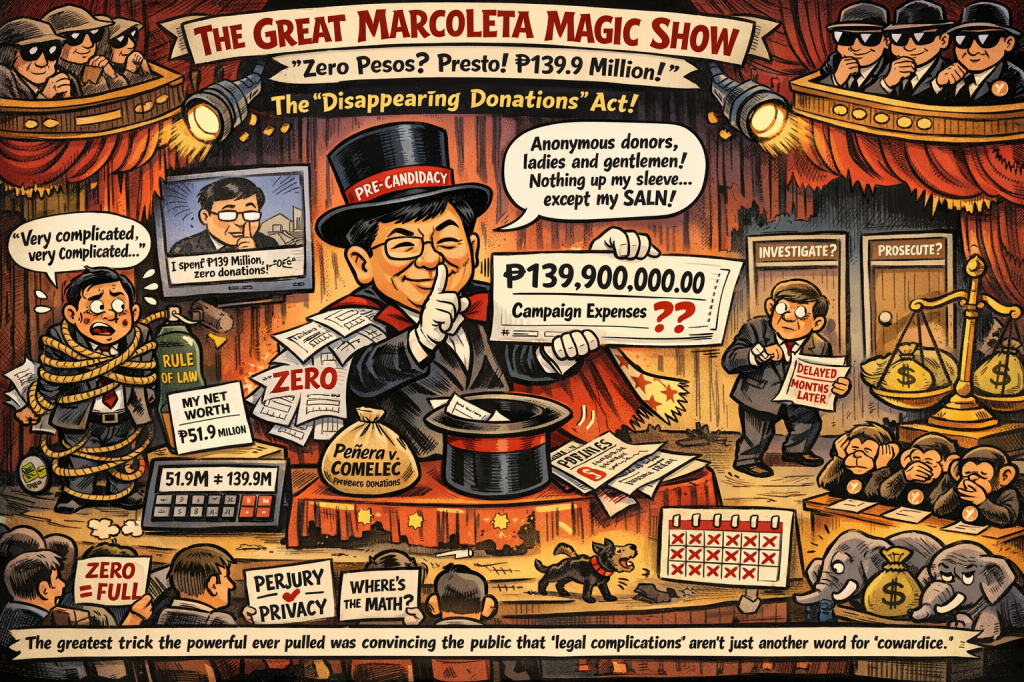
- “Mapipilitan Akong Gawing Zero”: The Day Senator Rodante Marcoleta Confessed to Perjury on National Television and Thought We’d Clap for the Creativity

- “Just Following Orders” Is Dead: How the Hague Just Turned Tokhang’s Finest Into International Fugitives

 KWEBA ni BAROK
Leave a comment