By Louis ‘Barok‘ C. Biraogo — February 1, 2025
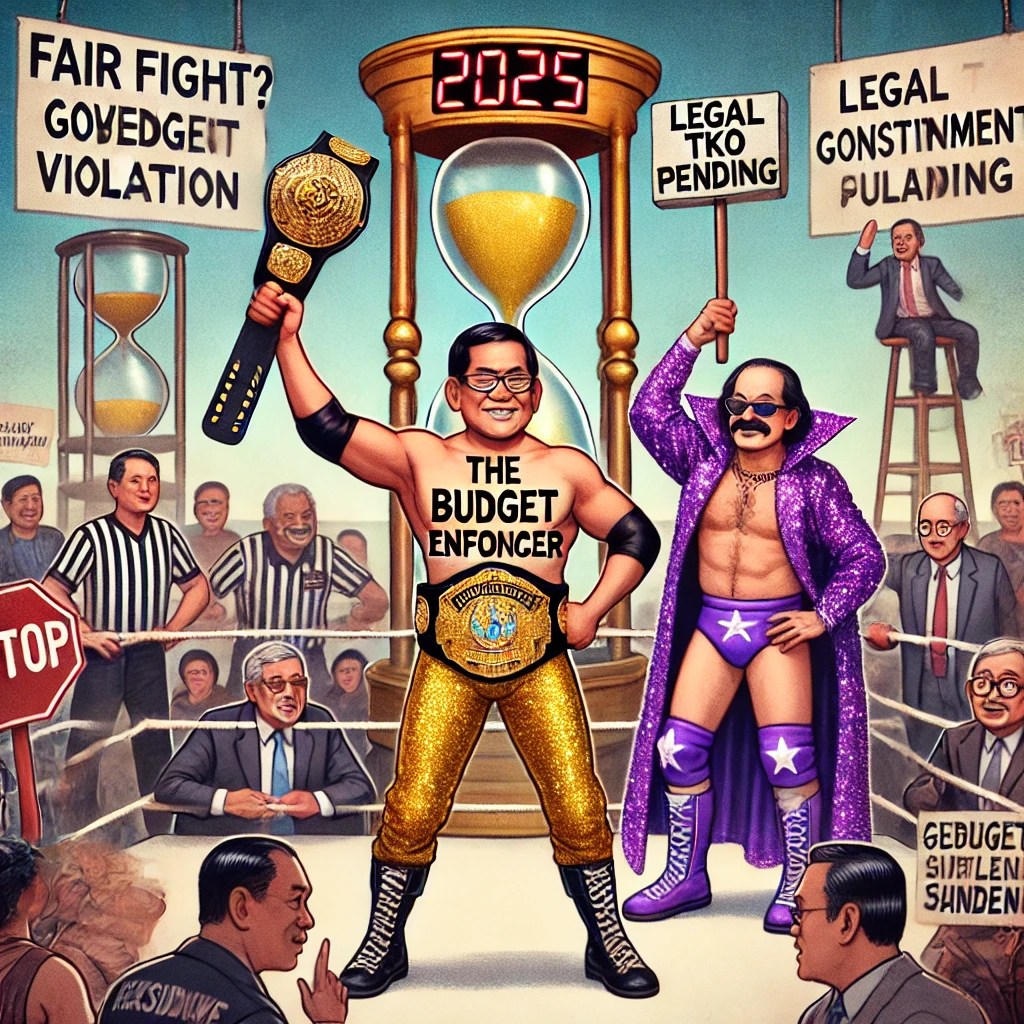
THE 2025 General Appropriations Act isn’t just another budget bill—it’s a legal and political battlefield that could shake the very foundations of Philippine governance. With allegations of constitutional violations, accusations of backroom dealings, and the looming threat of a government shutdown, this controversy pits President Ferdinand Marcos Jr. against a coalition of former officials and lawmakers. Is this a fight for transparency and accountability, or a calculated move to destabilize the administration? This deep dive unpacks the legal clashes, political maneuvers, and the far-reaching consequences of this high-stakes showdown.
The Legal Challenge: Constitutional Violations and Ethical Concerns
The petitioners, led by Rep. Isidro Ungab and former Executive Secretary Vic Rodriguez, have raised four primary constitutional challenges to the 2025 GAA:
- Violation of the Universal Health Care Act (UHCA):
The petitioners argue that the GAA fails to allocate funds for PhilHealth, despite the UHCA mandating government subsidies for indirect contributors. They contend that PhilHealth’s surplus and investment funds should be used to enhance benefits and reduce member contributions, not to cover operational expenses. This alleged failure to prioritize healthcare funding raises ethical concerns about the government’s commitment to universal health care, a cornerstone of social equity. - Unconstitutional Increase in Congressional Budgets:
The GAA reportedly increased the budgets for the House and Senate beyond initial proposals, violating Article VI, Section 25(1) of the Constitution, which mandates that “Congress may not increase the appropriations recommended by the President for the operation of the Government.” The petitioners argue that the President’s failure to veto these increases undermines the constitutional separation of powers and the principle of fiscal restraint. - Superficial Adherence to Education Priority:
The GAA allegedly lumps together appropriations for military academies and educational institutions, creating a misleading impression of prioritizing education. The petitioners argue that the highest budget allocation went to infrastructure, not education, contradicting the constitutional mandate to prioritize education as a state policy. - Blank Items in the Bicameral Conference Committee Report:
The petition alleges that the bicameral conference committee submitted a report with blank items, violating Article VI, Section 27 of the Constitution, which requires that “no provision or enactment shall be embraced in the general appropriations bill unless it relates specifically to some particular appropriation therein.” This omission, the petitioners argue, constitutes a grave abuse of discretion and undermines transparency and accountability in the budget process.
These arguments highlight systemic issues in the budget process, including potential violations of constitutional mandates, lack of transparency, and questionable prioritization of public funds.
The Government’s Defense: Presumption of Constitutionality and Practical Realities
The government, represented by Solicitor General Menardo Guevarra, has mounted a robust defense of the 2025 GAA, relying on legal principles and practical considerations:
- Presumption of Constitutionality:
The government emphasizes that the GAA is legally presumed to be valid, regular, and constitutional until proven otherwise. This principle places the burden of proof on the petitioners to demonstrate the budget’s unconstitutionality. The government argues that the petitioners’ claims are speculative and lack sufficient evidence to overturn this presumption. - Legitimacy of the Budget Process:
The government contends that the 2025 GAA underwent rigorous deliberations and complied with constitutional requirements, including the bicameral conference committee process. It asserts that any blank items in the committee report were “typographical errors” corrected by authorized technical staff, implying that these errors do not invalidate the budget. - Consequences of a Government Shutdown:
President Marcos Jr. has warned that a Supreme Court ruling against the GAA would force the government to “shut down everything,” halting essential services and causing widespread disruption. The government argues that the potential consequences of a shutdown—economic instability, delayed public services, and political turmoil—outweigh the petitioners’ concerns. - Legal Precedents:
The government may rely on Supreme Court precedents, such as Ang Tibay v. CIR (1940), which established the cardinal rights of due process in administrative proceedings. While the budget process is legislative, the government could argue that it involves quasi-judicial elements requiring due process, which were observed.
The government’s defense underscores the practical challenges of invalidating a national budget and the potential chaos that could ensue. However, it also raises questions about whether political expediency is being prioritized over constitutional integrity.
The Stakes: Potential Consequences of a Supreme Court Ruling
The Supreme Court’s decision on the 2025 GAA will have far-reaching implications for the Philippines:
- Government Shutdown:
A ruling against the GAA could force a government shutdown, halting essential services such as healthcare, education, and infrastructure projects. This would disproportionately affect vulnerable populations and exacerbate existing social and economic inequalities. - Budgetary Uncertainty:
Invalidating the GAA would create significant budgetary uncertainty, delaying or canceling crucial programs and projects. This could undermine economic growth, deter foreign investment, and erode public trust in government institutions. - Political Instability:
A ruling against the GAA could escalate political tensions, with the opposition likely framing it as a victory against the administration. This could lead to increased calls for President Marcos Jr.’s resignation or impeachment, further destabilizing the political landscape. - Legal Precedents:
The Supreme Court’s decision could set a precedent for future budget challenges, potentially leading to reforms in the budget process. However, it could also open the door to increased judicial intervention in legislative matters, blurring the lines between the branches of government.
Underlying Issues: Power Struggles and Ideological Differences
The controversy surrounding the 2025 GAA is not merely a legal dispute; it reflects deeper political and social dynamics:
- Power Struggles:
The legal challenge can be seen as part of a broader power struggle between the administration and its critics. The petitioners, many of whom are former government officials, may be using the courts to challenge the administration’s policies and legitimacy. - Ideological Differences:
The debate over the GAA highlights ideological differences regarding the role of government in addressing social and economic issues. While the administration prioritizes infrastructure and economic growth, critics argue that healthcare, education, and social services should take precedence. - Transparency and Accountability:
The controversy underscores the need for greater transparency and accountability in the budget process. The allegations of blank items and opaque allocations have fueled public skepticism about the government’s commitment to good governance.
Building a Better System: Steps to Ensure Accountability and Fairness
To address the issues raised by the 2025 GAA controversy, the following steps are recommended:
- For the Government:
- Enhance transparency in the budget process by publishing detailed reports and holding public consultations.
- Prioritize constitutional mandates, such as healthcare and education, in future budgets.
- Develop contingency plans to mitigate the impact of a potential government shutdown.
- For Rep. Isidro Ungab and Former Executive Secretary Vic Rodriguez:
- Continue advocating for transparency and accountability in the budget process, ensuring that their legal challenge remains focused on constitutional principles rather than political motives.
- Collaborate with civil society and legal experts to propose concrete reforms to the budget process, addressing issues such as blank items and misaligned priorities.
- Engage the public in understanding the implications of the 2025 GAA controversy, fostering informed discourse on the importance of a fair and transparent budget.
- For the Supreme Court:
- Issue a clear and principled ruling that upholds constitutional integrity while considering the practical implications of its decision.
- Provide guidelines for future budget processes to prevent similar controversies.
- For the Filipino People:
- Demand greater accountability from elected officials and participate in public debates on budgetary priorities.
- Support civil society organizations that advocate for transparency and good governance.
By addressing the underlying issues and implementing reforms, the Philippines can emerge from this crisis with a stronger, more transparent, and more accountable budget process that serves the best interests of the nation.
The Crossroads of Governance: Lessons from the 2025 Budget Battle
The 2025 budget dispute is more than a legal battle—it’s a crossroads for the Philippines. One path leads to greater transparency, stronger institutions, and a renewed faith in governance. The other risks deepening mistrust, legal uncertainty, and political instability. The choices made now—by the government, the judiciary, and the people—will determine whether this crisis becomes a catalyst for reform or a symptom of a deeper democratic erosion.

- “I Warned You in 2022!” — Sara’s Crystal Ball Meets Claire’s Nonfeasance Roast
- 200 Mega Boxes of Lies: Remulla Unleashes AI to Sort the Swamp (Before It Swallows Us All)

- Three-Way Circus 2028: Sara, Leni & Tulfo Walk Into a Poll…
- Marcoleta’s Zero Donations Lie: How a Televised Confession Became “Legal Complications”
- Priest Sentences Duterte to Life – No Trial Needed
- Flood Control or Flood of Corruption? Marcos’ Infrastructure Probe Hits a Curious Pause

- Tau Gamma Phi: Where Brotherhood Means Beating You to Death and Blaming the Rogue Chapter
- Procurement Mafia’s Latest Hit Job: Why Herbosa Can’t Catch a Break
- Abra-Cadabra! 4.3 Million Poor Filipinos Just Vanished – Thanks, DHSUD Math

- Sara’s Magic Plane Fantasy vs. Marcos’ Bureaucratic Black Hole: Who Screws OFWs Worse?
- Sara’s Bagman Blows the Whistle – Then She Blows Perjury Smoke
- Bong Suntay’s Wet Dream Defense: How One Congressman Turned Impeachment into Pornhub Testimony

 KWEBA ni BAROK
Leave a comment