By Louis ‘Barok‘ C. Biraogo — February 4, 2025
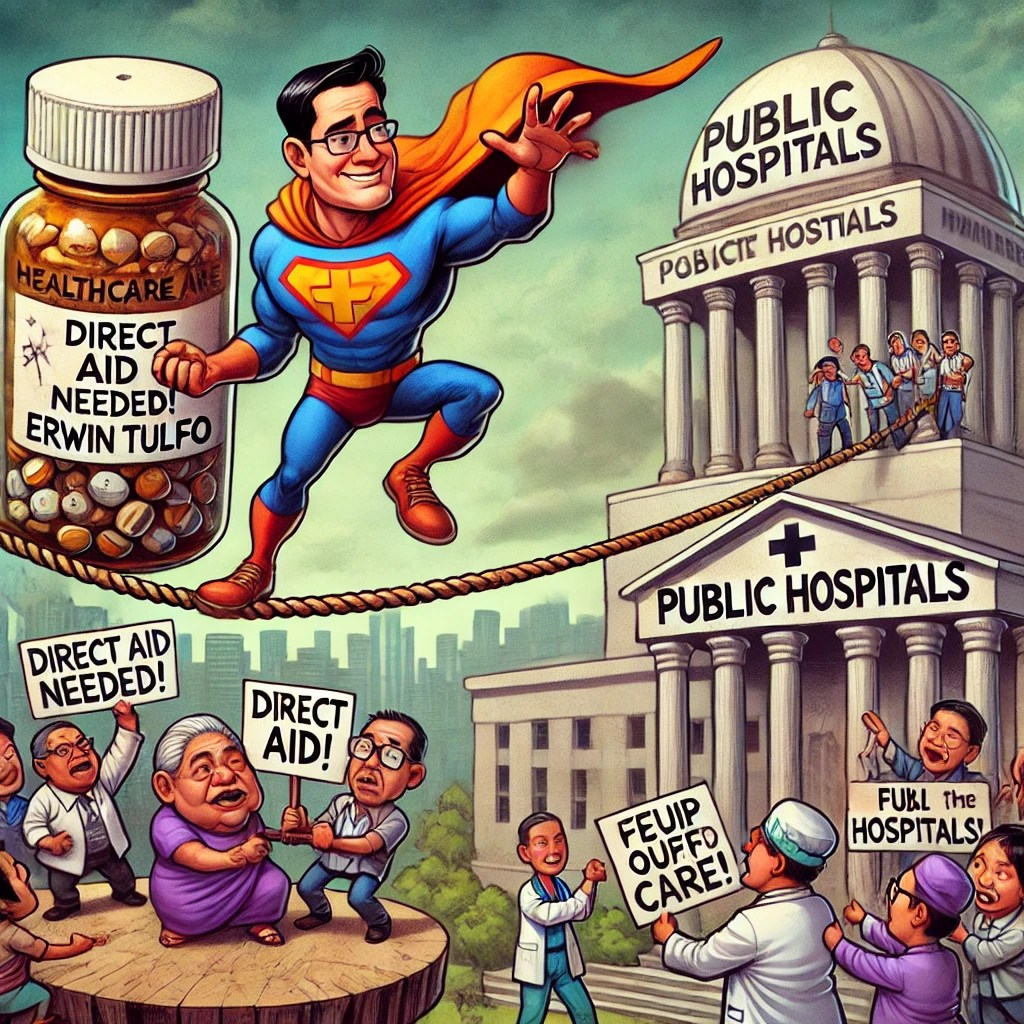
IN THE Philippines, nearly 60% of healthcare costs are paid out-of-pocket—a staggering figure that leaves countless families trapped in cycles of debt and untreated illness. To combat this crisis, House Deputy Majority Leader Erwin Tulfo has introduced the ‘Universal Medical Access and Equipment Act of 2025,’ a bold proposal to leverage the MAIFIP fund and equip public hospitals with life-saving medicines and medical devices.”
At first glance, the bill appears noble—who could argue against the idea of ensuring that hospitals have the tools to treat the sick? Yet, as with any policy shift, the devil is in the details. To truly assess the bill’s impact, we must scrutinize its potential benefits, risks, legal standing, and implementation challenges. More importantly, we must question whether this proposal is a genuine step toward universal healthcare—or a politically motivated maneuver with unintended consequences.
The Hope for Better Healthcare: Examining the Promise of Tulfo’s Bill
Tulfo’s bill aims to address the chronic shortages of medicines and medical equipment in public hospitals, which often leave indigent patients either waiting for care or forced to buy medications out-of-pocket. The promise is twofold:
- Improved Access to Healthcare for the Poor
- If public hospitals are better stocked with essential medicines and diagnostic tools (such as X-ray, ultrasound, and ECG machines), indigent patients may no longer need to purchase these services elsewhere, reducing out-of-pocket expenses.
- The bill aligns with the principles of universal healthcare by attempting to guarantee access to essential treatments, particularly for those in rural and impoverished communities.
- Strengthening Public Healthcare Infrastructure
- By prioritizing hospital equipment, the bill seeks to improve the long-term capacity of public hospitals to diagnose and treat diseases effectively.
- This could reduce the burden on underfunded health centers and alleviate some of the pressure on overwhelmed tertiary hospitals.
- Potential Cost Savings for the Government
- A well-equipped hospital system could prevent the need for costly emergency care and hospitalizations that arise from untreated conditions, ultimately reducing long-term healthcare expenses.
These are worthy goals, but can Tulfo’s proposal achieve them without unintended trade-offs?
The Catch: Will Tulfo’s Proposal Backfire?
The biggest concern surrounding the bill is its reallocation of the MAIFIP fund. Currently, this fund is intended to provide financial assistance to indigent patients, helping them pay for medical expenses, including hospital bills, medicines, and procedures. By redirecting the fund toward purchasing medicines and equipment for hospitals, the bill risks:
- Stripping Indigent Patients of Direct Financial Aid
- The MAIFIP fund acts as a financial lifeline for many indigent patients. Removing or significantly reducing this support could leave many without the ability to afford essential care outside the hospital setting.
- If a patient requires treatment not covered by hospital resources (e.g., specialized procedures or post-hospital medications), they may now lack the financial assistance they once relied on.
- Budgetary Constraints and the Risk of Underfunding
- The MAIFIP fund is not unlimited. If this policy is enacted without additional budget allocations, it could mean hospitals receive medical supplies at the expense of direct patient support.
- The government may ultimately be forced to increase healthcare spending—or face worsening shortages elsewhere in the system.
- Implementation and Corruption Risks
- Ensuring that all hospitals are well-equipped is a logistical challenge. Without proper oversight, funds meant for hospital supplies could be misused, leading to waste or corruption.
- The risk of inefficiency in procurement and distribution is high, especially given the Philippines’ history of irregularities in government supply contracts.
While Tulfo presents the bill as a step toward strengthening the healthcare system, its potential downside—disrupting an already fragile safety net—cannot be ignored.
The Legal Battlefield: A Clash of Legal Principles in Tulfo’s Proposal
From a legal standpoint, the bill is both supported and challenged by existing laws.
Legal Justifications for the Bill
- The Philippine Constitution guarantees the right to health
- Article XIII, Section 11 of the 1987 Constitution mandates the state to make healthcare accessible to all. Tulfo’s bill could be framed as fulfilling this duty.
- Congress has the power to allocate funds for public welfare
- Under Article VI, Section 29(1), Congress can decide how public funds are spent. If the legislature deems that allocating MAIFIP to hospital equipment serves a broader public interest, it could be justified legally.
Legal Challenges to the Bill
- Misuse of the MAIFIP Fund
- The MAIFIP fund was created specifically to provide direct financial assistance to indigent patients. Redirecting it could be legally challenged as a violation of its intended purpose.
- A precedent exists in Tañada v. Tuvera, where the Supreme Court ruled that public funds must be used for their designated purpose.
- Overreach of Legislative Power?
- If the bill mandates the DOH to use funds in a specific way, it might encroach on executive discretion, violating the principle of separation of powers (Biraogo v. Philippine Truth Commission).
- Fiscal Responsibility and Long-Term Viability
- The bill does not specify where additional funding will come from if the MAIFIP fund proves insufficient. The Supreme Court has historically ruled (League of Cities of the Philippines v. Comelec) that new policies requiring government spending must have clear financial sustainability.
In short, while the bill is not inherently unconstitutional, it raises serious legal concerns about fund reallocation, government overreach, and fiscal responsibility.
The Politics: Is This About Healthcare—or Political Optics?
Beyond the policy debate, we must ask: What is the political motivation behind this bill?
- The Tulfo Brand and Populist Appeal
- Erwin Tulfo and his family have built their political brand on helping the poor, often through direct aid. This bill aligns with that image, positioning him as a champion of indigent patients.
- However, by shifting from direct patient aid to a broader hospital-based approach, he may be seeking a more visible, large-scale impact that reinforces his national political ambitions.
- Potential Conflicts of Interest
- The bill is co-authored by multiple Tulfo family members, raising questions about whether this is a well-intentioned reform or part of a broader strategy to consolidate political influence.
- The DOH’s Role and Resistance
- The Department of Health may resist being forced into a rigid allocation model that limits its discretion. If the executive branch pushes back, this could become another point of political friction.
Recommendations: A Smarter Path Forward
If the Philippine government truly wants to improve healthcare for the poor, a better approach would be:
- Expand MAIFIP Funding Instead of Redirecting It
- The government should increase healthcare funding overall, rather than taking resources away from indigent patients.
- Introduce Transparency and Oversight
- If funds are allocated for hospital equipment, strict monitoring mechanisms must be put in place to prevent corruption.
- Improve Procurement and Distribution Efficiency
- The DOH should be empowered to assess hospital needs properly, ensuring resources are allocated where they are most needed.
- Integrate the Bill with the Universal Health Care Act
- Instead of working in isolation, Tulfo’s proposal should complement existing healthcare reforms for a more holistic approach.
Final Verdict: A Well-Meaning but Flawed Proposal
The “Universal Medical Access and Equipment Act of 2025” seeks to address real healthcare gaps, but its reliance on the MAIFIP fund risks undermining the very people it aims to help. A more sustainable approach would be to increase overall healthcare funding rather than reshuffling existing resources.
If the Philippine government is serious about universal healthcare, it must go beyond quick-fix solutions and commit to long-term, systemic reforms—not just politically convenient band-aids.

- ₱75 Million Heist: Cops Gone Full Bandit

- ₱6.7-Trillion Temptation: The Great Pork Zombie Revival and the “Collegial” Vote-Buying Circus

- ₱1.9 Billion for 382 Units and a Rooftop Pool: Poverty Solved, Next Problem Please

- ₱1.35 Trillion for Education: Bigger Budget, Same Old Thieves’ Banquet

- ₱1 Billion Congressional Seat? Sorry, Sold Out Na Raw — Si Bello Raw Ang Hindi Bumili

- “We Will Take Care of It”: Bersamin’s P52-Billion Love Letter to Corruption

- “Skewed Narrative”? More Like Skewered Taxpayers!

- “Scared to Sign Vouchers” Is Now Official GDP Policy – Welcome to the Philippines’ Permanent Paralysis Economy
- “Robbed by Restitution?” Curlee Discaya’s Tears Over Returning What He Never Earned

- “My Brother the President Is a Junkie”: A Marcos Family Reunion Special

- “Mapipilitan Akong Gawing Zero”: The Day Senator Rodante Marcoleta Confessed to Perjury on National Television and Thought We’d Clap for the Creativity
- “Just Following Orders” Is Dead: How the Hague Just Turned Tokhang’s Finest Into International Fugitives

 KWEBA ni BAROK
Leave a comment