By Louis ‘Barok‘ C. Biraogo — February 4, 2025
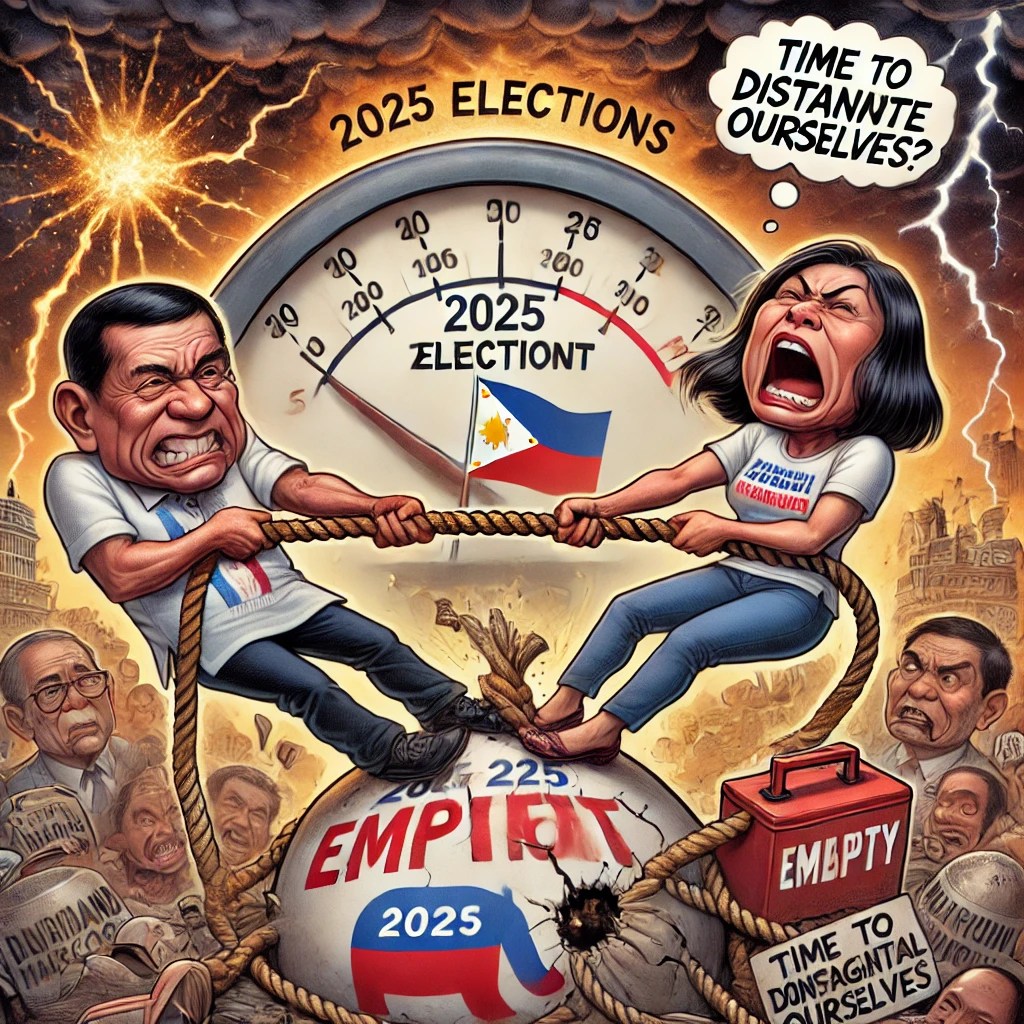
IN POLITICS, trust is currency. Lose it, and you risk a freefall into irrelevance, as President Ferdinand Marcos Jr. and Vice President Sara Duterte are now discovering. The latest Social Weather Stations (SWS) survey paints a stark picture: Marcos’ trust rating has slid to 50%, while Duterte’s has dropped to 49%—a significant decline from their previously comfortable positions.
These numbers aren’t just statistical blips; they signal a deeper undercurrent of public dissatisfaction that could redefine the Philippine political landscape. The decline is driven by economic hardships, governance failures, and growing fractures within the ruling coalition. As Filipinos lose faith in their leaders, the big question looms: is this the beginning of the unraveling of the Marcos-Duterte alliance?
The Erosion of Confidence: Exploring the Factors Behind Filipinos’ Declining Trust
Public discontent rarely emerges overnight. Marcos and Duterte’s slipping trust ratings can be traced to a confluence of economic and political missteps:
- Inflation and Economic Struggles – The Marcos administration has struggled to control inflation, which continues to erode the purchasing power of ordinary Filipinos. Rising food and fuel prices disproportionately impact the poor, leading to frustration that inevitably translates into declining approval ratings.
- Confidential Funds Controversy – Duterte’s refusal to address public outcry over her questionable use of confidential funds has fueled perceptions of impunity and lack of transparency. The Duterte name once symbolized strong leadership, but Sara’s handling of the controversy has made even her loyal base uneasy.
- Governing Without Impact – A common criticism of Marcos is his inability to translate power into progress. His grand economic vision, from agricultural reforms to foreign investment, has yet to deliver tangible benefits to Filipinos. Meanwhile, Duterte, who doubles as the education secretary, has failed to address the pressing issues in the Philippine education system.
The consequence? A steady erosion of political capital that threatens to cripple their leadership.
The Regional Fault Lines: Marcos’ Weakness, Duterte’s Dilemma
A closer look at the survey reveals regional disparities that further complicate their political strategies.
- Marcos’ Strength in Luzon, Weakness in Mindanao – With his highest trust rating in Luzon outside Metro Manila (60%) and his lowest in Mindanao (37%), Marcos struggles to gain traction in the southern regions—an alarming sign given that Mindanao delivered crucial votes in 2022.
- Duterte’s Mindanao Stronghold, Luzon Struggles – Duterte maintains a commanding 78% trust rating in Mindanao, but her numbers plummet in Luzon (33%) and Metro Manila (36%). These urban centers are vital for shaping national discourse, and losing ground here signals trouble for her broader ambitions.
The irony is striking: while their alliance was meant to consolidate north-south unity, these numbers suggest they are failing to bridge the very divides they promised to heal.
Impeachment Pressure: A Weakened Duterte Faces the Storm
The timing of Duterte’s trust decline couldn’t be worse. She is already facing an impeachment complaint, and her weakened political position could embolden critics to push forward.
- Marcos’ Calculated Distance – Marcos has declared he won’t block impeachment proceedings, a move that reads less like neutrality and more like political survival. Allowing the process to unfold without interference shields him from accusations of political favoritism.
- Duterte’s Vulnerability – As her trust rating dips, her ability to rally support against impeachment weakens. A once untouchable Duterte is now a leader under siege, facing political wolves circling in anticipation of a misstep.
Impeachment is far from guaranteed, but its growing feasibility exposes the fragility of Duterte’s once-dominant position.
The 2025 Midterms: A Test for Marcos and Duterte
The decline in trust ratings has major implications for the 2025 midterm elections. With both leaders struggling to maintain public confidence, their allies face an uphill battle:
- For Marcos’ Camp – Candidates aligned with Marcos may distance themselves from his administration if his trust ratings remain low. Without a strong economic recovery to campaign on, the administration risks losing key congressional and local seats.
- For Duterte’s Allies – Duterte’s Mindanao base may remain intact, but losses in urban and Luzon regions could hurt her allies. She may be forced to recalibrate her political messaging, focusing on damage control rather than expansion.
Opposition figures, sensing weakness, are likely already strategizing how to exploit these vulnerabilities. If Marcos and Duterte cannot course-correct before 2025, they may find themselves presiding over a diminished political force.
From Coalition to Collision: The 2025 Elections and the Fight for Power
What began as a fragile alliance of convenience between Ferdinand Marcos Jr. and Sara Duterte has now completely unraveled, giving way to an all-out political war. With public trust in both leaders collapsing and internal fractures deepening, the stage is set for a brutal battle ahead of the 2025 elections.
- Duterte’s Ambitions vs. Marcos’ Calculations – Sara Duterte’s loyalty to Marcos was always transactional, not ideological. Now, with her political future under threat, she appears to be charting her own course, signaling a complete break from the remnants of their once-shared coalition. Her moves could either consolidate her independent power base or further isolate her in a rapidly shifting political landscape.
- Factionalism Within the Ranks – The collapse of trust in both leaders has triggered factional infighting within their respective camps. What was once a unified front held together by shared interests has devolved into splintered groups vying for control. This internal chaos threatens not only governance but also the stability of their political machinery as they prepare for the electoral battlefield.
The chain reaction sparked by Sara Duterte’s exit from the cabinet has accelerated into open hostilities. Former allies are now adversaries, and the gloves are off. Every move—from policy decisions to public statements—is being weaponized in a high-stakes struggle for dominance.
No Turning Back: The Political War Intensifies
The Marcos-Duterte truce is no more; what remains is a full-blown political war with no room for reconciliation. As the 2025 elections approach, this conflict will define the future of Philippine politics. The question is no longer whether the alliance can survive—it’s how far each side is willing to go to secure victory in a fight where the stakes have never been higher.
Where Do They Go From Here?
Marcos and Duterte face a simple choice: restore public trust or suffer political decline. To reverse their downward trajectory, they must:
- Deliver Tangible Economic Relief – Inflation must be tackled head-on. Short-term band-aids won’t suffice; they need long-term solutions to stabilize prices and boost wages.
- Address Corruption and Transparency Issues – Duterte must confront the confidential funds controversy head-on. Deflection won’t work. Marcos, meanwhile, must prove he’s governing with integrity, not just optics.
- Manage Political Alliances Carefully – The ruling coalition must reinforce its internal cohesion or risk imploding under the weight of competing ambitions.
Trust, once lost, is difficult to regain. If Marcos and Duterte fail to acknowledge and correct their missteps, the 2025 midterms may mark not just electoral losses but the beginning of the end for their political dominance.
The Philippines has seen many leaders rise and fall, their fates decided by the public’s shifting confidence. Marcos and Duterte still have time to rewrite the story—but the window is closing fast.

- ₱75 Million Heist: Cops Gone Full Bandit

- ₱6.7-Trillion Temptation: The Great Pork Zombie Revival and the “Collegial” Vote-Buying Circus

- ₱1.9 Billion for 382 Units and a Rooftop Pool: Poverty Solved, Next Problem Please

- ₱1.35 Trillion for Education: Bigger Budget, Same Old Thieves’ Banquet

- ₱1 Billion Congressional Seat? Sorry, Sold Out Na Raw — Si Bello Raw Ang Hindi Bumili

- “We Will Take Care of It”: Bersamin’s P52-Billion Love Letter to Corruption

- “Skewed Narrative”? More Like Skewered Taxpayers!

- “Scared to Sign Vouchers” Is Now Official GDP Policy – Welcome to the Philippines’ Permanent Paralysis Economy

- “Robbed by Restitution?” Curlee Discaya’s Tears Over Returning What He Never Earned

- “My Brother the President Is a Junkie”: A Marcos Family Reunion Special

- “Mapipilitan Akong Gawing Zero”: The Day Senator Rodante Marcoleta Confessed to Perjury on National Television and Thought We’d Clap for the Creativity
- “Just Following Orders” Is Dead: How the Hague Just Turned Tokhang’s Finest Into International Fugitives

 KWEBA ni BAROK
Leave a comment