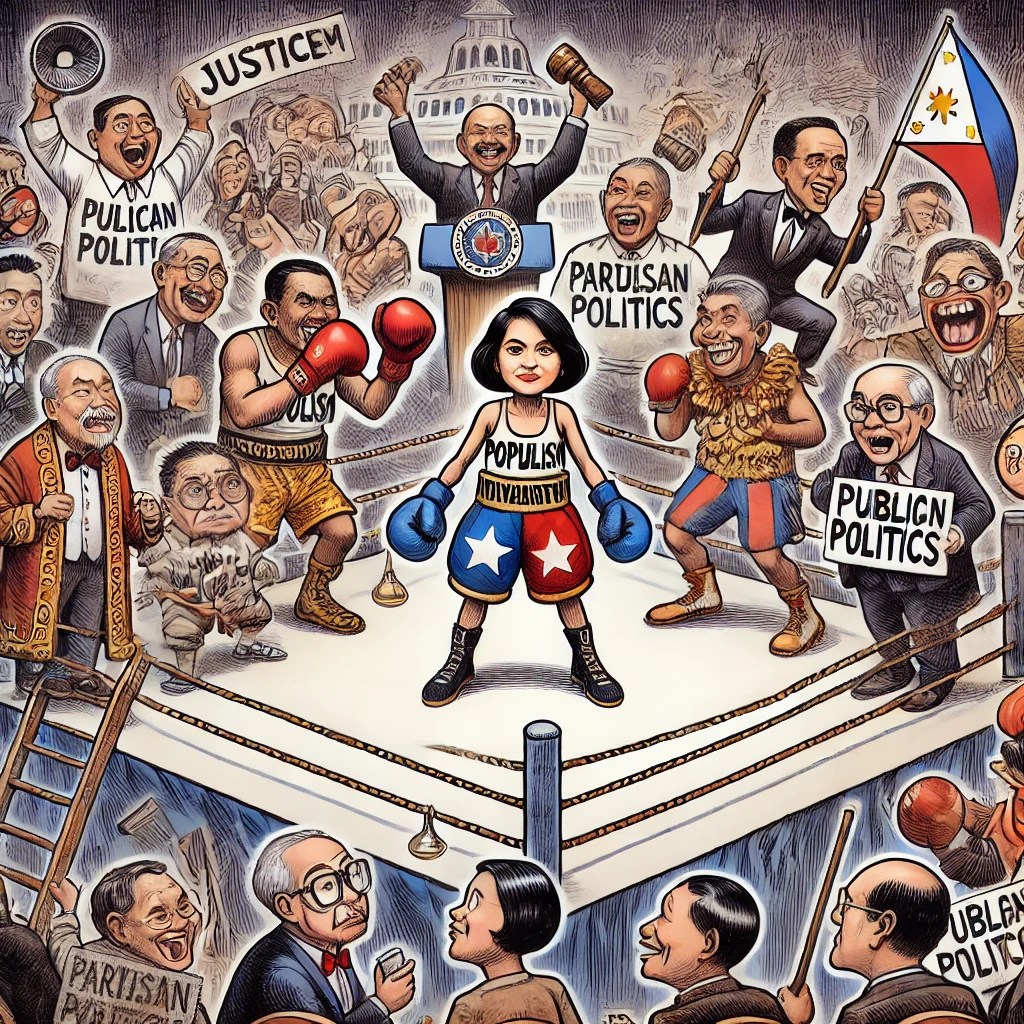
By Louis ‘Barok’ C Biraogo — February 5, 2025
A SINGLE political decision can alter the course of a nation. Today, 153 lawmakers have set the Philippines on a collision course with history by moving to impeach Vice President Sara Duterte. But is this a reckoning long overdue, or a dangerous precedent that could destabilize democracy itself?
At the heart of this battle lies a fundamental question: Is this impeachment a righteous reckoning for abuses of power, or a weaponized gambit in the unrelenting war of Philippine politics?
The Law Is Clear, But Is It Enough?
The Philippine Constitution, Article XI, Section 3, lays down strict grounds for impeachment: culpable violation of the Constitution, treason, bribery, graft and corruption, other high crimes, or betrayal of public trust. These are weighty allegations, meant to safeguard the republic from leaders who pose a grave danger to its institutions. The lawmakers who have endorsed this complaint, exceeding the one-third threshold, have ensured that the case bypasses congressional committees and heads straight to the Senate for trial.
But here’s the crux of the issue: Are the allegations substantial enough to meet the constitutional bar for impeachment? If this is just another case of political maneuvering disguised as moral outrage, then the process itself risks becoming the very betrayal of public trust it seeks to punish.
Recent jurisprudence, such as Francisco v. House of Representatives (2003) and Gutierrez v. House of Representatives (2007), has reinforced the notion that impeachment is not a tool for settling political scores. A weak case could backfire, reinforcing the perception that this is just another chapter in the Philippines’ long history of impeachment as political retribution rather than a genuine effort at accountability.
The Political Undercurrents: More Than Just a Legal Case
The numbers alone—153 lawmakers in favor—signal a formidable coalition with clear political motivations. Duterte has never been a conventional political figure; she has been both a champion and a lightning rod, a symbol of both populist strength and establishment defiance. The forces arrayed against her come from both political adversaries and factions within her own sphere.
This is a high-risk gamble. If she is convicted, it will send a chilling message that no political dynasty, no matter how entrenched, is immune from scrutiny. If she is acquitted, she emerges stronger—a populist phoenix rising from the ashes of an attempted takedown, with a ready-made narrative of political persecution heading into the next elections.
Impeachment is often a Rorschach test of a nation’s political mood. In the U.S., the impeachments of Donald Trump were bitterly divisive, with clear lines drawn between those who saw them as a necessary check on executive abuse and those who decried them as partisan overreach. In South Korea, former President Park Geun-hye’s impeachment demonstrated that public outrage, when backed by compelling evidence, can indeed dismantle even the most powerful figures.
In the Philippines, the stakes are no different. If this impeachment is perceived as politically motivated rather than legally sound, it will deepen public cynicism, erode trust in institutions, and reinforce the idea that governance is just a never-ending chess match of power plays.
The Ethical Litmus Test
There is a broader ethical question at play: Do lawmakers have a duty to pursue impeachment even when the odds of conviction are slim? The Code of Conduct and Ethical Standards for Public Officials (Republic Act No. 6713) demands integrity, transparency, and accountability from public officials. But these principles cut both ways. If the 153 lawmakers pushing for impeachment have compelling evidence, then they are fulfilling their duty to the nation. If, however, this is merely a power struggle in legislative clothing, then they themselves may be guilty of undermining public trust.
A political system that wields impeachment as a blunt instrument for partisan battles risks setting a dangerous precedent—one where elections become secondary to post-election legal warfare, and governance is perpetually stalled by accusations rather than action.
What Comes Next?
Regardless of how this impeachment plays out, it carries significant implications for the nation’s democratic future:
- If Duterte is convicted, it will set a new standard for accountability—one that could haunt future leaders who believe their political strength shields them from scrutiny.
- If she is acquitted, it will embolden her supporters and potentially set the stage for an even fiercer political resurgence.
- If the process collapses due to procedural missteps, it will reinforce the perception that impeachment is a broken mechanism, used more as a tool of political harassment than of genuine accountability.
For lawmakers, the imperative is clear: If impeachment is to mean anything, it must be about justice, not politics. If they wish to uphold the rule of law, they must ensure that this process is transparent, evidence-based, and free from political score-settling. Otherwise, this will be just another chapter in the Philippines’ long, exhausting history of impeachment as spectacle rather than substance.
Long after the votes are cast and the headlines fade, one question will remain: Did the Philippines rise to the challenge of justice, or did it allow politics to triumph over principle? This moment will not just define Sara Duterte’s fate—it will shape the legacy of Philippine democracy for generations to come.

- ₱75 Million Heist: Cops Gone Full Bandit

- ₱6.7-Trillion Temptation: The Great Pork Zombie Revival and the “Collegial” Vote-Buying Circus

- ₱1.9 Billion for 382 Units and a Rooftop Pool: Poverty Solved, Next Problem Please

- ₱1.35 Trillion for Education: Bigger Budget, Same Old Thieves’ Banquet

- ₱1 Billion Congressional Seat? Sorry, Sold Out Na Raw — Si Bello Raw Ang Hindi Bumili

- “We Will Take Care of It”: Bersamin’s P52-Billion Love Letter to Corruption

- “Skewed Narrative”? More Like Skewered Taxpayers!

- “Scared to Sign Vouchers” Is Now Official GDP Policy – Welcome to the Philippines’ Permanent Paralysis Economy

- “Robbed by Restitution?” Curlee Discaya’s Tears Over Returning What He Never Earned

- “My Brother the President Is a Junkie”: A Marcos Family Reunion Special

- “Mapipilitan Akong Gawing Zero”: The Day Senator Rodante Marcoleta Confessed to Perjury on National Television and Thought We’d Clap for the Creativity

- “Just Following Orders” Is Dead: How the Hague Just Turned Tokhang’s Finest Into International Fugitives


 KWEBA ni BAROK
Leave a comment