
By Louis ‘Barok‘ C. Biraogo — February 13, 2025
WHAT would you do if your next meal depended on government aid? For millions of Filipinos, this isn’t a hypothetical—it’s reality. The latest surveys by Social Weather Stations (SWS) and Pulse Asia reveal overwhelming approval for social welfare programs, with 90% of respondents calling the Pantawid Pamilyang Pilipino Program (4Ps) a crucial lifeline. The Tulong Panghanapbuhay sa Ating Disadvantaged/Displaced Workers (TUPAD) program, which provides emergency employment, and the Assistance to Individuals in Crisis Situations (AICS) program, which offers financial aid to those in distress, both received similarly high ratings. Meanwhile, the Walang Gutom Program (WGP), aimed at addressing food insecurity, has been widely embraced as a necessity. In a country grappling with economic hardship, these programs aren’t just forms of assistance—they are a matter of survival.
But dig a little deeper, and the data reveals a more complex reality—one that raises uncomfortable questions about sustainability, governance, and the long-term effectiveness of a system built on perpetual assistance.
The Politics of Generosity
At face value, these numbers reinforce a long-standing truth in Philippine politics: direct government aid is popular. The Philippines, where nearly one in five families lives in poverty, has historically relied on “ayuda” (assistance) as both an economic tool and a political strategy. From Ferdinand Marcos Sr.’s “Kadiwa” rolling stores in the 1970s to Gloria Macapagal-Arroyo’s conditional cash transfers, presidents have used social welfare programs not only to alleviate hardship but also to secure public goodwill.
This latest wave of support for government aid should come as no surprise. Filipinos have endured soaring food prices, sluggish wage growth, and widening inequality. In that context, cash assistance and short-term employment programs feel less like temporary relief and more like economic necessities. The question is: Do these programs empower the poor, or do they merely pacify them?
The Hidden Trade-Offs of Welfare Dependence
Beneath the strong satisfaction ratings, there are signs of deeper vulnerabilities. Pulse Asia’s survey suggests that 82% of respondents believe 4Ps improves financial stability. But does it? Studies on conditional cash transfer programs worldwide—including 4Ps—show that while they reduce short-term poverty, they do little to break the cycle of dependence unless paired with quality education, job creation, and economic reforms.
Then there’s TUPAD, the government’s emergency employment program, which enjoys 88% approval. It provides short-term jobs to displaced workers—yet it offers no path to long-term employment. A carpenter hired for 15 days of road maintenance will eventually return to joblessness once his contract ends. Is this truly economic empowerment, or just a Band-Aid on a broken system?
Another unspoken issue is transparency. Stratbase Group president Dindo Manhit warned that without proper oversight, these programs risk being exploited for political gain. The Philippines has a troubling history of patronage politics, where aid distribution is often influenced by electoral considerations. Who decides which families receive 4Ps benefits? Are employment slots in TUPAD distributed equitably, or do they reward political allies?
The Human Cost: Stories Behind the Statistics
To understand the stakes, consider the case of Analyn, a single mother in Cebu who has been a 4Ps beneficiary for five years. The cash grants help cover her children’s school expenses, but her real dream is a stable job. “Masaya ako sa tulong, pero kailan ba ako hindi na aasa sa ayuda?” she wonders. (I’m grateful for the help, but when will I stop relying on aid?)
Then there’s Joel, a construction worker in Manila who relies on TUPAD when regular work dries up. “Minsan, may trabaho. Minsan, wala. Pero sa TUPAD, kahit sandali lang, may kita.” (Sometimes there’s work, sometimes there’s none. But with TUPAD, at least for a while, I earn something.) He appreciates the program, but he knows it’s not a real solution.
These are the faces behind the statistics—Filipinos who need more than temporary relief. They need real, lasting opportunities.
Beyond Ayuda: A Roadmap for Reform
So where do we go from here? How can the government retain the social safety net’s benefits while addressing its shortcomings?
- Ensure Transparency and Fair Distribution – Social welfare programs should have independent audits, digital tracking of fund distribution, and clear beneficiary selection criteria to prevent political interference.
- Shift from Short-Term Relief to Long-Term Solutions – TUPAD should be linked to vocational training, helping workers transition into stable jobs. 4Ps should be restructured to include employment assistance for parents, not just education for children.
- Invest in Sustainable Livelihoods – Instead of relying on periodic cash handouts, the government should invest in small business grants, skills training, and rural development programs that create self-sufficiency.
- Strengthen Economic Policies to Reduce Poverty at its Root – Social welfare should not be a substitute for real economic reforms. Wage policies, agricultural support, and industrial growth must be prioritized to create well-paying jobs.
The Bigger Picture: Lessons for Governance
The Philippines is not alone in grappling with these questions. Across the world, from Brazil’s Bolsa Família to America’s food stamp program, governments struggle to balance short-term relief with long-term empowerment. The lesson is clear: social welfare works best when paired with policies that reduce the need for it.
Aid is essential, but it should be a bridge to stability—not a permanent crutch. The challenge for the Marcos administration is not just to sustain these programs but to transform them into stepping stones toward genuine economic progress. Otherwise, we risk building a nation perpetually dependent on government generosity, instead of one where citizens can thrive on their own.
The data from SWS and Pulse Asia tells us that Filipinos appreciate ayuda. The real test is whether the government can give them something even more valuable: independence.

- “Forthwith” to Farce: How the Senate is Killing Impeachment—And Why Enrile’s Right (Even If You Can’t Trust Him)

- “HINDI AKO NAG-RESIGN!”

- “I’m calling you from my new Globe SIM. Send load!”

- “Mahiya Naman Kayo!” Marcos’ Anti-Corruption Vow Faces a Flood of Doubt

- “Meow, I’m calling you from my new Globe SIM!”

- “No Special Jail for Crooks!” Boying Remulla Slams VIP Perks for Flood Scammers

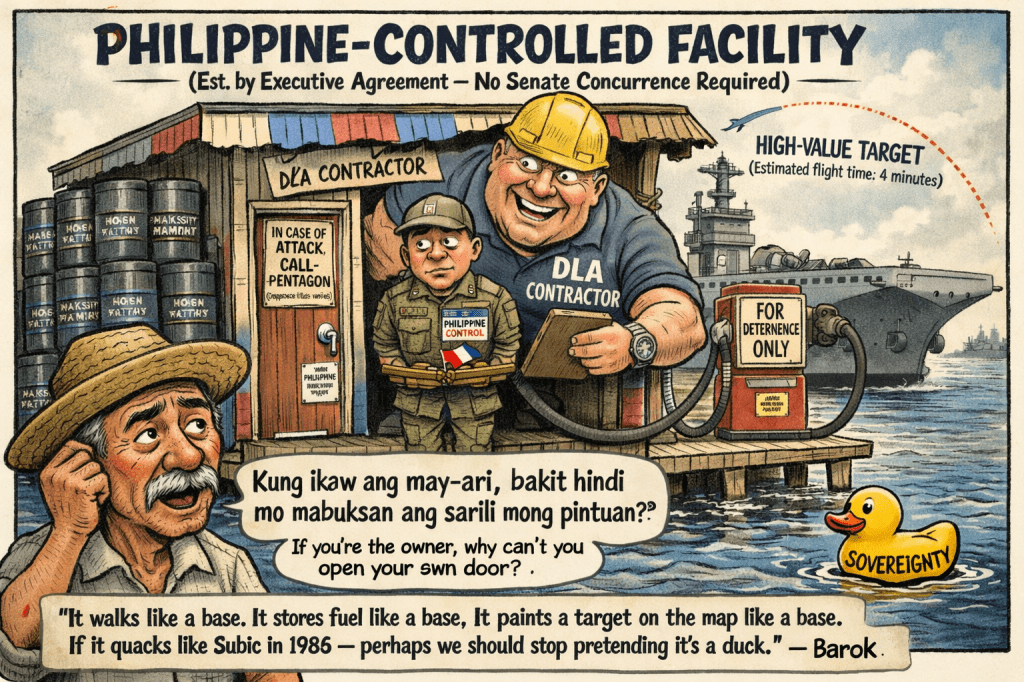
- “Philippine-Controlled” or Yankee Gas Station? The Davao Fuel Depot Farce Exposed

- “PLUNDER IS OVERRATED”? TRY AGAIN — IT’S A CALCULATED KILL SHOT

- “Several Lifetimes,” Said Fajardo — Translation: “I’m Not Spending Even One More Day on This Circus”

- “Shimenet”: The Term That Broke the Internet and the Budget

- “We Did Not Yield”: Marcos’s Stand and the Soul of Filipino Sovereignty

- “We Gather Light to Scatter”: A Tribute to Edgardo Bautista Espiritu


 KWEBA ni BAROK
Leave a comment