
By Louis ‘Barok‘ C. Biraogo — February 13, 2025
WAS the 2025 national budget tampered with? A legal battle is unfolding over accusations that Speaker Martin Romualdez and other House leaders falsified key legislative documents—a charge that carries serious legal consequences under Article 170 of the Revised Penal Code (RPC) and Republic Act No. 6713 (Code of Conduct and Ethical Standards for Public Officials and Employees). But is this a legitimate corruption case, or just political theater? With timing suspiciously aligned with the House’s impeachment of Vice President Sara Duterte, the accused say it’s all part of a grander political chess game. The answer could define the future of power struggles in Philippine politics.
The question before us: Is this a clear case of budget falsification, or a political maneuver cloaked in legalese?
Core Legal Contentions of the Prosecution
The complainants, led by former Speaker Pantaleon Alvarez, allege that House leaders inserted ₱241 billion into the national budget after lawmakers had signed the bicameral report. This, they argue, constitutes falsification of legislative documents under Article 170 of the RPC, which states:
“Any public officer who shall falsify any legislative document by altering its true meaning, making false statements, or inserting untruthful data, with intent to cause damage or make use of the falsified document, shall be held criminally liable.”
To secure a conviction, the prosecution must establish four key elements:
1. The Existence of a Genuine Legislative Document
- The bicameral conference report is an official document that serves as the final reconciled version of the budget before it is ratified by both chambers.
- The original bicam report contained blank spaces, while the final General Appropriations Act (GAA) submitted to Malacañang had specific amounts filled in.
2. Unauthorized Material Alteration
- The prosecution claims that inserting ₱241 billion into the budget after ratification is a material alteration.
- Unlike minor typographical corrections, adding billions in allocations substantively changes the approved budget.
3. Intent to Deceive or Defraud
- The accused claim the changes were mere corrections. However, the prosecution will argue that:
- The changes were not disclosed to lawmakers who ratified the bicam report.
- The insertions benefited specific projects or officials, raising red flags for corruption.
4. Public Interest and Harm
- The national budget directly impacts taxpayers, making any unauthorized alterations a matter of grave public interest.
If proven, violating Article 170 carries penalties of imprisonment and perpetual disqualification from public office.
Beyond criminal liability, the prosecution also alleges ethical violations under RA 6713, specifically:
- Lack of Transparency (Section 4(c))
- Public officials must disclose transactions involving public funds. The secrecy surrounding the ₱241-billion insertion undermines transparency.
- Conflict of Interest (Section 7)
- If the alterations benefit certain districts or political allies, it could be considered an abuse of power.
- Grave Misconduct
- Altering a key legislative document without proper authorization constitutes misconduct and warrants removal from office.
Prosecution’s Strongest Evidence
- Documentary Proof: The original bicameral report with blank spaces vs. the final enrolled copy with inserted figures.
- Witness Testimony: Lawmakers and legislative staff who processed the budget.
- Forensic Analysis: Investigating timestamps on document revisions.
Core Legal Contentions in Favor of the Accused
Speaker Romualdez and his allies reject the allegations, framing the complaint as a politically motivated attack by allies of former President Rodrigo Duterte. Their legal strategy revolves around three key defenses:
1. Lack of Intent to Falsify
- Good Faith Argument:
- The accused claim that post-ratification budget adjustments are standard practice.
- Stella Quimbo, the House appropriations chair, stated that technical staff were authorized to fill in blanks with correct figures after ratification.
- This, they argue, negates criminal intent, a required element for falsification under Article 170.
- Precedent from Macalintal v. PETROPHIL Corporation (G.R. No. 160261):
- The Supreme Court ruled that minor procedural lapses do not automatically constitute criminal misconduct if they do not violate substantive legal requirements.
2. Bicameral Conference Committee’s Authority
- The bicameral conference committee is empowered to reconcile budget discrepancies.
- Adjustments made by staff after ratification but before transmittal fall within legislative discretion under Article VI, Section 16 of the 1987 Constitution.
- Presumption of Regularity (Rule 131, Rules of Court):
- Public officers are presumed to have acted in good faith unless proven otherwise.
- The burden of proof is on the prosecution to show clear intent to deceive.
3. Political Motive Behind the Complaint
- The accused argue that this is a retaliatory move following the impeachment of Vice President Sara Duterte.
- The complainants, led by Pantaleon Alvarez, are known Duterte allies who have openly criticized Romualdez’s leadership.
- Timing of the Case:
- If the complaint had genuine merit, why did Alvarez remain silent during budget deliberations?
- The accused will argue that selective prosecution—focusing only on House leaders and not the Senate—suggests ulterior motives.
Procedural Framework and Supreme Court Precedents
- Jurisdiction of the Ombudsman
- The Ombudsman can investigate public officials, but Romualdez’s camp may argue parliamentary immunity, citing Francisco v. House of Representatives (G.R. No. 189600), which upheld legislative autonomy in internal matters.
- Exhaustion of Legislative Remedies
- The accused may contend that budget disputes should be resolved within Congress first, before resorting to external legal action.
- Burden of Proof in Criminal Cases
- Article 170 cases require proof beyond reasonable doubt. If the prosecution cannot establish clear intent and material damage, the accused may be acquitted.
Political Implications and Public Perception
Beyond legal arguments, this case is a high-stakes political battle.
- For the Complainants (Alvarez & Duterte Allies):
- If the case gains traction, it could severely weaken Romualdez ahead of 2025 elections.
- It fuels the Duterte vs. Romualdez power struggle, with Sara Duterte’s 2028 ambitions at stake.
- For the Accused (Romualdez & House Leaders):
- If they survive this case, they consolidate power and maintain influence over the 2025 budget, which is crucial for election preparations.
- However, public confidence in the legislative process will suffer if the case is dismissed on technicalities.
The Bigger Issue: Budget Transparency in the Philippines
- Whether criminally liable or not, the fact that ₱241 billion was inserted post-ratification raises serious concerns about how the budget is handled.
- Legislative reforms may be necessary to ensure transparency in the budget process and prevent future disputes.
Conclusion: What Comes Next?
- The Ombudsman will review the complaint and determine probable cause.
- If evidence is strong, it could lead to criminal charges and political fallout for Romualdez.
- If dismissed, it reinforces the narrative of political vendetta.
At its core, this case is about more than legal technicalities—it is a proxy war for control over Philippine politics. Whether justice prevails or political interests win out remains to be seen.

- “Forthwith” to Farce: How the Senate is Killing Impeachment—And Why Enrile’s Right (Even If You Can’t Trust Him)
- “HINDI AKO NAG-RESIGN!”

- “I’m calling you from my new Globe SIM. Send load!”

- “Mahiya Naman Kayo!” Marcos’ Anti-Corruption Vow Faces a Flood of Doubt

- “Meow, I’m calling you from my new Globe SIM!”

- “No Special Jail for Crooks!” Boying Remulla Slams VIP Perks for Flood Scammers

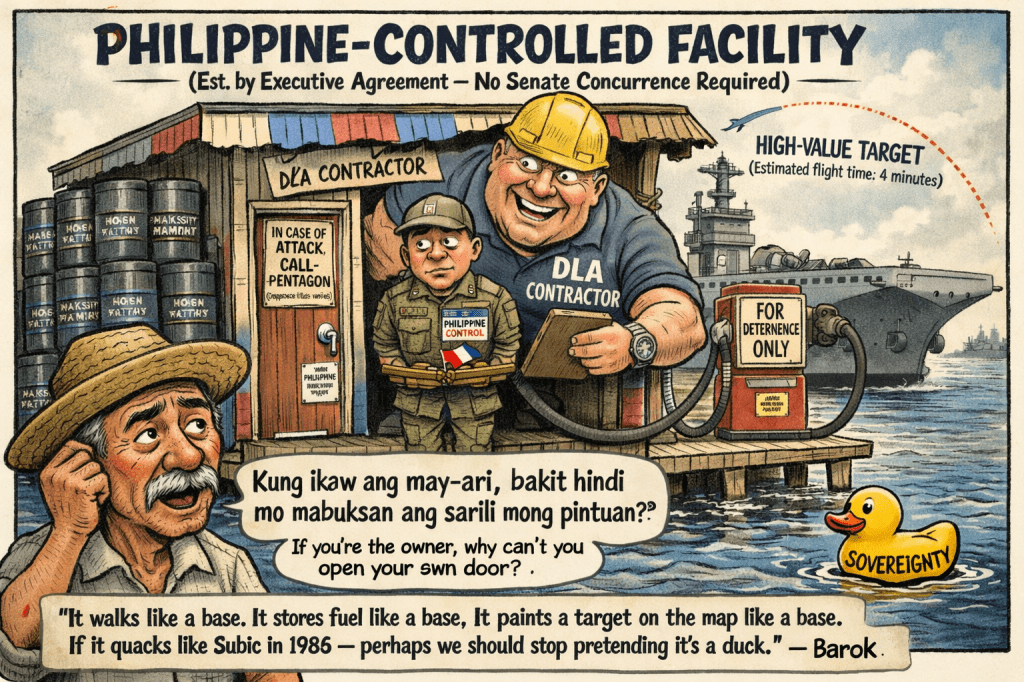
- “Philippine-Controlled” or Yankee Gas Station? The Davao Fuel Depot Farce Exposed

- “PLUNDER IS OVERRATED”? TRY AGAIN — IT’S A CALCULATED KILL SHOT

- “Several Lifetimes,” Said Fajardo — Translation: “I’m Not Spending Even One More Day on This Circus”

- “Shimenet”: The Term That Broke the Internet and the Budget

- “We Did Not Yield”: Marcos’s Stand and the Soul of Filipino Sovereignty

- “We Gather Light to Scatter”: A Tribute to Edgardo Bautista Espiritu



 KWEBA ni BAROK
Leave a comment