By Louis ‘Barok‘ C. Biraogo — February 13, 2025
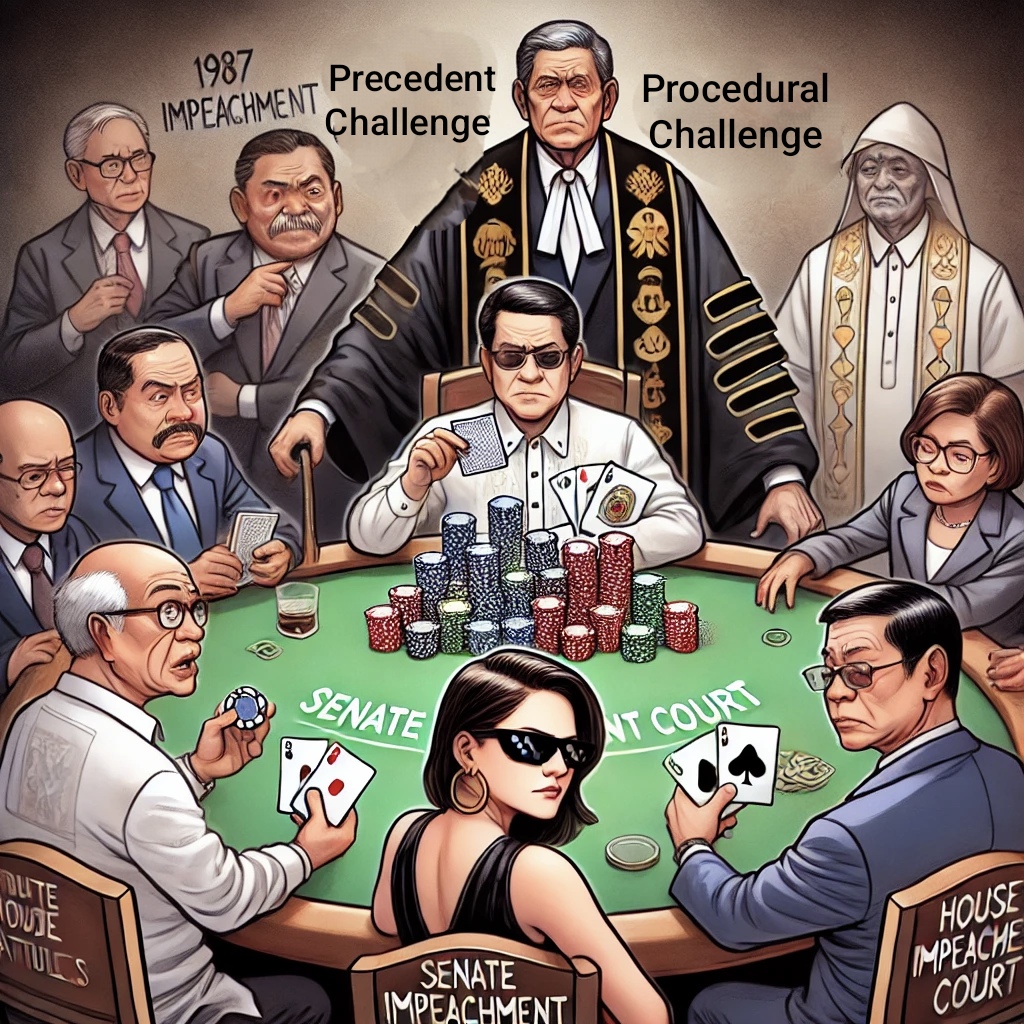
IF Philippine politics were a high-stakes poker game, the House of Representatives just went all in—impeaching Vice President Sara Duterte with a staggering 240 votes. But will this bold move secure victory, or are lawmakers walking into a legal trap, as the late Senator Miriam Defensor Santiago once warned? Now, the Senate holds the cards, and the stakes couldn’t be higher.
This impeachment is more than just a legal proceeding—it is a political earthquake, shaking the already unstable foundations of Philippine democracy. Let’s break it down.
The Charges: A Legal Minefield
The impeachment complaint against Duterte includes betrayal of public trust, culpable violation of the Constitution, bribery, graft and corruption, and other high crimes. That is a laundry list of allegations, but impeachment is not a courtroom trial—it is inherently political. The Senate will be the ultimate judge, and the success of these charges will depend less on strict legal interpretations and more on political will.
The most serious charge—culpable violation of the Constitution—must clear a high bar. The 1987 Constitution does not define it precisely, but past impeachments suggest that it requires a clear, willful, and egregious breach of fundamental law. If the prosecution has a smoking gun, a direct and irrefutable violation, then conviction is possible. If not, this may devolve into a political spectacle, a battle of narratives rather than a battle of facts.
Bribery and graft allegations are also complex. The bar for proving criminal liability in a court of law is higher than in an impeachment trial, but the public will expect evidence beyond political rhetoric. If the case is poorly argued, it could backfire, reinforcing Duterte’s claims of persecution rather than accountability.
The Prosecution Panel: Are They Up for the Fight?
The composition of the House prosecution team is a mix of political veterans, legal professionals, and political newcomers. Some, like Joel Chua and Gerville Luistro, have legal backgrounds and have aggressively pursued corruption cases. Others, like Romeo Acop, bring law enforcement experience to the table. But Miriam Defensor Santiago’s warning looms large: impeachment is a matter of law, and many House members are not trained litigators.
Santiago’s critique during the 2012 impeachment of Chief Justice Renato Corona remains relevant. The House prosecutors then struggled with trial tactics, often fumbling legal arguments against a well-prepared defense. Will history repeat itself? Many of the current impeachment prosecutors lack extensive litigation experience, and their biggest challenge may not be proving Duterte’s guilt, but proving their own competence in an impeachment court where the defense team will likely be stacked with seasoned lawyers.
The Political Context: Power Struggles and Hidden Agendas
Beyond the legal arguments, the impeachment is a political weapon wielded in a high-stakes battle. Duterte’s relationship with President Marcos Jr. has spiraled into open warfare, and her removal would empower Marcos to consolidate his power with his allies. The Speaker of the House, Martin Romualdez, Marcos’ cousin and a powerful figure in the House of Representatives, is suspected of orchestrating the impeachment push. This raises the question: is this about corruption and accountability, or about eliminating a political rival ahead of the 2028 presidential election?
The move also signals a potential realignment of political forces. Many of the House prosecutors are affiliated with factions that have distanced themselves from Duterte’s camp, suggesting that Marcos is using this impeachment to purge remnants of the Duterte political machine. If successful, this could mark the end of the Duterte dynasty’s grip on national politics. If it fails, however, it could strengthen Duterte by painting her as a political martyr.
Procedural Hurdles: The Road to the Senate Trial
The Senate trial will be the real battlefield, and procedural issues could decide the outcome. The defense could challenge the sufficiency of the charges, argue that due process was not observed in the House, or exploit procedural loopholes to delay the trial.
One key procedural issue is the One-Year Rule, which prohibits multiple impeachment complaints against the same official within a year. While four complaints were initially filed with the House Secretary General, only one was forwarded to the Speaker’s office. If Duterte’s camp can argue that this selection process was flawed or that procedural lapses occurred in handling the complaints, they could seek to invalidate the impeachment case entirely on technical grounds.
Additionally, the 10-Day Rule, which applies to the House of Representatives, requires a roll-call vote on the impeachment complaint within ten session days. If the House failed to comply with this requirement or committed procedural missteps during the voting process, these issues could be raised in the Senate. As the impeachment court, the Senate could then dismiss the case outright without proceeding to a full trial, citing defects in how the House transmitted the articles of impeachment.
Public Opinion and Media Narratives
The impeachment battle is being fought not just in Congress but also in the court of public opinion. The Facebook post referencing Santiago’s 2012 impeachment critique is telling—it highlights public skepticism about the House prosecutors’ competence and suggests that the impeachment is as much about political theater as it is about legal accountability.
The Marcos administration’s control of key media networks will likely shape coverage, and Duterte’s allies will frame her as a victim of political persecution. If the prosecution fails to present a compelling case, Duterte could emerge politically stronger, with public sympathy on her side.
Ensuring a Fair Trial: Recommendations
- Strengthen the Legal Team: House prosecutors should enlist experienced litigators to assist with legal strategy, ensuring that the case is airtight and not just a political performance.
- Stick to the Strongest Charges: Rather than presenting a broad, unfocused case, the prosecution should zero in on the most provable and politically compelling charges.
- Avoid Political Grandstanding: The prosecution must resist the temptation of media theatrics. A weak case will be exploited by the defense to discredit the entire impeachment process.
- Ensure Senate Transparency: The trial should be fully televised and open to public scrutiny to counter accusations of a politically motivated vendetta.
The Stakes: More Than Just One Politician’s Fate
Sara Duterte’s impeachment is not just about her—it’s about the future of political accountability in the Philippines. If the prosecution succeeds, it could set a precedent for holding high officials accountable. If it fails, it could reinforce the perception that impeachments in the Philippines are mere political tools rather than instruments of justice.
History has seen this moment before—leaders invoking legality while democracy hangs in the balance. The question is not just what happens in this impeachment, but what precedent it sets. Will future generations inherit a system that serves the people or one that serves only power?

- ₱75 Million Heist: Cops Gone Full Bandit

- ₱6.7-Trillion Temptation: The Great Pork Zombie Revival and the “Collegial” Vote-Buying Circus

- ₱1.9 Billion for 382 Units and a Rooftop Pool: Poverty Solved, Next Problem Please

- ₱1.35 Trillion for Education: Bigger Budget, Same Old Thieves’ Banquet

- ₱1 Billion Congressional Seat? Sorry, Sold Out Na Raw — Si Bello Raw Ang Hindi Bumili

- “We Will Take Care of It”: Bersamin’s P52-Billion Love Letter to Corruption

- “Skewed Narrative”? More Like Skewered Taxpayers!

- “Scared to Sign Vouchers” Is Now Official GDP Policy – Welcome to the Philippines’ Permanent Paralysis Economy

- “Robbed by Restitution?” Curlee Discaya’s Tears Over Returning What He Never Earned

- “My Brother the President Is a Junkie”: A Marcos Family Reunion Special

- “Mapipilitan Akong Gawing Zero”: The Day Senator Rodante Marcoleta Confessed to Perjury on National Television and Thought We’d Clap for the Creativity

- “Just Following Orders” Is Dead: How the Hague Just Turned Tokhang’s Finest Into International Fugitives



 KWEBA ni BAROK
Leave a comment