By Louis ‘Barok‘ C. Biraogo — February 16, 2025
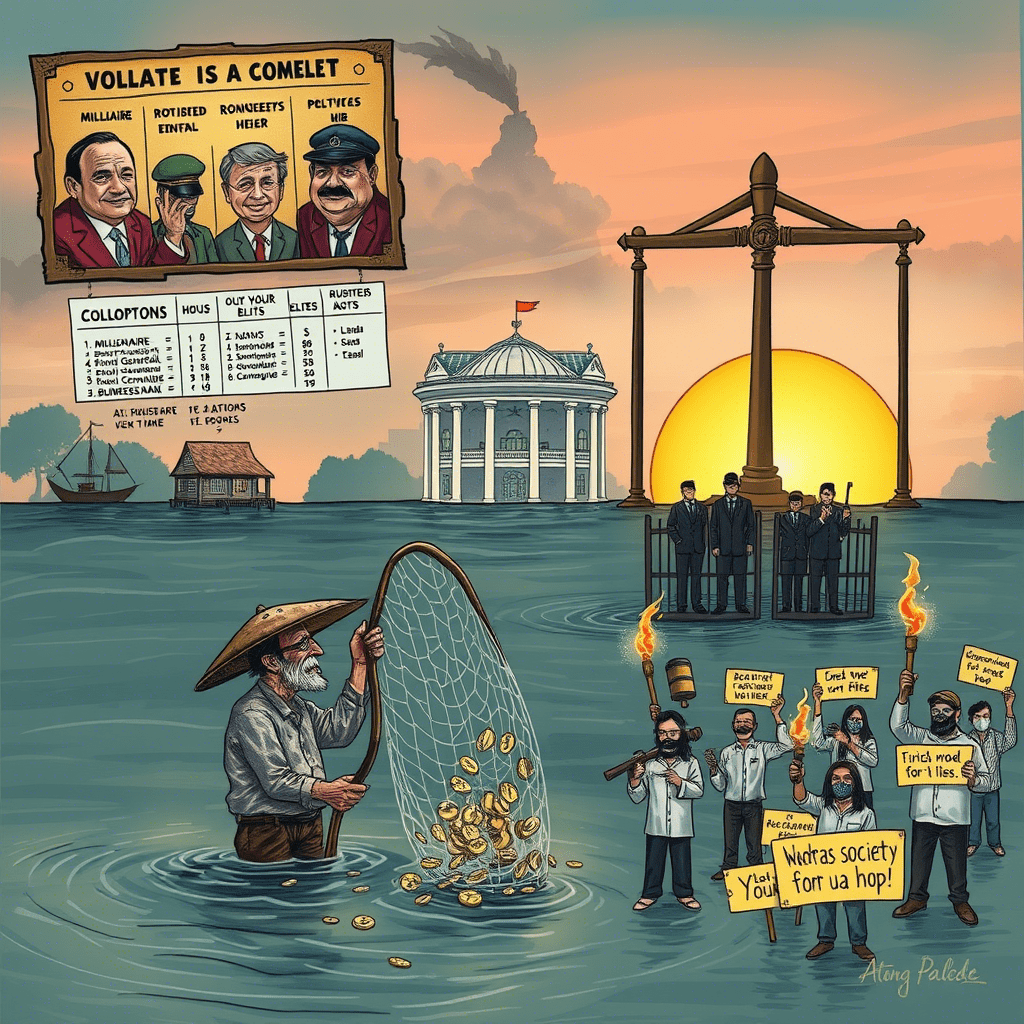
BEFORE dawn breaks, a fisherman in the Visayas casts his net into the dark waters, praying for a catch that will feed his family. But as he scans the list of party-list candidates—the very people meant to fight for his rights—he finds no fellow fisherfolk. Instead, he sees millionaires, retired generals, and heirs of political dynasties. What was once a system for the marginalized now serves as a safety net for the powerful.
Is the Philippine party-list system a sham? Was it always doomed to be co-opted by the powerful, or is there still hope for reform?
A System Built on Good Intentions—Hijacked by the Powerful
When the Party-List System Act (RA 7941) was passed in 1995, it was envisioned as a tool to give the poor, the workers, the indigenous, and other underrepresented groups a fighting chance in the halls of Congress. The law explicitly stated that party-list representatives must come from the marginalized and advocate for their causes.
But like a road paved with good intentions, the system was vulnerable to exploitation. Political dynasties and business tycoons saw an opportunity—why compete in expensive congressional races when they could simply create party-list groups, fund their way to victory, and gain additional seats in the legislature?
Over time, what was supposed to be a counterbalance to elite politics became a backdoor for the very people it sought to exclude. According to the watchdog Kontra Daya, more than half of the 156 party-list groups contesting this year’s elections have ties to dynasties, big business, or the police and military. These are not organizations representing the poor. They are extensions of power, using the party-list system as a tool for influence.
The Supreme Court’s Fatal Blow
If there was a turning point in the party-list system’s downfall, it was the Supreme Court’s 2013 ruling in Atong Paglaum v. Comelec. The decision removed the requirement that party-list groups must represent marginalized sectors, effectively opening the floodgates for traditional politicians and wealthy individuals. What was once a protection for the voiceless became a loophole for the powerful.
The ruling contradicted the intent of the Constitution, which mandates that party-list representatives should serve underrepresented sectors. It also disregarded earlier efforts to clean up the system. In 2012, the Commission on Elections (Comelec) had disqualified numerous fake party-list groups, but after the Supreme Court ruling, they had no legal basis to continue doing so.
The numbers tell the story. In 2010, there were 187 party-list groups vying for a voice in Congress. By 2022, that figure had slipped to 173, a modest decline that belied persistent concerns about elite infiltration undermining the system’s purpose. This year, as of February 16, 2025, 156 party-list groups are running in the May midterms, and many of the frontrunners remain tethered to the same entrenched interests that dominate Philippine politics.
Why This Matters: The Real Losers
When a billionaire’s brother or a governor’s son takes a party-list seat meant for farmers or urban poor workers, the consequences are not just symbolic. These seats come with real power—legislative influence, government funding, and access to policymaking that should be used to uplift the marginalized. Instead, they are used to protect business interests, consolidate political control, and maintain the status quo.
Think of it this way: Every seat occupied by a fake party-list group is a seat denied to a real grassroots organization. It’s a voice stolen from an indigenous community, a labor union, or a fisherfolk association that genuinely needs representation.
The result? Policies that continue to favor the rich over the poor. A government that pretends to be democratic but is, in reality, an oligarchy with better marketing.
How the System Can Be Fixed
Reforming the party-list system won’t be easy, but it’s not impossible. Here’s where change can begin:
- Amend RA 7941 to Restore the Original Intent
- The law must be revised to require that party-list nominees come from the sectors they claim to represent.
- Groups linked to political dynasties, big businesses, or retired government officials should be automatically disqualified.
- Challenge the Supreme Court’s 2013 Decision
- Legal scholars and civic groups should file a petition to overturn Atong Paglaum v. Comelec and reinstate the requirement that party-list groups must represent marginalized sectors.
- Empower the Commission on Elections (Comelec)
- Comelec must be given the authority to conduct background checks on nominees and party-list groups before elections.
- Party-list groups should be required to publicly disclose their funding sources and organizational structure to prove they are genuine grassroots organizations.
- Implement Spending Limits
- Wealthy political clans and business elites should not be able to outspend genuine advocacy groups in party-list elections. Strict spending caps should be enforced.
- Mobilize Civil Society
- Voters must be educated on which party-list groups genuinely represent the marginalized and which are merely fronts for traditional politicians.
- Media and watchdog groups must continue exposing fake party-lists to increase public pressure for reform.
The Fight for Democracy Isn’t Over
It’s easy to be cynical about Philippine politics. Every election, the same names dominate the headlines. The same families tighten their grip on power. The same corrupt networks thrive.
But history has shown that democratic institutions—even broken ones—can be reformed when citizens fight back.
In 1986, Filipinos ousted a dictator through people power. In 2001, they removed a corrupt president. And in 2022, they proved that political dynasties can be challenged, even if they win the election.
The party-list system was meant to be a tool for the powerless. It is time to reclaim it.
The question is: Will Filipinos rise to the challenge?

- ₱8B BBM Pork: CCTV for Every Captain’s Kumpare?
- ₱75 Million Heist: Cops Gone Full Bandit

- ₱6.7-Trillion Temptation: The Great Pork Zombie Revival and the “Collegial” Vote-Buying Circus

- ₱1.9 Billion for 382 Units and a Rooftop Pool: Poverty Solved, Next Problem Please

- ₱1.35 Trillion for Education: Bigger Budget, Same Old Thieves’ Banquet
- ₱1 Billion Congressional Seat? Sorry, Sold Out Na Raw — Si Bello Raw Ang Hindi Bumili

- “We Will Take Care of It”: Bersamin’s P52-Billion Love Letter to Corruption

- “Skewed Narrative”? More Like Skewered Taxpayers!

- “Scared to Sign Vouchers” Is Now Official GDP Policy – Welcome to the Philippines’ Permanent Paralysis Economy
- “Robbed by Restitution?” Curlee Discaya’s Tears Over Returning What He Never Earned

- “No Pressure” Luistro? The House Pork Bazaar Exposed
- “My Brother the President Is a Junkie”: A Marcos Family Reunion Special



 KWEBA ni BAROK
Leave a comment