By Louis ‘Barok’ C Biraogo — February 19, 2025
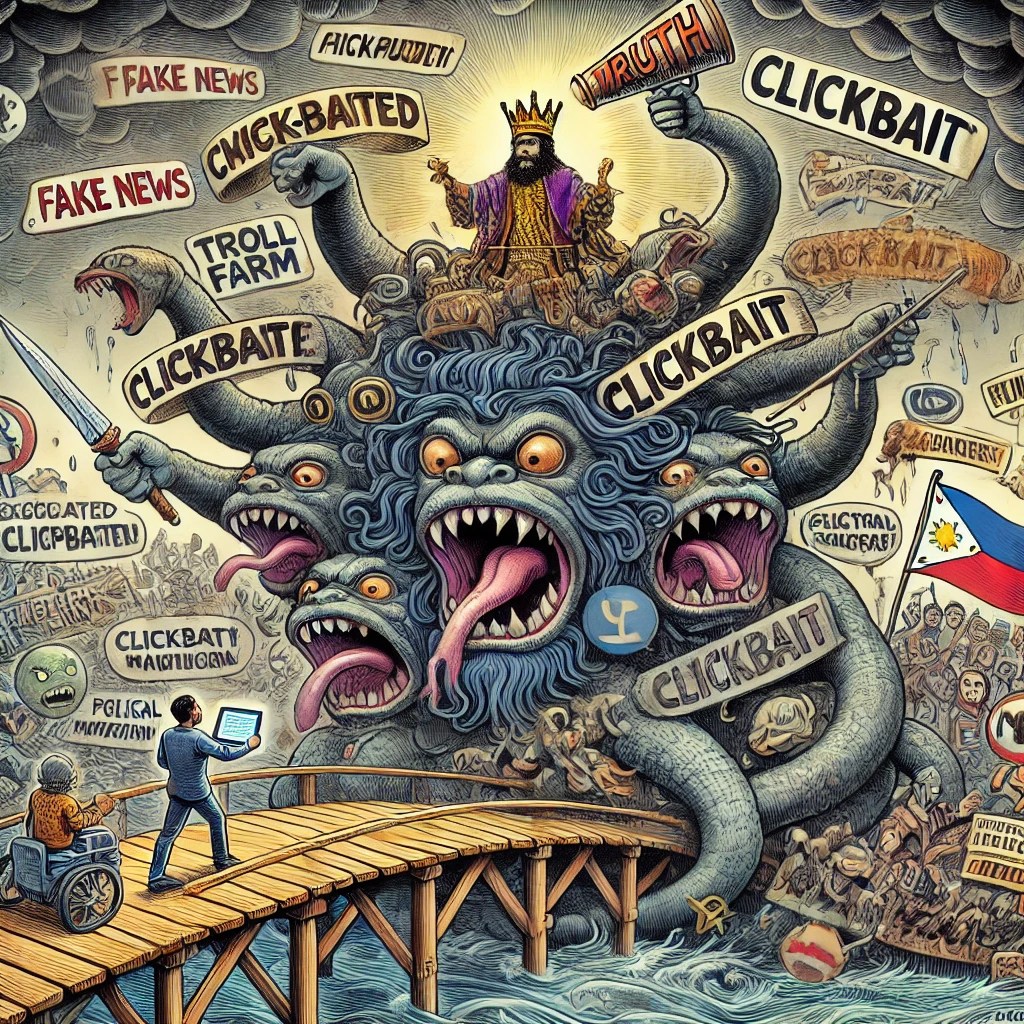
WHAT happens when misinformation becomes the new normal? In the Philippines, political propaganda has long been an art form—but the latest fake news, claiming that Vice President Sara Duterte enjoys higher trust ratings than President Ferdinand Marcos Jr., takes this deception to a whole new level. Even though OCTA Research swiftly disproved the claim, the seed of doubt has been sown. Will the truth matter in a world that’s grown accustomed to falsehoods?
This incident raises critical questions: Who benefits from spreading this lie? What does it say about the fragility of Philippine democracy? And most importantly, what can be done to combat the growing misinformation crisis?
The Anatomy of a Lie: Who Benefits?
Fake news does not spread in a vacuum. It thrives where political interests intersect with public gullibility. The recent false claim about Duterte’s supposed rise in ratings suggests two possible motives:
- Undermining Marcos: By portraying Marcos as losing public confidence, this misinformation could erode his political standing, making him appear weak and vulnerable. If factions within the ruling coalition seek to realign power, sowing doubt about Marcos’ leadership could be a strategic move.
- Elevating Duterte: This could be an attempt to rehabilitate the Vice President’s image, positioning her as a more viable political figure. With the 2028 presidential elections on the horizon, crafting a narrative of growing public support could lay the groundwork for a future bid.
Beyond these direct political beneficiaries, fake news merchants—troll farms, influencers, and clickbait websites—profit financially from sensationalism. More clicks mean more ad revenue, and truth is often the casualty.
The Consequences: Misinformation as a Democratic Threat
History has shown that misinformation can be weaponized to manipulate public perception and sway elections. The parallels with past political deceptions are unsettling:
- The Bangsamoro Organic Law is a Threat to National Security: This narrative often paints the BOL as a step towards secession, ignoring its intent to provide autonomy and address historical grievances. It fuels fear and division, hindering peace efforts.
- The West Philippine Sea is a Chinese Territory: This misinformation undermines the Philippines’ legal claim to the disputed waters and fuels Chinese expansionism. It weakens the country’s position in international negotiations and potentially endangers its maritime resources.
In the Philippines, fake news does more than just mislead—it erodes trust in institutions, weakens the press, and polarizes society. The longer falsehoods circulate, the harder it becomes to restore faith in factual discourse. When public trust collapses, democracy itself is at risk.
The Fight Against Fake News: What Needs to Change?
A multi-pronged approach is needed to curb the spread of misinformation and safeguard Philippine democracy:
1. Strengthening Media Literacy
- Education Initiatives: Schools should integrate media literacy programs to teach students how to critically evaluate news sources.
- Public Awareness Campaigns: The government, civil society, and tech platforms must collaborate on nationwide campaigns to educate citizens on detecting misinformation.
2. Holding Social Media Platforms Accountable
- Stricter Content Moderation: Tech companies must take responsibility for curbing the spread of fake news by improving detection algorithms and enhancing fact-checking partnerships.
- Transparency in Algorithms: Platforms should disclose how their algorithms promote certain content and take steps to reduce the virality of false information.
3. Enhancing Fact-Checking Efforts
- Government and Media Collaboration: Independent fact-checking organizations should receive institutional support without compromising editorial independence.
- Rapid Response Mechanisms: Establishing a government-led misinformation response team can help swiftly debunk viral fake news before it takes root.
4. Enacting Targeted Legislation
- Defining and Penalizing Fake News: A well-crafted law should distinguish between harmful misinformation and free speech while imposing penalties for those who deliberately spread falsehoods.
- Protecting Press Freedom: Anti-fake news laws must be precise to avoid weaponization against journalists and dissenters.
Navigating the Future: A Call for Vigilance and Resilience
This isn’t just about one fake survey. It’s about the broader war on truth. The Philippines stands at a crossroads—will it allow misinformation to dictate its political narrative, or will it take decisive action to protect democratic integrity?
The fight against fake news is not just a task for journalists or tech giants—it’s a battle we all must fight together. The media must be vigilant in uncovering the truth, social media platforms must take greater responsibility, and Filipinos must hold their leaders accountable. Our democracy isn’t a given; it’s something we must protect every single day. The fate of the Philippines hinges on our collective resolve.

- “Forthwith” to Farce: How the Senate is Killing Impeachment—And Why Enrile’s Right (Even If You Can’t Trust Him)
- “HINDI AKO NAG-RESIGN!”

- “I’m calling you from my new Globe SIM. Send load!”

- “Mahiya Naman Kayo!” Marcos’ Anti-Corruption Vow Faces a Flood of Doubt

- “Meow, I’m calling you from my new Globe SIM!”

- “No Special Jail for Crooks!” Boying Remulla Slams VIP Perks for Flood Scammers

- “PLUNDER IS OVERRATED”? TRY AGAIN — IT’S A CALCULATED KILL SHOT

- “Several Lifetimes,” Said Fajardo — Translation: “I’m Not Spending Even One More Day on This Circus”

- “Shimenet”: The Term That Broke the Internet and the Budget

- “We Did Not Yield”: Marcos’s Stand and the Soul of Filipino Sovereignty

- “We Gather Light to Scatter”: A Tribute to Edgardo Bautista Espiritu

- $150M for Kaufman to Spin a Sinking Narrative


 KWEBA ni BAROK
Leave a comment