By Louis ‘Barok‘ C. Biraogo — February 19, 2025
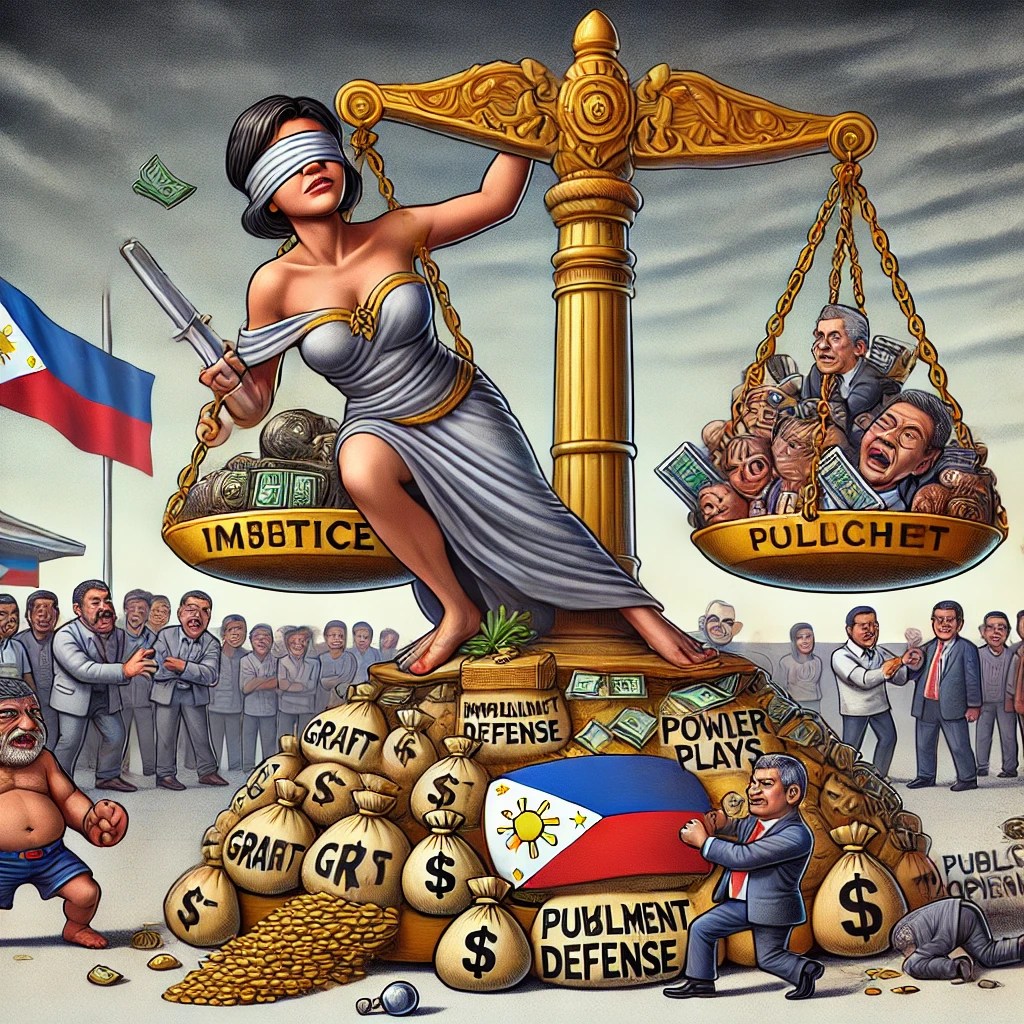
MARIA Santos, a schoolteacher in Manila, once believed in the steadfastness of her nation’s leaders. Today, she joins the 73% of Filipinos who, according to a Tangere survey, support the Senate impeachment trial of Vice President Sara Duterte. The allegations against Duterte have not only shaken the political elite but have also stirred the collective conscience of a nation yearning for accountability and justice.
A Crisis of Legitimacy
The impeachment complaint against Duterte, endorsed by 215 House members, alleges a laundry list of high crimes: culpable violation of the Constitution, betrayal of public trust, graft and corruption, and even an alleged plot to assassinate President Ferdinand Marcos Jr. and key members of his family. If true, these accusations go far beyond mere political infighting—they point to a government at war with itself.
But impeachment, as history has shown, is often as much about power as it is about the law. The fact that a majority of House members moved so decisively against Duterte suggests that she has lost the protection of the ruling coalition. Is this a genuine reckoning for wrongdoing, or a calculated move to eliminate a powerful rival?
The Marcos-Duterte Rift: A Battle for Political Dominance
The impeachment of Duterte is the clearest sign yet that the once-formidable Marcos-Duterte alliance is collapsing. In 2022, Bongbong Marcos and Sara Duterte formed an uneasy coalition that allowed them to dominate the elections. But alliances in Philippine politics are notoriously fragile. The moment Marcos secured the presidency, he no longer needed Duterte to consolidate power.
The assassination allegations are particularly revealing. Such a charge, if fabricated, would be an extraordinarily bold move to destroy Duterte’s political future. If true, it would expose an unprecedented level of internal sabotage within the administration. Either way, this impeachment is not just about legal culpability—it is about who will control the Philippines for the next decade.
The Senate’s Dilemma: Between Justice and Political Survival
The fate of Duterte now rests with the Senate, which must decide whether to proceed with a trial. Senate President Francis Escudero has so far resisted pressure to convene an impeachment court, citing procedural concerns. But the reality is far more complex.
- If the Senate convicts Duterte, it would mark a decisive break with the Duterte dynasty, effectively ending her political career and signaling that Marcos now reigns unchallenged.
- If the Senate acquits her, it risks backlash from those who view the trial as essential for accountability, raising questions about whether the system protects powerful figures at the expense of justice.
- If the Senate delays or stalls, it prolongs the political crisis, creating instability that could erode investor confidence and weaken governance.
It is important to note that the 73% who support an impeachment trial do not necessarily favor a conviction. Rather, their support indicates a strong public demand for due process and accountability. However, senators face a different kind of pressure—not just from public opinion but from their own political survival.
Many senators are reluctant to decide before the 2025 midterm elections, as the outcome will determine which faction—the Marcos or Duterte camp—emerges dominant. Those running under the administration-backed coalition are particularly cautious, knowing that any stance could alienate crucial voter blocs. A premature decision could provoke backlash either from the North, where Marcos remains strong, or from the South, where Duterte still commands significant influence. In this high-stakes game, political calculations often outweigh principled action.
Historical Parallels: Lessons from the Estrada and Corona Impeachments
This is not the first time the Philippines has faced a high-stakes impeachment trial. In 2000, President Joseph Estrada’s impeachment trial collapsed in chaos, leading to his ouster through people power. In 2012, Supreme Court Chief Justice Renato Corona was convicted in an impeachment trial that many saw as a political maneuver by the Aquino administration.
The lesson? Impeachment in the Philippines is rarely just a legal process—it is a test of political survival. And in most cases, the outcome is determined not by evidence, but by which faction holds the upper hand.
The Bigger Picture: What This Means for Philippine Democracy
Beyond the immediate political battle, the Duterte impeachment is a referendum on the state of democracy in the Philippines. Three key issues stand out:
- Weaponization of Impeachment: While impeachment is meant to hold leaders accountable, it is often used as a political weapon to eliminate rivals. This raises concerns about the impartiality of institutions tasked with upholding justice.
- Public Trust and Democratic Institutions: The fact that a majority of Filipinos support impeachment suggests a deep-seated frustration with corruption and abuse of power. Yet, if the process is seen as politically motivated, it could erode trust in democratic institutions rather than strengthen them.
- The Future of Opposition Politics: If Duterte falls, who will fill the vacuum? The opposition has struggled to present a strong alternative to the Marcos administration. The impeachment trial could either open the door for new leadership or consolidate power further within the Marcos camp.
Where Do We Go From Here? A Call for Institutional Reforms
Regardless of the trial’s outcome, this crisis underscores the urgent need for institutional reforms:
- Independent Investigative Bodies: The Philippines needs stronger institutions to investigate high-level corruption and abuses of power, free from political interference.
- Stronger Checks and Balances: Congress must ensure that impeachment is not just a political weapon but a legitimate tool for accountability.
- Civic Engagement and Transparency: Filipinos must demand transparency in the process. Public pressure should not only focus on punishment but on long-term reforms to prevent future abuses.
The Verdict: A Nation at a Crossroads
The coming weeks will determine not just Sara Duterte’s fate but the direction of Philippine democracy. The Senate’s decision will send a message about whether accountability still holds meaning in a system dominated by political dynasties.
This is not just about politics. It is about the kind of nation we want to be. If history has taught us anything, it is that silence allows injustice to thrive. The question now is simple: Will we be the generation that speaks up—or the one that lets history repeat itself?

- “Forthwith” to Farce: How the Senate is Killing Impeachment—And Why Enrile’s Right (Even If You Can’t Trust Him)
- “HINDI AKO NAG-RESIGN!”

- “I’m calling you from my new Globe SIM. Send load!”

- “Mahiya Naman Kayo!” Marcos’ Anti-Corruption Vow Faces a Flood of Doubt

- “Meow, I’m calling you from my new Globe SIM!”

- “No Special Jail for Crooks!” Boying Remulla Slams VIP Perks for Flood Scammers

- “PLUNDER IS OVERRATED”? TRY AGAIN — IT’S A CALCULATED KILL SHOT

- “Several Lifetimes,” Said Fajardo — Translation: “I’m Not Spending Even One More Day on This Circus”

- “Shimenet”: The Term That Broke the Internet and the Budget

- “We Did Not Yield”: Marcos’s Stand and the Soul of Filipino Sovereignty

- “We Gather Light to Scatter”: A Tribute to Edgardo Bautista Espiritu

- $150M for Kaufman to Spin a Sinking Narrative



 KWEBA ni BAROK
Leave a comment