By Louis ‘Barok‘ C. Biraogo — February 22 2025
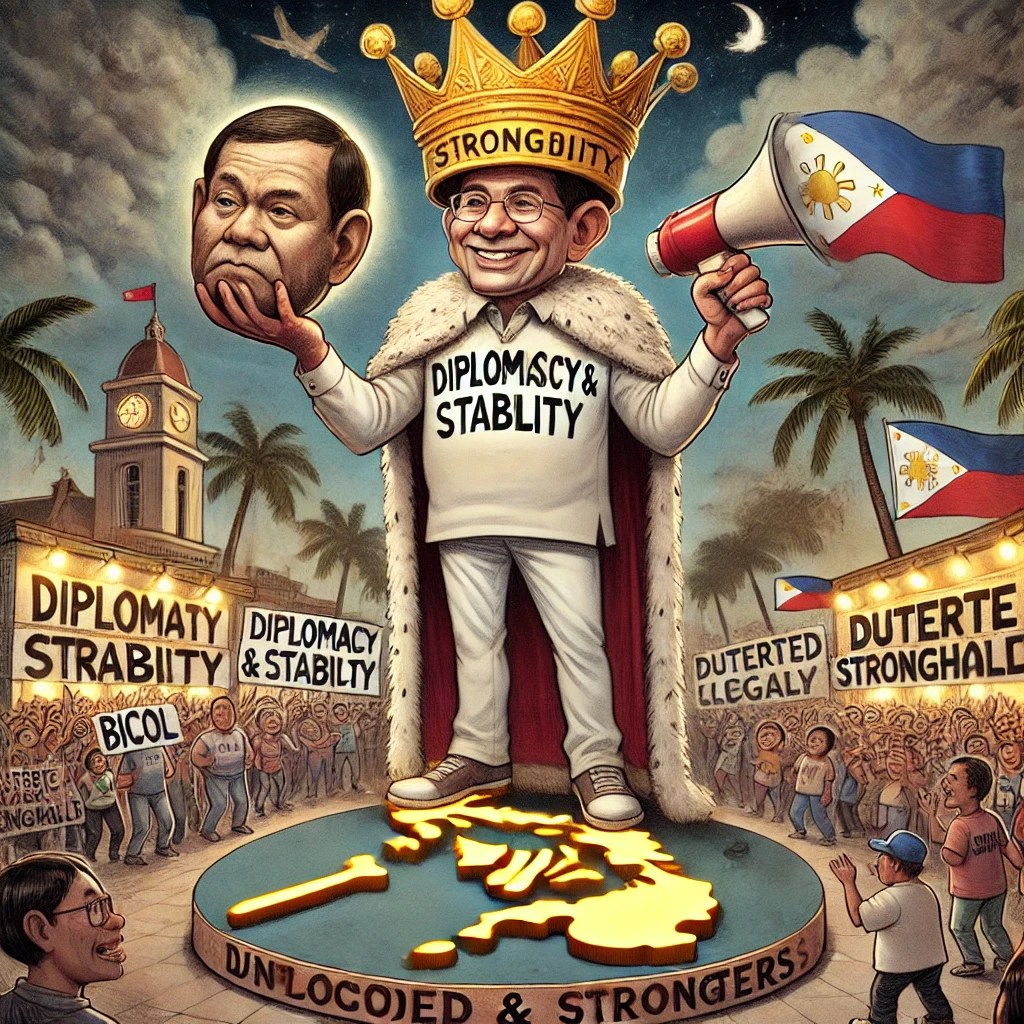
IN THE crowded plaza of Davao City, where banners once proclaimed the Duterte name with unshakable certainty, a quiet but unmistakable shift is underway. Vendors who once sold Sara Duterte campaign merchandise now hedge their bets, offering shirts with President Ferdinand Marcos Jr.’s face alongside—or even instead of—the Duterte brand. For decades, Mindanao has been the bastion of the Dutertes, yet the latest OCTA Research survey suggests an unraveling of their grip. In a political landscape shaped by dynasties, the widening chasm between Marcos’s 36% support and Duterte’s dwindling 18% is more than a statistical fluctuation; it is a seismic political realignment with deep implications for the country’s future.
A Full-Blown Political War
The Marcos-Duterte alliance, once a juggernaut that delivered an overwhelming victory in the 2022 elections, is no longer just fracturing—it has collapsed into outright hostility. What was once a marriage of political convenience has turned into a brutal contest for dominance. Marcos needed Duterte’s grassroots machinery in Mindanao, while Duterte gained national legitimacy by aligning with the historically controversial Marcos name. But the gloves are now off. With allegations of corruption, betrayal, and even whispered accusations of assassination plots, the former allies are now openly going for each other’s throats.
Marcos’s team, aware of the shifting landscape, has been methodically consolidating support. His administration has expanded social welfare programs in regions outside traditional Duterte strongholds while leveraging state resources to reinforce loyalty. Duterte, by contrast, has seen her influence wane, particularly outside of Davao. In Mindanao, where she once commanded absolute dominance, her support has plummeted from 25% to 9%. Even in her home region, she is no longer assured a monolithic voter base.
Regional Battlegrounds: The Contest for Supremacy
The survey data reveals a stark regional divide that is emblematic of larger political shifts. Marcos enjoys towering majorities in Northern and Eastern Luzon, with support reaching an astonishing 78% in Bicol, a region historically associated with the opposition. The Ilocos Region (71%) and Cagayan Valley (68%) remain Marcos strongholds, affirming the dominance of his family name in the north.
By contrast, Duterte’s standing in Mindanao has dramatically declined. Once her fortress, regions outside Davao now report support as low as 0% in some areas. This could be due to the administration’s ability to extend its influence into previously Duterte-aligned territories, either through patronage or the slow erosion of Duterte fatigue.
What explains this shift? One possibility is that the Duterte brand—once built on a tough, uncompromising stance against criminality and an appeal to strongman politics—is losing its luster in a post-Rodrigo Duterte era. Sara Duterte, while an imposing political figure, lacks the visceral charisma of her father. Meanwhile, Marcos has positioned himself as a more stable, diplomatic leader, emphasizing continuity rather than disruption.
The Undecided: A Wild Card in the Philippine Election
Perhaps the most consequential finding of the survey is the 26% of Filipinos who identify as politically independent, with another 12% undecided. These voters could be the kingmakers in future elections, determining whether Marcos solidifies his control or if a revitalized Duterte faction can mount a comeback.
The high percentage of independent voters suggests disillusionment with both dominant political families. Unlike previous elections where Filipinos gravitated toward entrenched dynasties, there is now a significant bloc open to persuasion. Their concerns—economic recovery, governance reform, and territorial sovereignty in the West Philippine Sea—may ultimately shape their choices more than blind loyalty to a political clan.
The Road to 2025: Political Strategies in Play
With midterm elections looming, both camps are expected to recalibrate their strategies. Marcos’s strategy appears clear: leverage state resources, consolidate his hold over key regions, and obliterate Duterte’s influence in Mindanao. His administration’s expansion of government aid programs, particularly in traditionally pro-Duterte regions, is a calculated move to sway voters.
Duterte, on the other hand, faces a steeper climb. To regain lost ground, she must rekindle the grassroots fervor that once defined her father’s base. This may involve adopting a more aggressive stance against the Marcos administration, painting herself as the authentic populist alternative. However, this strategy carries risks—particularly if it alienates conservative voters who favor stability over political infighting.
The West Philippine Sea: A Key Factor in the 2025 Election
Beyond domestic politics, these shifts have broader geopolitical consequences. The West Philippine Sea dispute remains one of the most critical issues for Filipino voters, with 70% advocating for diplomatic assertion of the country’s territorial rights. Marcos has positioned himself as a pragmatist, balancing diplomatic overtures with military modernization efforts. His closer alignment with the United States and continued rejection of Chinese encroachment contrast sharply with the Duterte administration’s previous pro-Beijing tilt.
However, the deepening political war between Marcos and Duterte opens the door for foreign actors—especially China—to exploit the division. Given Duterte’s previous diplomatic alignment with Beijing, it is possible that China may covertly or even openly support her political resurgence. This could take the form of economic backing for Duterte-aligned local governments, media amplification through pro-China networks, or even diplomatic maneuvers designed to undermine Marcos’s foreign policy. If Duterte leans into anti-American rhetoric, Beijing may see an opportunity to back her camp as a counterbalance to Marcos’s pro-Western stance.
A weakened Duterte faction could mean less political resistance to Marcos’s foreign policy. However, if Duterte decides to align herself with nationalist elements critical of Marcos’s diplomacy, it could create a new fault line in Philippine politics—one that pits economic pragmatism against nationalist fervor. The risk of foreign interference in domestic political battles is now more pronounced than ever.
Beyond Political Families: A Test for Philippine Institutions
At its core, the Marcos-Duterte war is about more than just personalities; it represents a broader shift in the country’s political dynamics. The Philippine electorate is no longer beholden to a single family or faction. The increasing number of independent voters suggests a growing political maturity—one that may lead to a more competitive, issue-driven electoral landscape.
However, there are also risks. With traditional power blocs fracturing, new alliances of convenience may emerge, leading to more transactional politics rather than genuine reform. Moreover, as the struggle between Marcos and Duterte intensifies, the specter of authoritarian consolidation remains. If either side feels threatened enough, they may resort to undemocratic measures to secure their grip on power.
The Philippines has seen empires rise and fall, strongmen fade, and dynasties reinvent themselves. Today, as the Marcos-Duterte alliance fractures, the country faces a familiar question: Is this the beginning of a true political awakening, or merely the latest chapter in an unbroken cycle of power consolidation? As voters head to the midterm polls this May, their decisions will shape not just the current administration’s remaining years, but set the stage for the pivotal 2028 presidential contest.

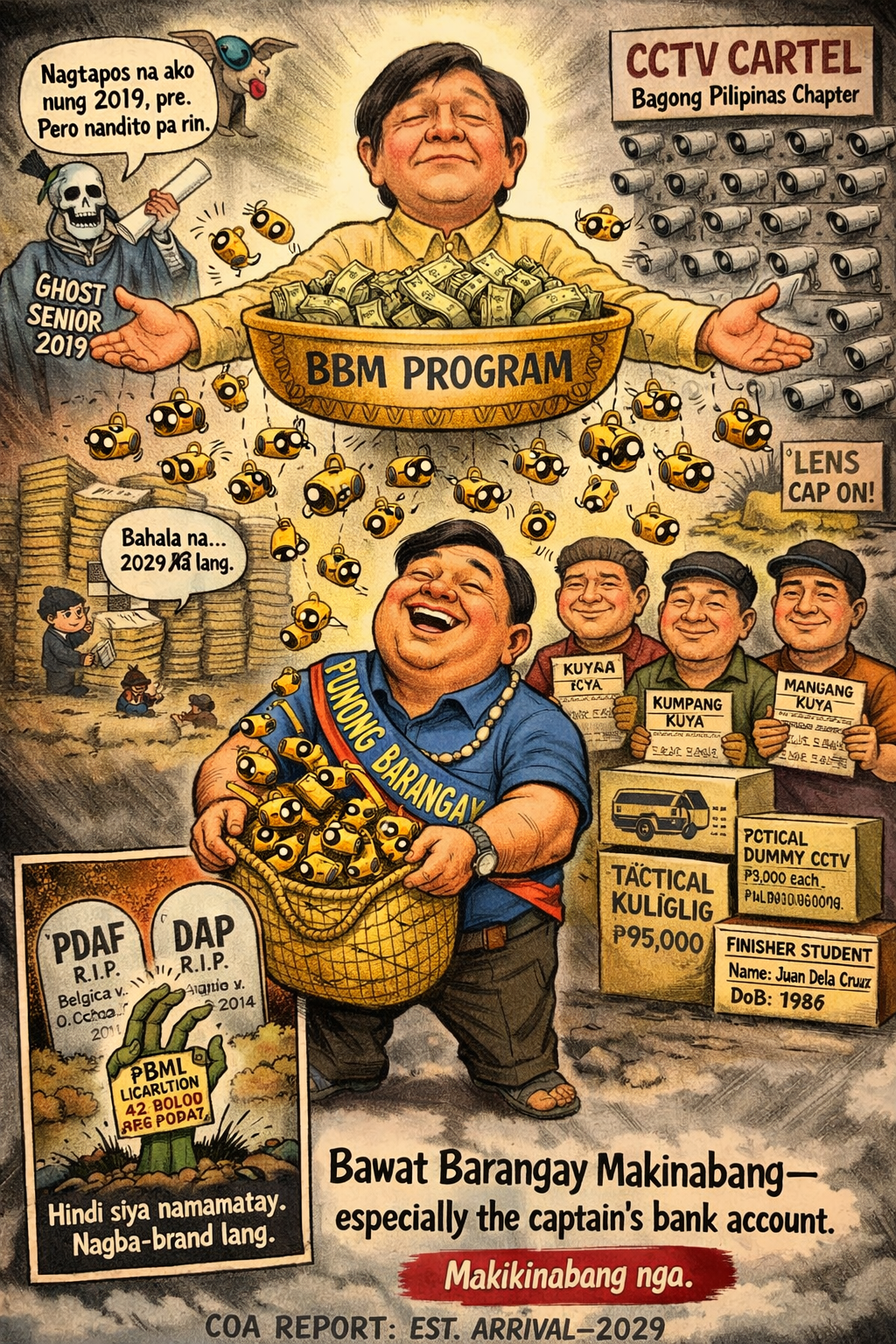
- ₱8B BBM Pork: CCTV for Every Captain’s Kumpare?
- ₱75 Million Heist: Cops Gone Full Bandit

- ₱6.7-Trillion Temptation: The Great Pork Zombie Revival and the “Collegial” Vote-Buying Circus

- ₱1.9 Billion for 382 Units and a Rooftop Pool: Poverty Solved, Next Problem Please

- ₱1.35 Trillion for Education: Bigger Budget, Same Old Thieves’ Banquet
- ₱1 Billion Congressional Seat? Sorry, Sold Out Na Raw — Si Bello Raw Ang Hindi Bumili

- “We Will Take Care of It”: Bersamin’s P52-Billion Love Letter to Corruption

- “Skewed Narrative”? More Like Skewered Taxpayers!

- “Scared to Sign Vouchers” Is Now Official GDP Policy – Welcome to the Philippines’ Permanent Paralysis Economy
- “Robbed by Restitution?” Curlee Discaya’s Tears Over Returning What He Never Earned

- “No Pressure” Luistro? The House Pork Bazaar Exposed
- “My Brother the President Is a Junkie”: A Marcos Family Reunion Special



 KWEBA ni BAROK
Leave a comment