
By Louis ‘Barok’ C Biraogo — February 24, 2025
SENATOR Imee Marcos stood in a Cebu hotel last Saturday, her voice steady but her words heavy with the weight of a nation watching. “The President is my brother,” she said, pausing as if to let the familial bond linger in the air. “At the same time, I owe a lot to the Dutertes.” Hours later, a crowd gathered in a vacant lot in Mandaue City, their indignation echoing through the night—an outcry against the looming impeachment of Vice President Sara Duterte. Imee, caught between blood and gratitude, chose neither side. “I am not taking sides here,” she declared, a senator seeking reelection, a Marcos navigating a storm she cannot outrun. Her refusal to choose is a human story, yes—but it’s also a symptom of a deeper malaise threatening the Philippines’ fragile democracy.
The Weight of Heritage: Power and Suffering
To understand this moment, we must rewind. The Marcos name once meant martial law, a dictatorship that plundered billions while silencing dissent—Ferdinand Marcos Sr.’s shadow still looms large. His son, President Ferdinand Marcos Jr., took office in 2022 promising unity, a polished rebranding of a tarnished legacy. Across the political divide stands the Duterte dynasty, forged in Davao’s tough streets. Rodrigo Duterte’s presidency from 2016 to 2022 was a brutal paradox—wildly popular yet stained by thousands of extrajudicial killings in his drug war. His daughter, Sara, now vice president, carries that mantle, her own tenure marked by defiance and controversy.
These families, once allies in the 2022 election, now fracture along fault lines of ambition and betrayal. Imee Marcos, the late dictator’s eldest daughter, embodies the tension. Her neutrality—or is it indecision?—mirrors a nation wrestling with its past and future. Political dynasties have long dominated the Philippines, with 70% of Congress tied to such clans, according to a 2019 study by the Ateneo School of Government. This isn’t just a family feud; it’s a test of whether democracy can break free from the grip of lineage.
The Human Cost of a House Divided
For ordinary Filipinos, this rift isn’t abstract. In Cebu, where the indignation rally unfolded, vendors hawk goods near protest sites, their livelihoods tethered to stability. A farmer in Mindanao told local reporters last week, “We just want peace—whoever’s in charge, just let us work.” Yet peace feels elusive. The Marcos-Duterte split has already sparked rallies, threats of impeachment, and whispers of unrest. Political instability breeds economic uncertainty—poverty rates hover at 18.1%, per 2023 government data, and each tremor at the top risks pushing more families into desperation.
The Senate, where Imee serves, is meant to be a bulwark against such chaos. It will soon sit as an impeachment court for Sara Duterte, accused by critics of mismanaging funds and defying accountability. Imee’s reluctance to engage—“I don’t like trouble,” she says—raises a question: If senators prioritize personal loyalties over institutional duty, who protects the public? Civil society voices, like the Philippine Center for Investigative Journalism, warn that this dynastic squabble could erode trust in governance further, with only 30% of Filipinos expressing confidence in their leaders, per a 2024 Pulse Asia survey.
Democracy’s Fragile Thread in Southeast Asia
Zoom out, and the stakes grow clearer. The Philippines is a democratic outlier in Southeast Asia, a region where authoritarianism often thrives—think Myanmar’s junta or Thailand’s coup-prone politics. A stable Manila signals hope; a fractured one invites doubt. If the Marcos-Duterte rift weakens institutions like the Senate, it’s not just a local story—it’s a warning for neighbors watching democracy’s ebb. ASEAN’s silence so far is deafening, but the ripple effects of Manila’s turmoil could unsettle a region already on edge.
Human rights hang in the balance, too. The Duterte years saw over 20,000 deaths linked to the drug war, per human rights groups, a legacy Sara has neither disowned nor fully embraced. Marcos Jr., meanwhile, has dodged reckoning with his father’s abuses. Neither side offers a clear path to justice—just more promises draped in power. “The Philippines risks becoming a democracy in name only,” warns political analyst Maria Ressia of the University of the Philippines, “where dynasties dictate and accountability fades.”
The Evidence of a Broken System
History offers grim lessons. The Marcos dictatorship’s fall in 1986 was a people’s triumph, yet dynasties endured—90% of provincial governors today hail from political clans, per the Philippine Statistics Authority. The Duterte era doubled down, blending populist rhetoric with strongman tactics. Now, as Imee tiptoes between her brother and her allies, the Senate braces for an impeachment showdown that could erupt at any moment. Will it be a trial of Sara Duterte—or of democracy itself?
Data backs the urgency. Transparency International ranks the Philippines 115th out of 180 nations for corruption perception—a slide from 99th a decade ago. The World Bank notes judicial delays hamstring governance, with cases languishing for years. Civil society, from groups like iDefend to grassroots activists, cries out for reform, yet their voices drown in the noise of elite infighting. “We’re tired of choosing between bad and worse,” a Manila teacher told me last year, her frustration echoing a nation’s exhaustion.
A Future Reimagined: Strengthening Democratic Foundations
So what’s the fix? First, break the dynasty stranglehold. A long-stalled anti-dynasty bill, languishing in Congress since 1987, must pass—limiting family members from holding concurrent offices. Second, bolster institutions. An independent judiciary and a Senate free of partisan taint need funding and protection—only 1.6% of the 2025 budget goes to justice, a pittance against the need. Third, amplify voters. Civic education, backed by local NGOs, can empower Filipinos to demand more than dynastic scraps—turnout in 2022 hit 83%, proof of a public ready to act.
The international community has a role, too. The U.S., Japan, and the EU—key partners—should tie aid and trade to governance benchmarks, not just photo-ops. ASEAN could mediate, nudging Manila toward stability over rivalry. But the real push lies with Filipinos themselves. “We can’t keep waiting for heroes,” says activist Leni Gerona. “We have to be them.”
Facing the Fork in the Road
Imee Marcos won’t take sides, and maybe that’s her prerogative. But the Philippines can’t afford neutrality. Democracy here isn’t just a system—it’s a fragile thread, frayed by decades of dynastic greed and human cost. Can a nation so divided heal? Can its people wrest power from clans who see it as their birthright? The answer starts in places like Cebu, where rallies flare and voices rise, demanding more than a family feud’s fallout.
This isn’t just Manila’s story—it’s democracy’s in the 21st century, teetering between renewal and ruin. Filipinos, and the world, must decide which it will be. The clock ticks toward an uncertain reckoning, whenever it may strike. Act now, or watch history repeat.

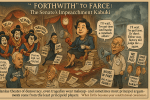
- “Forthwith” to Farce: How the Senate is Killing Impeachment—And Why Enrile’s Right (Even If You Can’t Trust Him)
- “HINDI AKO NAG-RESIGN!”

- “I’m calling you from my new Globe SIM. Send load!”

- “Mahiya Naman Kayo!” Marcos’ Anti-Corruption Vow Faces a Flood of Doubt

- “Meow, I’m calling you from my new Globe SIM!”

- “No Special Jail for Crooks!” Boying Remulla Slams VIP Perks for Flood Scammers

- “PLUNDER IS OVERRATED”? TRY AGAIN — IT’S A CALCULATED KILL SHOT

- “Several Lifetimes,” Said Fajardo — Translation: “I’m Not Spending Even One More Day on This Circus”

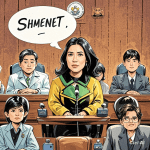
- “Shimenet”: The Term That Broke the Internet and the Budget
- “We Did Not Yield”: Marcos’s Stand and the Soul of Filipino Sovereignty

- “We Gather Light to Scatter”: A Tribute to Edgardo Bautista Espiritu

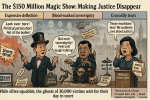
- $150M for Kaufman to Spin a Sinking Narrative

 KWEBA ni BAROK
Leave a comment