By Louis ‘Barok‘ C. Biraogo — February 25, 2025
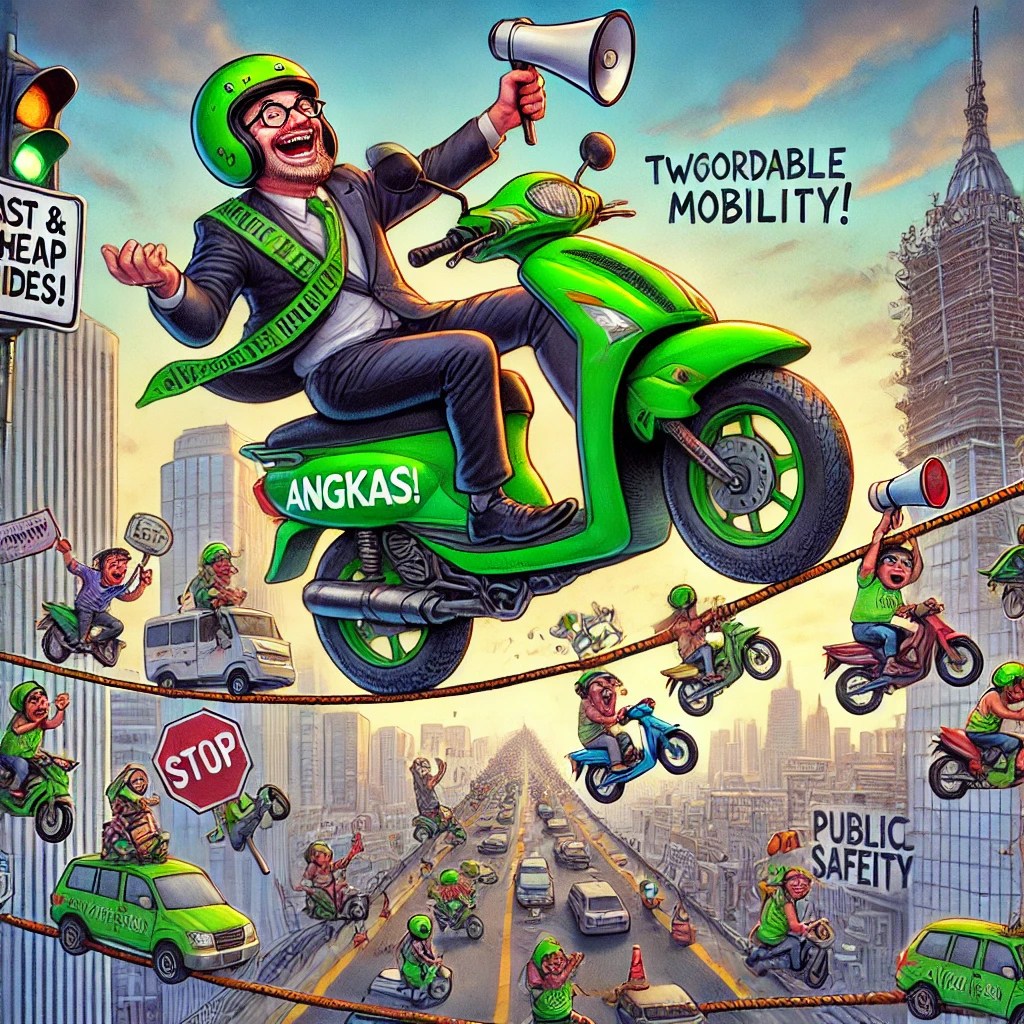
PUBLIC safety laws exist for a reason—but what happens when entire groups decide those laws no longer matter? On February 2, 2025, Cainta Junction in Rizal province witnessed a blatant disregard for such rules. Scores of Angkas riders, clad in neon-green vests, brought traffic to a standstill for over two minutes. Ignoring red lights and ‘no left turn’ signs, they prioritized their convenience over everyone else’s safety. As horns blared and tempers flared, the resulting mayhem was captured on a viral dashcam video—a chilling example of collective selfishness gone unchecked.
This wasn’t just a rogue act by a few reckless riders. George Royeca, the CEO of Angkas, admitted to organizing the motorcade, thrusting the incident into a spotlight that illuminates deeper questions: What does this say about corporate responsibility in an industry hailed as a lifeline for Metro Manila’s commuters? And what happens when innovation outpaces regulation in a city desperate for mobility?
Trapped in Traffic: The Root Causes of Metro Manila’s Daily Commute Nightmare
Metro Manila is a city choking on its own growth. With over 13 million residents, its roads are a daily battleground of gridlock, where jeepneys, buses, and cars crawl through a haze of exhaust. Public transportation is notoriously unreliable—the MRT breakdowns are a bitter punchline, and traffic jams stretch commutes into hours-long odysseys. Into this void stepped Angkas, a motorcycle taxi service launched in 2016 by Royeca and Angeline Tham. What began as a scrappy startup has ballooned into a juggernaut, boasting 28,614 riders and over 8 million app downloads by March 2023. It’s a rare success story in a developing economy, promising to weave through traffic and deliver affordable mobility.
Yet, this promise comes with peril. Motorcycles, nimble as they are, account for a staggering 17.7% of Metro Manila’s 4.87 million registered vehicles, according to 2023 data from Sarao. They’re a symptom of a broader failure: inadequate infrastructure and a sclerotic public transit system. Angkas and its rivals, JoyRide and Move It, have filled this gap, but their rise has collided head-on with a regulatory framework rooted in a 54-year-old law—Republic Act No. 4136—that never envisioned two-wheeled taxis. The tension is palpable: innovation versus safety, convenience versus order.
Corporate Power vs. Public Trust: Can Responsibility Coexist with Risk?
Angkas touts a 99.997% safety record, a figure waved like a banner in courtrooms and congressional hearings. It’s an impressive statistic, reflecting rigorous training, mandatory helmets, and regular bike maintenance. Riders like Renz Tesoro, who survived a 2023 sideswipe by an SUV driver, embody the company’s claim that proper protocols can tame the inherent risks of motorcycle travel. Public support echoes this—58% of Filipinos back legalizing motorcycle taxis, per a WR Numero study, seeing them as a lifeline in a transit-starved metropolis.
But the Cainta incident shatters this narrative. Blocking a major junction isn’t a statistical anomaly; it’s a deliberate act of hubris. Royeca’s swift apology—“I take full responsibility. There are no excuses”—and his surrender of his license to the Land Transportation Office (LTO) are commendable, but they don’t erase the pattern. In 2023, the LTO suspended Royeca’s license for 90 days after another motorcade flouted traffic laws. Earlier that year, an Angkas rider and passenger were injured in a hit-and-run, spotlighting the vulnerability of two-wheeled transport. These aren’t isolated blips—they’re red flags about a corporate culture that sometimes prioritizes visibility over discipline.
Royeca’s leadership is under scrutiny. At 43, he’s not just a CEO but a political aspirant, running as the first nominee for the Ang Kasangga party-list in the 2025 midterms. His dual role raises thorny questions: Can a corporate innovator-turned-politician balance compliance with ambition? The LTO’s 90-day license suspension, announced on February 17, 2025, by chief Vigor Mendoza II, is a slap on the wrist compared to the potential revocation initially floated. Yet, it’s a signal: accountability matters, even for disruptors.
Who Holds the Reins? The Interplay of Politics, Regulation, and Public Confidence
The Cainta fiasco reverberates beyond traffic fines. It’s a microcosm of the Philippines’ struggle to regulate a burgeoning industry. The LTO, empowered by RA 4136, can penalize reckless driving—Section 27 deems violators “improper persons” to drive—but its tools feel antiquated against a fleet of app-driven riders. Cainta Mayor Elenita Nieto’s sanction of community service for Angkas is creative but light; it sidesteps the structural issue of enforcement. Motorcycle taxis remain in a legal gray zone, their pilot operations extended since 2019 without a clear path to full legitimacy. Bills to regulate them have languished since 2007, leaving riders and commuters in limbo.
Royeca’s political bid amplifies the stakes. A corporate leader in Congress could advocate for motorcycle taxis—or tilt the scales toward regulatory capture, where Angkas’ interests dwarf public safety. Public trust, already shaky after years of transport woes, hangs in the balance. “Angkas saved me from hours in traffic,” says Manila vendor Maria Santos, echoing millions who rely on its speed. But she adds, “If they think they’re above the rules, what’s next?”
Urban mobility is the broader canvas. Metro Manila’s chaos demands alternatives, and Angkas delivers—fares from Gateway Mall to Mall of Asia hover at P238, half the cost of a Grab car. Yet, safety can’t be a casualty of convenience. The 2023 dashcam footage of an Angkas rider flung to the ground by an SUV lingers as a grim reminder: innovation must coexist with order.
Charting a New Path: Bold Steps Toward Systemic Reform
This incident isn’t just a PR crisis—it’s a call to action. Here’s how to move forward:
- Corporate Governance Reforms: Angkas must overhaul its culture. Mandatory retraining for all riders after traffic violations, paired with a zero-tolerance policy for organized breaches, would signal seriousness. Royeca should appoint an independent safety czar to audit protocols, distancing his political ambitions from operational oversight.
- Regulatory Updates: Congress must fast-track a motorcycle taxi law, setting clear standards for fleet size (capped at 45,000 in Metro Manila), rider qualifications, and penalties. The LTO needs modern tools—real-time tracking of violations via apps, not just post-incident probes—to match the industry’s pace.
- Safety Protocols: Angkas’ 99.997% record is a start, but prevention is key. Equip riders with dashcams to deter reckless behavior, and partner with local governments for emergency response drills. Public campaigns on traffic etiquette could bridge the gap between riders and motorists.
- Public Accountability Measures: Transparency is non-negotiable. Angkas should publish quarterly safety reports, detailing incidents and responses. A public hotline for complaints, monitored by a third party, would rebuild trust.
- Political Reform Needs: Royeca’s candidacy demands scrutiny. The Commission on Elections should probe conflicts of interest, ensuring his campaign doesn’t leverage Angkas’ clout. A broader ethic: corporate leaders in politics must disclose how their firms intersect with public policy.
Balancing Act: Navigating the Risks and Rewards of Innovation
The Cainta Junction blockade is more than a traffic snarl—it’s a parable of progress in peril. Angkas embodies the ingenuity of a developing nation, weaving through Manila’s gridlock with a promise of freedom. But freedom without guardrails is a recipe for disaster. In cities like Lagos or Jakarta, motorcycle taxis thrive under tighter rules; the Philippines can learn from them. Balance is possible—innovation can coexist with safety, corporate ambition with public good.
For now, Royeca rides as a passenger, his license sidelined. It’s a humbling detour, but the real test lies ahead: Can Angkas steer straight, or will it crash under the weight of its own audacity? Metro Manila’s commuters deserve more than witty apologies—they need a system that works, safely and fairly, for all.

- ₱75 Million Heist: Cops Gone Full Bandit

- ₱6.7-Trillion Temptation: The Great Pork Zombie Revival and the “Collegial” Vote-Buying Circus

- ₱1.9 Billion for 382 Units and a Rooftop Pool: Poverty Solved, Next Problem Please

- ₱1.35 Trillion for Education: Bigger Budget, Same Old Thieves’ Banquet

- ₱1 Billion Congressional Seat? Sorry, Sold Out Na Raw — Si Bello Raw Ang Hindi Bumili

- “We Will Take Care of It”: Bersamin’s P52-Billion Love Letter to Corruption

- “Skewed Narrative”? More Like Skewered Taxpayers!

- “Scared to Sign Vouchers” Is Now Official GDP Policy – Welcome to the Philippines’ Permanent Paralysis Economy
- “Robbed by Restitution?” Curlee Discaya’s Tears Over Returning What He Never Earned

- “My Brother the President Is a Junkie”: A Marcos Family Reunion Special

- “Mapipilitan Akong Gawing Zero”: The Day Senator Rodante Marcoleta Confessed to Perjury on National Television and Thought We’d Clap for the Creativity

- “Just Following Orders” Is Dead: How the Hague Just Turned Tokhang’s Finest Into International Fugitives


 KWEBA ni BAROK
Leave a comment