By Louis ‘Barok‘ C. Biraogo — February 27, 2025
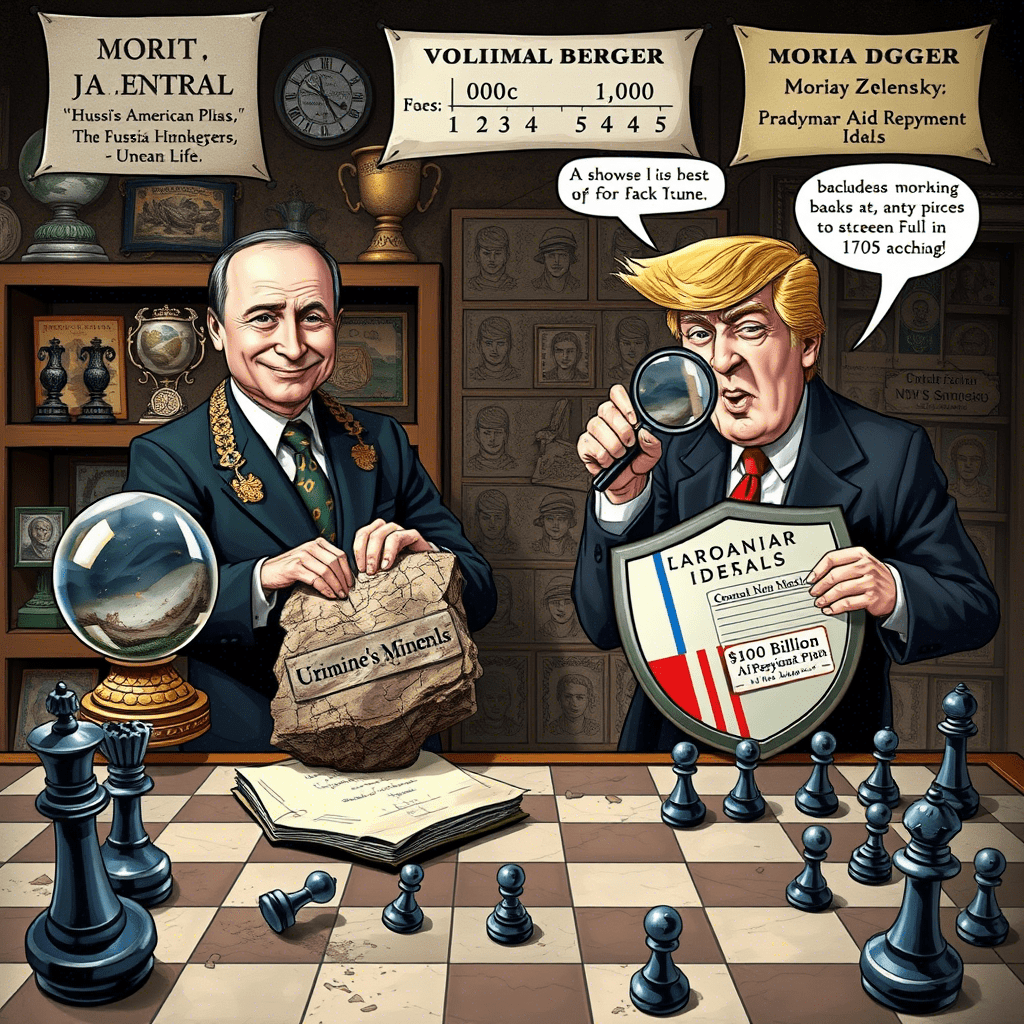
THE ground beneath Olena’s feet shimmered with promise. Rich deposits of lithium lay hidden there, fueling her childhood dreams of designing sleek, futuristic vehicles. Today, that same earth bears the scars of war—shattered homes, abandoned streets, and Russian tanks rolling over what was once her future. On Monday, Vladimir Putin stood before cameras and nonchalantly offered those minerals to the United States. It wasn’t just a transaction; it was a declaration. Who owns a nation’s soul—and at what cost should the US buy it?
Deep Dive: Unpacking the Facts, the Deal, and the Hidden Conflict
Let’s start with the raw reality. Putin, in a state TV interview, dangled an enticing carrot: access to Russia’s vast rare earth reserves and, more audaciously, those in the Ukrainian territories his forces have seized since 2022. Think lithium for batteries, titanium for jets, and aluminum to steady U.S. markets—perhaps 2 million tons of it, he mused, from Siberia’s Krasnoyarsk smelters. This comes as Donald Trump pressures Ukraine to hand over its own mineral wealth, estimated at $500 billion by his administration, as payback for nearly $100 billion in U.S. aid since the war began. Kyiv, led by Volodymyr Zelensky, counters that the figure’s inflated and insists any deal must include ironclad security guarantees—something Trump’s team has been reluctant to offer.
Ukraine’s mineral riches are no secret. The country holds about 5% of the world’s critical raw materials, a trove that could power the global shift to green tech. But here’s the catch: much of it—perhaps 40% or more—lies in regions like Donetsk and Luhansk, now under Russian control. Putin’s pitch isn’t just about economics; it’s a strategic jab. By offering America a slice of Ukraine’s stolen resources, he’s testing whether the U.S. will trade principle for pragmatism.
Why now? Putin’s timing is no accident. Sanctions have squeezed Russia’s economy, and he’s desperate for a lifeline. Meanwhile, Trump’s “America First” rhetoric signals a willingness to cut deals, even with adversaries, if the price is right. The Kremlin sees a crack in the West’s armor—a chance to sow discord and legitimize its conquests. Dmitry Peskov, Putin’s spokesman, called it a proposal with “broad prospects.” For whom, exactly?
The Masterstroke: Decoding Putin’s Strategic Chess Move
Putin’s move is a masterstroke of cynicism. He’s not just offering minerals; he’s offering a wedge. If the U.S. bites, it could fracture the Western alliance. Europe, already negotiating its own mineral pact with Ukraine, would fume at being sidelined. Ukraine, fighting for survival, might see its strongest ally waver. And China, the rare earth kingpin, could watch its leverage slip as Russia muscles into the market. For Moscow, it’s a win-win: revenue to fund its war machine and a chance to normalize its land grab.
But there’s more. Putin’s framing—“our historical territories, which have returned to the Russian Federation”—is a deliberate taunt. He’s betting the U.S. might implicitly endorse this narrative, weakening the international taboo against territorial conquest. It’s a page from the Soviet playbook, updated for the 21st century’s resource wars. And if Trump, fixated on reducing China’s mineral monopoly, takes the bait, Putin could position Russia as a pivotal player in the U.S.-China tech rivalry.
The Moral Ledger: Balancing Right and Wrong in a World of Deals
Can you negotiate with a thief over stolen goods? That’s the question haunting this deal. Those Ukrainian minerals aren’t Russia’s to give—they’re Olena’s, her nation’s, seized at gunpoint. To entertain Putin’s offer is to launder his aggression, to say that might makes right. I’ve walked through villages like hers, seen the hollowed-out schools and the graves of those who resisted. The moral cost of this trade isn’t abstract; it’s measured in lives lost and futures erased.
Trump’s parallel demand—half of Ukraine’s mineral wealth for past aid—raises its own ethical red flags. It smacks of colonial coercion, a superpower strong-arming a war-torn ally. Zelensky’s refusal to sign without security guarantees is a plea for dignity, not just survival. What kind of alliance demands payment in a nation’s lifeblood while offering vague promises in return? The contrast with the EU’s “win-win” approach is stark—Europe seeks partnership, not plunder.
The Scorecard of Power: Who Wins, Who Loses, and What’s at Stake in the Long Run
Who gains if this unfolds? Russia tops the list. Cash flows in, sanctions erode, and its grip on Ukraine tightens. U.S. tech firms might cheer cheaper minerals, but at what cost? China loses market share but could exploit Western disarray. Trump’s dealmakers might claim a short-term victory, dodging China’s grip without firing a shot.
The losers are clearer. Ukraine’s sovereignty takes a double hit—robbed by Russia, squeezed by America. Its people, like Olena, see their future auctioned off. The EU, outmaneuvered, loses strategic ground. And the West’s moral credibility frays—how do you rally the world against aggression while pocketing its spoils? Long-term, the norm against conquest weakens, inviting more Putins to redraw maps with impunity. Global supply chains shift, but at the risk of instability if Russia proves an unreliable partner.
Historical Echoes: Lessons from the Past
This isn’t new. In 1938, Britain and France traded Czech land for “peace” at Munich, only to embolden Hitler. Post-World War I, Germany’s reparations included resource concessions, fueling resentment that birthed another war. During the Cold War, the U.S. and Soviet Union vied for African minerals, often propping up dictators for access. History whispers a warning: resource diplomacy can stabilize economies but destabilize principles. When the U.S. courted Saudi oil in the 1940s, it gained energy security but tied itself to a regime at odds with its values. Putin’s offer is Munich redux—appeasement dressed as pragmatism.
The Principled Path Forward: Strategies for Staying Grounded Amid Global Upheaval
The U.S. can’t touch Putin’s offer—it’s radioactive. Trading with Russia for Ukraine’s stolen minerals isn’t just a deal with the devil; it’s handing him the receipt. Reject it outright, publicly, and call it what it is: a bribe to whitewash aggression. But words aren’t enough—here’s how to act.
First, lock in Ukraine’s deal, but do it right. Swap the arm-twisting for a real partnership. Offer Zelensky a five-year NATO security pact—boots on the ground if Russia blinks—tied to joint mineral projects. Send U.S. engineers, not just accountants, to kickstart extraction in government-held zones like Zhytomyr’s lithium fields. Match every dollar of aid with a dollar of investment—$10 billion over a decade could yield a supply chain that’s the US’, not Beijing’s or Moscow’s.
Second, bring the EU to the table, not the sidelines. Forge a trilateral alliance: U.S. capital, EU tech, Ukrainian resources. Target 20% of Europe’s rare earth needs from Ukraine by 2030—specific, doable, and a middle finger to Putin’s ploy. Coordinate sanctions too: slap a 100% tariff on any firm, like Rusal, peddling occupied Ukraine’s minerals. Make it hurt.
Third, look homeward. Pump $2 billion into America’s own mines—Mountain Pass in California, Round Top in Texas—enough to cut China’s stranglehold by a third in five years. Tax breaks for green-tech firms using domestic titanium or lithium keep the economics humming. It’s slower than Putin’s quick fix, but it’s clean.
Finally, go global. Push the UN Security Council for a resolution banning resource trade from occupied territories—think Crimea, Gaza, wherever blood stains the map. Russia will veto, sure, but force the vote. Let the world see who stands where. It’s a long shot, but norms matter, and this one’s overdue.
This isn’t charity—it’s strategy with a spine. Ukraine gets a lifeline, the West gets minerals, and Putin gets a message: you don’t win by stealing.
Closing Thoughts: The Values That Will Shape the Future of the West
Olena’s notebook lies buried under rubble now, her dreams a casualty of war. Putin’s offer isn’t a lifeline—it’s a noose, tightening around Ukraine and the West’s conscience. If the US trades Olena’s future for convenience, it doesn’t just lose minerals; it loses itself. The stakes aren’t just geopolitical; they’re existential. Will the US stand for something, or sell out for anything? That’s the question echoing from Kyiv to Washington, and history won’t forgive silence.

- “Forthwith” to Farce: How the Senate is Killing Impeachment—And Why Enrile’s Right (Even If You Can’t Trust Him)

- “HINDI AKO NAG-RESIGN!”

- “I’m calling you from my new Globe SIM. Send load!”

- “Mahiya Naman Kayo!” Marcos’ Anti-Corruption Vow Faces a Flood of Doubt

- “Meow, I’m calling you from my new Globe SIM!”

- “No Special Jail for Crooks!” Boying Remulla Slams VIP Perks for Flood Scammers

- “PLUNDER IS OVERRATED”? TRY AGAIN — IT’S A CALCULATED KILL SHOT

- “Several Lifetimes,” Said Fajardo — Translation: “I’m Not Spending Even One More Day on This Circus”

- “Shimenet”: The Term That Broke the Internet and the Budget

- “We Did Not Yield”: Marcos’s Stand and the Soul of Filipino Sovereignty

- “We Gather Light to Scatter”: A Tribute to Edgardo Bautista Espiritu

- $150M for Kaufman to Spin a Sinking Narrative




 KWEBA ni BAROK
Leave a comment