By Louis ‘Barok‘ C. Biraogo — February 28, 2025
Introduction: A High-Voltage Victory with Far-Reaching Sparks
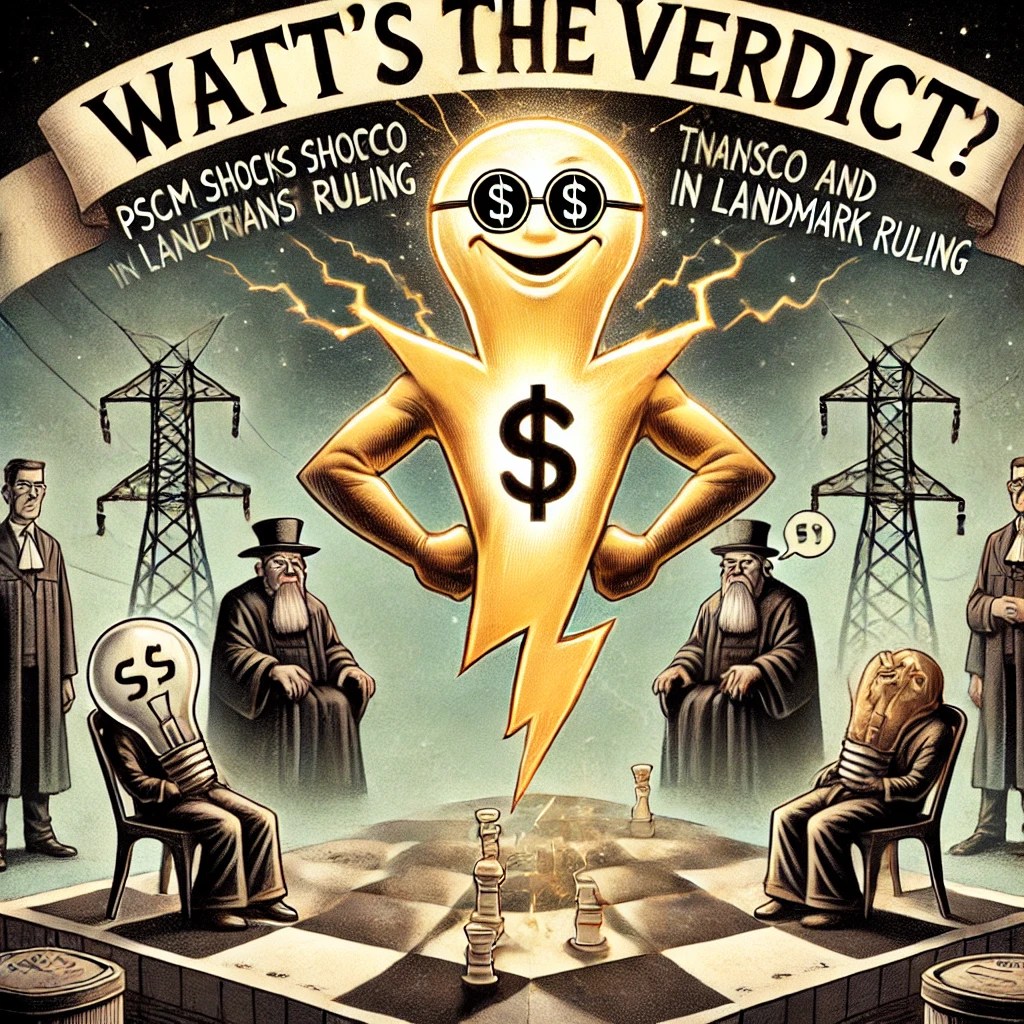
In a ruling that sent ripples through the Philippine energy sector, the National Grid Corporation of the Philippines (NGCP)—the powerhouse backed by tycoons Henry Sy Jr. and Robert Coyiuto—has emerged victorious in a seven-year arbitration showdown against state-run Power Sector Assets and Liabilities Management Corporation (PSALM) and National Transmission Corporation (TransCo). On February 19, 2025, the Singapore International Arbitration Centre (SIAC) tribunal handed down a decision that’s less a spark and more a full-blown lightning bolt, affirming NGCP’s legal standing, validating a massive ₱57.88 billion prepayment, and cementing its operational control over the nation’s transmission grid.
For legal junkies, this isn’t just a win for NGCP—it’s a masterclass in constitutional compliance, contractual enforcement, and the limits of government pushback in public-private partnerships (PPPs). With the tribunal dismissing allegations of nationality restriction breaches and Anti-Dummy Law violations, while sorting out a tangle of financial and operational disputes, the ruling has legal pundits asking: What does this mean for energy regulation, arbitration practice, and the delicate dance between private players and the Philippine state? Buckle up—let’s dissect this electrifying case.
The Tribunal’s Ruling: A Legal Surge Through the Grid
Constitutional Compliance: Nationality Restrictions Unshocked
At the heart of PSALM and TransCo’s case was a claim that NGCP’s 40% ownership by China’s State Grid Corporation violated Article XII, Section 11 of the Philippine Constitution, which mandates that public utilities be at least 60% Filipino-owned. They argued this breached the Concession Agreement and invited scrutiny under Commonwealth Act No. 108 (the Anti-Dummy Law), which prohibits foreigners from circumventing ownership rules through dummy arrangements.
The tribunal didn’t buy it. It found NGCP’s ownership structure compliant, with no evidence of undue foreign control or dummy shenanigans. This aligns with the constitutional threshold—NGCP’s Filipino stakeholders, led by Synergy Grid, hold the reins at 60%—and dodges the Anti-Dummy Law’s penalties. For a country jittery about foreign influence in critical infrastructure, this ruling is a green light that well-structured PPPs can pass muster, even with a heavyweight like China in the mix.
Anti-Dummy Law: No Foul Play Detected
PSALM and TransCo doubled down, alleging NGCP’s setup was a front for foreign domination. The Anti-Dummy Law, a relic of pre-independence paranoia, empowers regulators to penalize entities masking foreign control. Yet the tribunal saw through the smoke: NGCP’s operational and governance framework didn’t cede control to its Chinese partner. This isn’t just a win for NGCP—it’s a signal to critics that the law won’t be a blunt instrument for dismantling PPPs absent hard proof.
Contractual Obligations: The Concession Agreement Holds Steady
The Concession Agreement, birthed under Republic Act No. 9136 (Electric Power Industry Reform Act or EPIRA), governs NGCP’s role as the grid operator. PSALM and TransCo claimed NGCP breached its duties on permitted indebtedness and insurance, but the tribunal zapped those arguments. It ruled NGCP stayed within bounds, reinforcing the sanctity of the agreement’s terms. This isn’t mere contract law trivia—it’s a reminder that privatization deals under EPIRA aren’t easily unraveled by vague accusations.
Financial Determinations: Prepayment Sparks and Fee Fixes
The financial stakes were colossal. NGCP’s 2013 prepayment of ₱57.88 billion—a bold move to lighten its concession fee burden—was contested by PSALM and TransCo as invalid. The tribunal upheld it, noting PSALM’s acceptance waived any objections. TransCo’s ₱3.9 billion claim got slashed to ₱372.77 million, a fraction of the original demand.
On exchange rates, NGCP scored again: the tribunal blessed its $1:₱49.62 rate for converting ₱10.106 billion in project costs, trimming its concession fee further. Add indemnification of ₱56.5 million for right-of-way expenses and a ₱51.8 million reimbursement for retained obligations, and NGCP’s balance sheet looks a lot sunnier. Sure, it lost on capital expenditures for Sub-Transmission Assets, but the net result? A financial coup.
Operational Authority: NGCP’s Grid Reigns Supreme
Operationally, the tribunal clarified NGCP’s dominion. It retains exclusive control over the Transmission Development Plan (TDP), sidelining TransCo from meddling and letting NGCP deal directly with regulators. Its rights to use transmission assets for telecommunications? Secured. This delineation isn’t just about turf—it’s about who calls the shots in a sector where reliability is non-negotiable.
PSALM and TransCo’s Next Move: Can They Flip the Switch?
Procedural Options Under RA 9285
PSALM and TransCo aren’t out of juice yet. Under Republic Act No. 9285 (Alternative Dispute Resolution Act), they can petition a Regional Trial Court (RTC) to vacate the award. Section 24 adopts the UNCITRAL Model Law, giving them a 30-day window from receipt—likely ending mid-March 2025—to file. The Special ADR Rules (A.M. No. 07-11-08-SC) govern the process, routing the case to a Special Commercial Court.
Grounds for Vacating: A Tough Circuit to Break
Rule 19.10 of the Special ADR Rules lists narrow grounds to vacate: incapacity, invalid arbitration agreement, lack of notice, excess of authority, improper tribunal composition, non-arbitrable subject matter, or public policy violations. PSALM and TransCo might argue the award flouts public policy by greenlighting foreign influence in a public utility, but that’s a long shot—the tribunal’s constitutional compliance finding undercuts it. Excess of authority or procedural flaws? Possible, but the SIAC’s meticulous ruling leaves little room.
Jurisdictional and Timing Hurdles
The RTC has jurisdiction, but timing is tight. Miss the 30-day mark, and the award’s finality under UNCITRAL rules locks in. Appeals to the Court of Appeals—and potentially the Supreme Court—are options if the RTC denies them, but each step narrows the scope to procedural errors, not merits.
Supreme Court Precedents: An Uphill Climb
Philippine jurisprudence favors arbitration’s finality. In Fruehauf Electronics v. Technology Electronics (G.R. No. 204197, 2016), the Supreme Court barred courts from revisiting factual or legal errors—only extrinsic flaws like due process violations count. Gintong Pansit v. Court of Appeals (G.R. No. 215644, 2021) echoed this, limiting vacatur to statutory grounds. PSALM and TransCo need a smoking gun—think arbitral misconduct or a blatant jurisdictional overreach—to prevail. Odds? Slim to none.
Likelihood of Success: Flickering Hope
With the tribunal’s reasoning rooted in constitutional and contractual logic, PSALM and TransCo’s chances dim. Public policy arguments might resonate politically, but legally, they’re shaky without evidence of harm. The state’s best bet? Rally public pressure for regulatory reform, not courtroom heroics.
Broader Implications: Rewiring Philippine Energy Law
Public-Private Partnerships: A Charged Dynamic
This ruling turbocharges PPPs in critical infrastructure. NGCP’s win signals private players can thrive under EPIRA’s framework, even with foreign partners, if structured right. But it’s a double-edged sword—government entities may tighten future deals to avoid losing leverage, as TransCo did here.
Precedential Value: A Blueprint for Energy Disputes
Energy sector players, take note: this case sets a high bar for challenging PPP operators. Arbitration’s efficiency and finality shine, likely nudging future disputes away from courts and into tribunals. The clarity on nationality restrictions and operational control offers a roadmap for navigating similar clashes.
Regulatory Oversight: Policy Plugs Needed
EPIRA and RA 9285 worked as intended, but gaps loom. How does the state balance privatization’s benefits with public interest? The ruling exposes regulatory oversight’s limits—TransCo’s sidelined role suggests a need for stronger checks. Expect calls for amendments to tighten nationality rules or bolster state authority.
Political Fallout: A Storm Brewing
Politically, this is dynamite. NGCP’s triumph, with its Chinese stakeholder, could fuel nationalist backlash—think congressional probes or populist rhetoric. PSALM and TransCo, backed by the Office of the Government Corporate Counsel, will face heat to “protect Filipino interests.” Meanwhile, NGCP’s stock (via Synergy Grid) gets a boost, but public trust in PPPs might flicker.
Conclusion: A New Current for Philippine Energy
NGCP’s arbitration victory isn’t just a legal W—it’s a seismic shift in how the Philippines powers its future. The tribunal’s ruling reinforces constitutional compliance, contractual fidelity, and private sector clout, while leaving PSALM and TransCo grasping for a viable counterstrike. For Above the Law readers, this case is a live wire: it illuminates arbitration’s muscle, tests PPP resilience, and challenges regulators to adapt.
Long-term, expect a rewired energy landscape. Private operators gain confidence, but the state may push back with tighter rules or louder politics. One thing’s clear: NGCP’s grid isn’t just transmitting electricity—it’s conducting a masterclass in legal and economic power. Stay tuned—this circuit’s still humming.

- “Forthwith” to Farce: How the Senate is Killing Impeachment—And Why Enrile’s Right (Even If You Can’t Trust Him)
- “HINDI AKO NAG-RESIGN!”

- “I’m calling you from my new Globe SIM. Send load!”

- “Mahiya Naman Kayo!” Marcos’ Anti-Corruption Vow Faces a Flood of Doubt

- “Meow, I’m calling you from my new Globe SIM!”

- “No Special Jail for Crooks!” Boying Remulla Slams VIP Perks for Flood Scammers

- “PLUNDER IS OVERRATED”? TRY AGAIN — IT’S A CALCULATED KILL SHOT

- “Several Lifetimes,” Said Fajardo — Translation: “I’m Not Spending Even One More Day on This Circus”

- “Shimenet”: The Term That Broke the Internet and the Budget

- “We Did Not Yield”: Marcos’s Stand and the Soul of Filipino Sovereignty

- “We Gather Light to Scatter”: A Tribute to Edgardo Bautista Espiritu

- $150M for Kaufman to Spin a Sinking Narrative


 KWEBA ni BAROK
Leave a comment