
By Louis ‘Barok‘ C Biraogo — March 1, 2025
OFF THE coast of Palawan, Kuya Juan casts his net into waters that shimmer with promise and peril. For generations, his family has fished these seas, their lives entwined with the rhythms of the tides and the bounty beneath. But today, Juan’s boat bobs near Reed Bank, a submerged reef in the South China Sea claimed by the Philippines—and coveted by China. Beneath these waves lie oil and gas reserves that could light homes and fuel factories, yet they also spark a contest of sovereignty and survival that threatens Juan’s way of life. His story is not just one of fish, but of a nation wrestling with a question: Can it share its treasures without losing its soul?
This analysis weaves human stakes into the tangled threads of policy and power to unpack the Philippines’ fraught dance with China over joint exploration in the South China Sea. It’s a saga of economic hunger clashing with constitutional steel, of diplomatic tightropes stretched across a geopolitical fault line. Let’s dive in.
Sovereignty vs. Survival: The Philippine Paradox
The Philippines sits atop a paradox as old as nations themselves: how to assert control over what’s yours while grappling with the limits of power. The South China Sea, a 1.4 million-square-mile expanse, holds an estimated 11 billion barrels of oil and 190 trillion cubic feet of natural gas, much of it locked beneath waters Manila claims as its exclusive economic zone (EEZ). For a country where 16 million people live below the poverty line and energy imports drain the treasury, these resources gleam like a lifeline. Yet, asserting that claim means staring down China, a neighbor with a navy that dwarfs the Philippines’ modest fleet and a map that redraws maritime boundaries to Beijing’s liking.
Foreign Affairs Secretary Enrique Manalo’s recent words—spoken on February 27, 2025—capture this tension: the Philippines is “open” to joint exploration with China, but only if “legal conditions” are met. It’s a stance that nods to pragmatism without bowing to pressure. China’s escalatory moves, like the February 18 helicopter buzzing a Philippine patrol plane just three meters overhead, test that resolve. For Juan, such incidents aren’t abstract—they’re a shadow over his fishing grounds, a reminder that sovereignty isn’t just a word on a map but a shield for his livelihood.
The Legal Labyrinth: Navigating Courts and Constitutional Challenges
The Philippines’ legal framework is a fortress built to protect its resources—and it’s proving a formidable barrier to compromise. Article XII, Section 2 of the 1987 Constitution declares that “all lands of the public domain, waters, minerals, coal, petroleum, and other mineral oils…belong to the State,” and their exploration must be under its “full control and supervision.” The state can partner with Filipino citizens or corporations (at least 60% Filipino-owned) via joint ventures, co-production, or production-sharing agreements. Foreign entities? They’re limited to technical or financial assistance—nothing more.
This rigidity was etched in stone by the Supreme Court in January 2023, when it ruled the 2005 Tripartite Agreement for Joint Marine Seismic Undertaking (JMSU) unconstitutional. Signed with China and Vietnam, the JMSU spanned 142,886 square kilometers—80% within the Philippines’ EEZ—but allowed foreign state-owned firms to explore without fitting the Constitution’s narrow mold. The Court’s verdict was clear: no shortcuts, no sovereignty swaps. That decision, affirmed in 2024, looms over today’s talks, a legal ghost reminding negotiators that any deal must pass muster under Manila’s own rules, not Beijing’s.
Then there’s the 2016 Permanent Court of Arbitration ruling, a triumph for the Philippines under UNCLOS. It shredded China’s “nine-dash line” claim and affirmed Manila’s rights to its EEZ, including Reed Bank. Yet China rejects it, and enforcement is a mirage without global muscle. The Philippines can’t bend its Constitution to appease Beijing, but neither can it ignore the reality of China’s boots—and boats—on the ground.
Chessboard of Giants: Strategy and Survival Among Superpowers
Zoom out, and the South China Sea becomes a square on a larger board, where the United States and China vie for dominance in the Indo-Pacific. The Philippines, a U.S. treaty ally, hosts American troops under the Enhanced Defense Cooperation Agreement and joins joint exercises that rile Beijing. Just this month, U.S. and Canadian ships sailed alongside Philippine vessels, a flexed muscle China called “provocative.” Meanwhile, China’s Belt and Road projects—like the stalled infrastructure deals Manalo downplayed—tie economic strings to geopolitical leverage.
For Manila, this is less a choice between superpowers than a bid for breathing room. Diversifying ties with Japan, Australia, and the EU, as Manalo noted, builds resilience—a hedge against over-reliance on either Washington or Beijing. But joint exploration with China risks tilting that balance, signaling accommodation to a rival the U.S. wants contained. The stakes? A stable Indo-Pacific hangs in the balance, and Juan’s fishing boat could become collateral damage.
Costs and Promises: A Human Lens
Economically, the numbers dazzle. Tapping Reed Bank could cut the Philippines’ $10 billion annual energy import bill, powering homes and factories while lifting communities like Juan’s out of poverty. A 2019 study pegged potential gas reserves there at 5.4 trillion cubic feet—enough to shift the nation’s energy calculus. Joint exploration might split costs and risks with China, whose deep pockets and tech could accelerate extraction.
But benefits come with shadows. Dependency on Chinese investment could lock the Philippines into uneven terms, echoing colonial ghosts. Environmental risks—spills, reef damage—threaten fishing communities already battered by climate change. And human security? Escalating tensions could militarize these waters further, turning Juan’s nets into nets of conflict. The moral urgency here isn’t just about profit—it’s about who pays the price.
Unlocking the Impasse: Strategies for Progress
So, how does the Philippines thread this needle? It starts with Kuya Juan’s story—a reminder that policy isn’t abstract, but a lifeline for millions. Here’s a roadmap:
- Diplomatic Reset: Launch quiet, bilateral talks with China, mediated by a neutral player like Singapore. Frame it as a confidence-building measure—small-scale seismic surveys, not full drilling—to test intent without locking in commitments. Pair this with louder multilateral forums, like ASEAN, to keep China accountable.
- Legal Blueprint: Draft a joint development agreement as a “service contract” under Article XII, Section 2. China’s state firms provide tech and financing, while a Filipino-majority corporation (say, a revamped PNOC) leads operations. Anchor it in the 2016 ruling—Reed Bank is ours, but we’ll share the pie. Get Supreme Court pre-clearance to avoid another JMSU fiasco.
- Sovereignty Safeguards: Cap China’s role at 40% equity, with transparent revenue splits (60-40 favoring Manila). Embed veto power for the Philippines on key decisions—where to drill, how to sell. Station Philippine Coast Guard vessels to monitor sites, signaling control without provocation.
- People’s Watchdog: Open the process to civil society—fisherfolk like Juan, NGOs, academics. Publish deal terms online, hold town halls, and create an oversight board with teeth. Transparency isn’t just optics; it’s armor against corruption and capitulation.
This isn’t easy. China may balk at limits; nationalists in Manila may cry sellout. But the alternative—stagnation or showdown—serves no one. The Philippines can’t drill alone, and China won’t back off. A deal that marries law, equity, and vigilance could turn rivalry into reluctant partnership.
The Next Chapter: Visions of the Future
Kuya Juan casts his net again, the sun dipping low. He doesn’t care about constitutional clauses or arbitral awards—he wants fish today and a future tomorrow. The Philippines stands at a similar edge, its leaders clutching a frayed rope between pride and pragmatism. Joint exploration with China isn’t a surrender; it’s a gamble with rules. Get it right, and the nation might just haul in a catch worth celebrating—one that honors the law, lifts the poor, and keeps the peace. Get it wrong, and the reefs Kuya Juan calls home could become battlegrounds. The choice isn’t just Manila’s—it’s ours, too, to demand a world where sovereignty and survival don’t have to fight.
Let’s make it happen. Step by step, net by net.

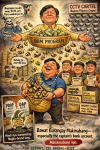
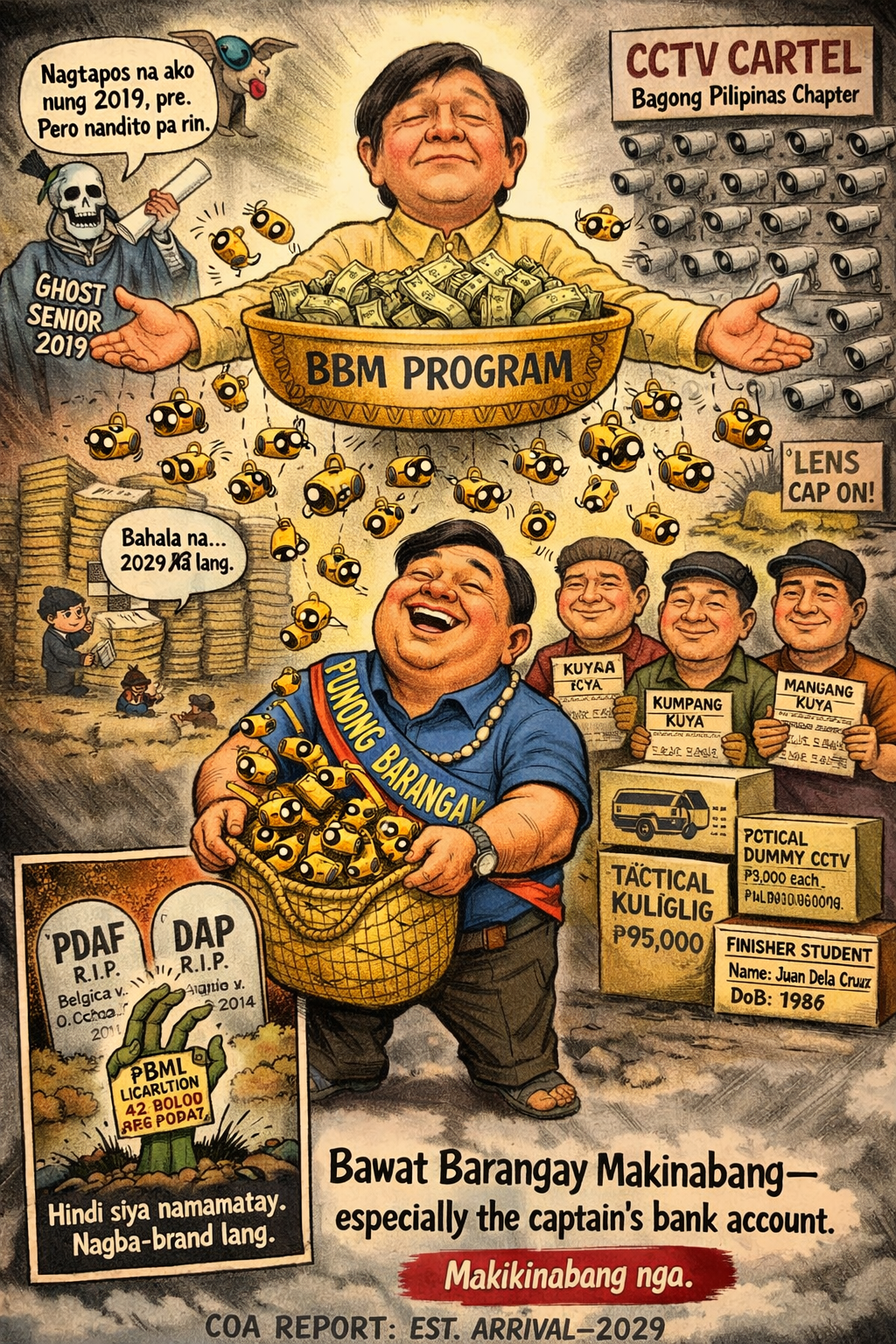
- ₱8B BBM Pork: CCTV for Every Captain’s Kumpare?
- ₱75 Million Heist: Cops Gone Full Bandit

- ₱6.7-Trillion Temptation: The Great Pork Zombie Revival and the “Collegial” Vote-Buying Circus

- ₱1.9 Billion for 382 Units and a Rooftop Pool: Poverty Solved, Next Problem Please

- ₱1.35 Trillion for Education: Bigger Budget, Same Old Thieves’ Banquet

- ₱1 Billion Congressional Seat? Sorry, Sold Out Na Raw — Si Bello Raw Ang Hindi Bumili

- “We Will Take Care of It”: Bersamin’s P52-Billion Love Letter to Corruption

- “Skewed Narrative”? More Like Skewered Taxpayers!

- “Scared to Sign Vouchers” Is Now Official GDP Policy – Welcome to the Philippines’ Permanent Paralysis Economy
- “Robbed by Restitution?” Curlee Discaya’s Tears Over Returning What He Never Earned

- “No Pressure” Luistro? The House Pork Bazaar Exposed
- “My Brother the President Is a Junkie”: A Marcos Family Reunion Special





 KWEBA ni BAROK
Leave a comment