
By Louis ‘Barok‘ C. Biraogo — March 5, 2025
Introduction: The Internet’s a Cesspool—Can Law Save Us?
Welcome to 2025, where the internet is less a marketplace of ideas and more a dumpster fire of fake news, memes, and conspiracy threads. The Department of Justice (DOJ), under Secretary Jesus Crispin Remulla, is on a mission to toughen cyber laws, spurred by Communications Secretary Jay Ruiz’s vision of a digital MTRCB to tame this “Wild, Wild West.” But here’s the rub: how do you regulate misinformation without torching the 1987 Constitution’s free speech guarantees or turning the Philippines into a dystopian nanny state? Buckle up—this framework dives deep into the legal muck, balancing constitutional sanctity with the need to stop your tito from sharing that “5G causes COVID” post.
Why Are We Even Doing This? The Grand Purpose
This isn’t just about slapping fines on trolls. We’re conducting a sophisticated, multi-dimensional legal analysis to tackle digital misinformation’s emerging challenges—think constitutional protections, societal safeguards, and a dash of tech-savvy realism. The goal? A framework that’s legally bulletproof, socially sane, and future-proof.
The Big Three: Dimensions That’ll Make or Break Us
1. Constitutional Chaos: Free Speech vs. Fake News Smackdown
- 1987 Constitution, Article III, Section 4: “No law shall be passed abridging the freedom of speech, of expression, or of the press.”
- Limits: Chavez v. Gonzales (2008) allows regulation when there’s a “clear and present danger.” Misinformation (e.g., election hoaxes, anti-vax nonsense) might qualify, but the line is blurry.
- Implications: Any regulation must pass strict scrutiny—compelling state interest, narrow tailoring, least restrictive means. Criminalizing “fake news” risks overbreadth (Disini v. Secretary of Justice, 2014).
- Intersections: Free speech clashes with public order (RPC’s libel) and national security (Ruiz’s concern). The Cybercrime Prevention Act (RA 10175) flexes muscle against cyber libel, but it’s a sledgehammer, not a scalpel.
- Vulnerabilities: Vague definitions of “fake news” invite abuse—think Marcos-era censorship vibes. The DOJ’s amendment push could stumble into unconstitutional territory without precision.
- Human Rights Standards: The ICCPR (Article 19) allows speech restrictions for public safety, but proportionality is key. Overzealous laws could draw UN rapporteur side-eyes.
2. Regulation Roulette: Can We Fix What’s Broken?
- Existing Frameworks:
- Cyber libel punishes defamatory posts (up to 12 years in jail!), but only if you’re the original poster (Disini).
- Election laws and PD 90 (rumor-mongering) are dusty relics, rarely enforced.
- Bayanihan Act’s COVID-19 misinformation penalties were a one-off.
- Gaps: No law targets non-defamatory misinformation—like false typhoon alerts or election rigging claims. Enforcement is reactive, not preventive, and anonymous trolls laugh at jurisdiction.
- International Models:
- Singapore’s POFMA: Flags “false statements of fact” with takedown orders—effective but criticized for chilling dissent.
- Germany’s NetzDG: Fines platforms for illegal content—scalable but tech-heavy.
- EU’s Digital Services Act: Balances transparency with rights—worth a peek.
- Recommendations: A hybrid law—civil penalties for systemic misinformation, criminal sanctions for egregious cases, and a proactive oversight body.
3. Techpocalypse Now: The Social Media Monster We Fed
- Tech Drivers: Algorithms amplify garbage, bots spread it, and Filipinos—85% online per 2025 stats—eat it up. Misinformation isn’t just lies; it’s a tech-driven, socially fueled phenomenon.
- Sociological Spread: Trust in institutions is tanking (thanks, 2022 election fake news), and media literacy is a pipe dream for most. “Echo chamber effects” dominate—your lola’s Facebook group isn’t debating, it’s preaching.
- Long-Term Impacts: Regulatory overreach could erode trust further (imagine a “fake news” czar jailing critics). Under-regulation risks societal fractures—think vaccine hesitancy killing thousands.
How We Crack This Nut: Analytical Methodology
- Legal Reasoning: Statutory interpretation, case law (Estrada v. Sandiganbayan on vagueness doctrine), and constitutional first principles.
- Interdisciplinary Lens: Tech insights, sociology of disinformation, and practical enforcement realities.
- Theory Meets Practice: Balancing ivory-tower ideals with boots-on-the-ground feasibility.
Critical Evaluation: BS Detector On
- Deconstruct Narratives: The DOJ’s “fake news is a sin” rhetoric is noble but slippery—whose truth wins?
- Expose Overreach: A digital MTRCB sounds cool until it’s censoring your Facebook Live rants.
- Unintended Consequences: Criminal laws could clog courts with petty cases or scare legit whistleblowers.
- Innovative Solutions: Think outside the jail cell—tech partnerships, public education, adaptive rules.
Deliverables: What You’re Getting
1. Legal Autopsy: Dissecting the Mess We’re In
- Current Landscape: RPC and RA 10175 handle defamation but not systemic lies. Pending anti-fake news bills (PHP 5M fines!) lack constitutional vetting.
- Limitations: Narrow scope, chilling effects (journalists self-censor post-Rappler cases), and enforcement gaps (good luck catching a VPN-using troll).
- Analysis: Cyber libel’s prisión mayor is overkill for a dumb tweet, but no law stops a coordinated disinformation campaign.
2. Tech Tsunami: Riding the Digital Wave
- Dimensions: Misinformation spreads 6x faster than truth online. Platforms profit off engagement, not accuracy.
- Challenges: Regulating X or TikTok without killing their vibe—or driving them offshore—is a tightrope walk.
- Mechanisms: Mandate transparency (algorithm audits), incentivize fact-checking, and create a “misinfo hotline” for rapid response.
3. World Tour: Stealing Ideas from Smarter Countries
- Singapore: POFMA’s swift corrections work but lean authoritarian—Philippine courts would balk.
- Germany: NetzDG’s platform fines scale enforcement—adaptable with stronger free speech safeguards.
- EU: DSA’s risk-based approach fits our chaotic digital scene—contextualize it for Manila’s mess.
4. Crystal Ball Time: Recommendations That Won’t Suck
- Proposals: A Digital Media Oversight Commission (DMOC)—not a censorship board, but a tech-savvy regulator with takedown powers and civil fines. Decriminalize minor libel; reserve jail for malicious campaigns.
- Adaptive Frameworks: Laws that evolve with tech—think sunset clauses and regular reviews.
- Balance: Enforce without suffocating expression—exempt satire, opinion, and good-faith errors.
Conclusion: Slaying the Hydra Without Burning the House Down
Digital misinformation is a hydra—cut one head, two grow back. The DOJ’s right to worry, but tougher laws alone won’t do it. We need a DMOC, smarter penalties, and a public that doesn’t swallow every X post whole. Balance is the game: protect society, preserve rights, and maybe—just maybe—keep the internet fun. Because in 2025, the Philippines can’t afford to lose either its democracy or its meme game.

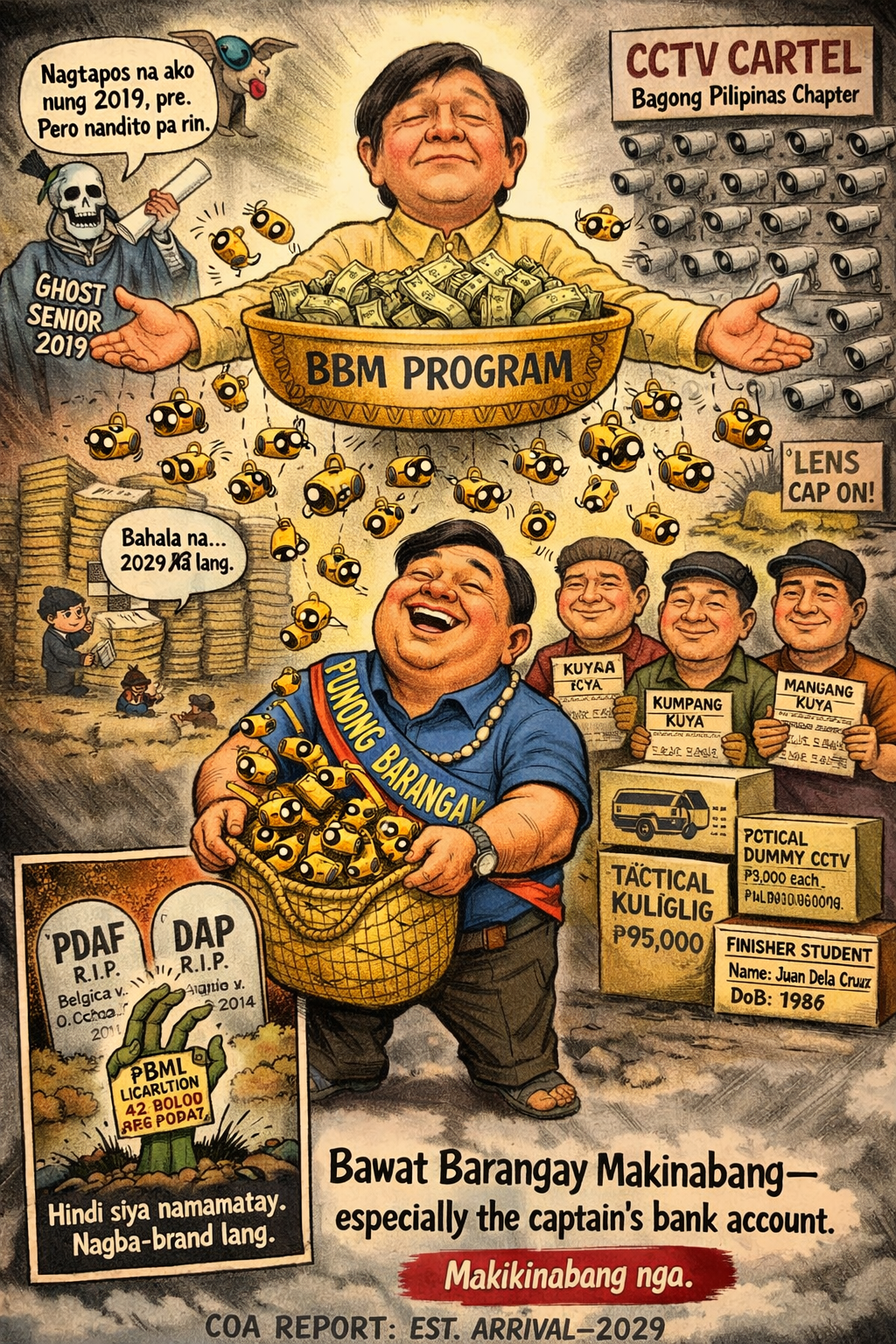
- ₱8B BBM Pork: CCTV for Every Captain’s Kumpare?
- ₱75 Million Heist: Cops Gone Full Bandit

- ₱6.7-Trillion Temptation: The Great Pork Zombie Revival and the “Collegial” Vote-Buying Circus

- ₱1.9 Billion for 382 Units and a Rooftop Pool: Poverty Solved, Next Problem Please

- ₱1.35 Trillion for Education: Bigger Budget, Same Old Thieves’ Banquet
- ₱1 Billion Congressional Seat? Sorry, Sold Out Na Raw — Si Bello Raw Ang Hindi Bumili

- “We Will Take Care of It”: Bersamin’s P52-Billion Love Letter to Corruption
- “Skewed Narrative”? More Like Skewered Taxpayers!

- “Scared to Sign Vouchers” Is Now Official GDP Policy – Welcome to the Philippines’ Permanent Paralysis Economy
- “Robbed by Restitution?” Curlee Discaya’s Tears Over Returning What He Never Earned

- “No Pressure” Luistro? The House Pork Bazaar Exposed
- “My Brother the President Is a Junkie”: A Marcos Family Reunion Special


 KWEBA ni BAROK
Leave a comment