
By Louis ‘Barok‘ C. Biraogo — March 8, 2025
Time vs. Democracy: When the Clock Decides Elections
CHITO Bulatao Balintay was three minutes late. Three minutes. That’s all it took for the Commission on Elections (Comelec) to disqualify him from the 2025 elections. But in a twist fit for a legal drama, the Supreme Court stepped in, capes metaphorically at the ready, to declare: ‘Not so fast.’ This isn’t just a story about deadlines—it’s a battle between procedural rigidity and the messy, unpredictable reality of democracy.
That’s the scene in the Philippines as of March 2025, where the SC has overturned Comelec’s disqualifications of Chito Bulatao Balintay and Marie Grace David for the 2025 elections. These rulings aren’t just legal wins for two local hopefuls—they’re a seismic slap at Comelec’s obsession with procedural purity over substantive justice. But are we witnessing a noble defense of democracy or just another judicial power trip? Buckle up, because we’re diving into the messy, snark-laden heart of it.
Critical Legal Examination: Rules Are Rules—Until They’re Not
Procedural Rigidity vs. Substantive Justice: A Filipino Face-Off
The SC’s decisions in Balintay v. Comelec (G.R. No. 277540) and David v. Comelec (G.R. No. 277720) hinge on a classic legal tension: when do strict rules stop serving justice and start strangling it?
- Balintay, an indigenous candidate for Zambales governor, got dinged for submitting his complete Certificate of Candidacy (COC) three minutes past the October 8, 2024, deadline after an initial incomplete filing.
- David, a substitute for vice mayor in Limay, Bataan, was rejected for filing post-deadline after a December 2024 withdrawal.
Comelec’s stance? Rules are sacred—miss the cutoff, and you’re toast. The SC’s response? Hold my gavel—justice trumps your stopwatch.
The Court’s reasoning leans heavily on the idea that elections aren’t “laboratory conditions” (a direct quote from the Balintay briefer). Translation: real life is messy, and Comelec should adapt, not just enforce. But here’s the rub—where’s the line? If three minutes late is fine, what about three hours? Three days? The SC’s call for “quick decisions in unforeseen circumstances” sounds noble, but it’s a slippery slope to ad hoc governance. Practitioners, take note: this vagueness could be your golden ticket—or your client’s noose.
Grave Abuse of Discretion: Comelec’s Favorite Spanking
Both rulings pin Comelec with “grave abuse of discretion,” a phrase so overused in Philippine jurisprudence it’s practically a constitutional catchphrase. Under Article VIII, Section 1 of the 1987 Constitution, the SC can zap any government body acting with “lack or excess of jurisdiction.”
- In Balintay, the SC chided Comelec for not bending rules for a candidate who tried to comply on time.
- In David, it upheld Section 77 of the Omnibus Election Code (OEC) over Comelec’s Resolution No. 11045, arguing David met substantive substitution requirements.
Logical snag alert: if Comelec’s job is to enforce election laws uniformly, isn’t the SC’s intervention the real overreach? The “grave abuse” label feels more like a vibe than a rigorous test—Comelec didn’t exactly rewrite the law; it just followed it to the letter. The SC’s insistence on “justice and fair play” is aspirational, sure, but it risks turning a quasi-judicial body into a punching bag for every late filer with a sob story.
Election Laws vs. Administrative Rules: Who Wins?
The David case exposes a juicy rift between statutory law (OEC Section 77) and Comelec’s administrative fiat (Resolution No. 11045). Section 77 allows substitutions for withdrawn candidates up to a reasonable point—typically tied to ballot printing, not the October COC deadline Comelec cited. The SC ruled David complied with the law, not Comelec’s tighter regulation.
But let’s poke the bear: if Comelec can’t set firm deadlines, how does it manage the chaos of a national election? The SC’s preference for statutory flexibility over administrative clarity might noble up the process, but it could also clog it with last-minute challenges. Precedent-wise, this elevates the OEC over Comelec’s resolutions, potentially sparking a flood of substitution cases. Good luck, election lawyers—you’re about to get busy.
Precedential Fallout: A Pandora’s Ballot Box
These decisions don’t just save Balintay and David—they rewrite the playbook. Future candidates can now cry “grave abuse” whenever Comelec plays hardball, especially if they’ve got a sympathetic backstory (indigenous roots, anyone?). The SC’s emphasis on voter will over procedural hiccups could loosen filing strictures across the board.
But here’s the kicker: without clear boundaries, we’re one step from judicially sanctioned free-for-alls. How many “unique circumstances” will the SC stomach before it regrets this Pandora’s box?
Political Context: Power Plays and Indigenous Promises
SC vs. Comelec: Who’s the Boss?
The SC-Comelec tug-of-war isn’t new, but these rulings crank it up a notch. Comelec, constitutionally tasked with running elections, gets its knuckles rapped for being too zealous, while the SC flexes its judicial review muscle under Article VIII. It’s less about cooperation and more about supremacy—Comelec sets the stage, but the SC gets final curtain call.
This dynamic reeks of a power imbalance; an unelected judiciary overriding an election body risks looking like elitist meddling. Are voters really served, or just the Court’s ego?
Balintay’s Indigenous Angle: Representation or Tokenism?
Balintay’s case isn’t just about a late COC—it’s a rare spotlight on indigenous representation. The SC’s nod to his “unique circumstances” as an IP member signals sensitivity to marginalized voices, a big deal in a country where indigenous candidates are often sidelined.
Real-world consequence? His ballot spot could inspire more IP runs in 2025. But let’s not get misty-eyed—the SC didn’t explicitly tie this to indigenous rights, so it’s more happy accident than landmark precedent. Still, Comelec’s initial snub looks tone-deaf in retrospect.
Judicial Overreach: A Pattern Emerges
From Smartmatic v. Comelec (2024) to Macalintal v. Comelec (2023), the SC’s been elbow-deep in electoral disputes lately. This isn’t oversight—it’s a trend of judicial activism. Critics might argue it protects democracy; skeptics (hi, us) see a Court itching to micromanage. For 2025, expect more candidates banking on SC bailouts, turning election prep into a legal circus. Is this the new normal, or just a phase?
2025 Elections: Chaos or Clarity?
These rulings could juice up the 2025 race—more candidates, more substitutions, more fights. Balintay and David’s wins might embolden latecomers, but they’ll also strain Comelec’s already creaky machinery. Voters win if their choices expand; they lose if the process drowns in litigation. The real-world stakes? A ballot that reflects intent—or one bogged down by procedural quicksand.
Comparative Perspective: Democracy’s Global Mirror
Southeast Asia: Rules Bend, Sometimes Break
Look at Indonesia—its Constitutional Court often tweaks election rules to favor inclusion, like letting ex-convicts run in 2024 if their sentences are served. The Philippines’ SC shares this vibe, prioritizing access over rigidity. Thailand’s stricter Election Commission, though, mirrors Comelec’s initial stance—miss a deadline, and you’re out, no tears shed.
The SC’s softer touch might make Manila the region’s poster child for electoral leniency—whether that’s praise or pity depends on execution.
US Ballot Battles: A Familiar Tune
Stateside, ballot access fights are a judicial staple—think Bush v. Gore (2000) or Anderson v. Celebrezze (1983), where the Supreme Court struck down Ohio’s early filing deadline for independents. The Philippine SC’s logic echoes this: voter choice trumps technicalities. But the US has clearer statutory guardrails; our OEC’s murkiness invites more SC meddling. Lesson? Flexibility’s great—until it’s a free-for-all.
Global Standards: Fairness Over Formality
The Venice Commission’s Code of Good Practice in Electoral Matters (2002) urges “proportionality” in election rules—restrictions should serve democracy, not thwart it. The SC’s rulings align here, but Comelec’s initial rigidity didn’t. Globally, the trend favors access—think South Africa’s IEC bending deadlines for Mandela’s ANC in 1994. The Philippines is catching up, but at what cost to predictability?
Recommendations: Fixing the Mess
Comelec: Get a Grip, Already
Comelec needs a procedural overhaul—stat. Ditch the “rules are God” mindset and build flex into deadlines, especially for substitutions. A grace period for minor fixes (say, 24 hours) could’ve saved Balintay’s COC without chaos. And for substitution? Sync your resolutions with the OEC, not your whims—Section 77 isn’t a suggestion. Train staff to spot “unforeseen circumstances” instead of robotically rejecting. Efficiency matters, but so does fairness.
Congress: Rewrite the Damn Code
The Omnibus Election Code is a relic—patchy, vague, and begging for clarity. Define substitution deadlines explicitly (December, not October, for withdrawals), and codify exceptions for late filings with good cause. Give Comelec statutory wiggle room, not just SC lectures. The 2025 mess is your cue—stop dithering and legislate.
Election Admins: Balance, Not Blindness
Administrators should weigh substantive rights (voter choice, candidate access) against procedural order. Adopt a “reasonableness” test—does rejection serve the public, or just the rulebook? Alternative view: some experts say strictness prevents fraud. Fair, but when it’s three minutes or a legit substitution, that’s overkill. Adapt, don’t dictate.
Lawyers: Play the Justice Card
For clients facing Comelec’s wrath, hammer the SC’s “justice and fair play” line. File certiorari fast, citing Balintay and David—grave abuse is your ace. Push indigenous or marginalized angles if they fit; the Court’s soft spot is showing. But warn clients: this is a gamble—SC whims aren’t guaranteed.
Conclusion: Democracy’s Tightrope Walk
The SC’s smackdown of Comelec is a win for Balintay, David, and maybe democracy—if you squint. It’s also a loud reminder that election rules aren’t scripture; they’re tools for voter will, not bureaucratic flexing. But the Court’s fuzzy logic and power flex leave us asking: who’s really running this show?
For 2025, candidates get a lifeline, voters get more names, and Comelec gets a timeout. Practitioners, sharpen your pencils—justice just got messier, and that’s where the real fight lives. Now, can someone set a universal deadline clock that doesn’t tick like a dictator?

- “Philippine-Controlled” or Yankee Gas Station? The Davao Fuel Depot Farce Exposed

- Safer Cities or Police State? Cebu’s 784 Shirtless Arrests Exposed

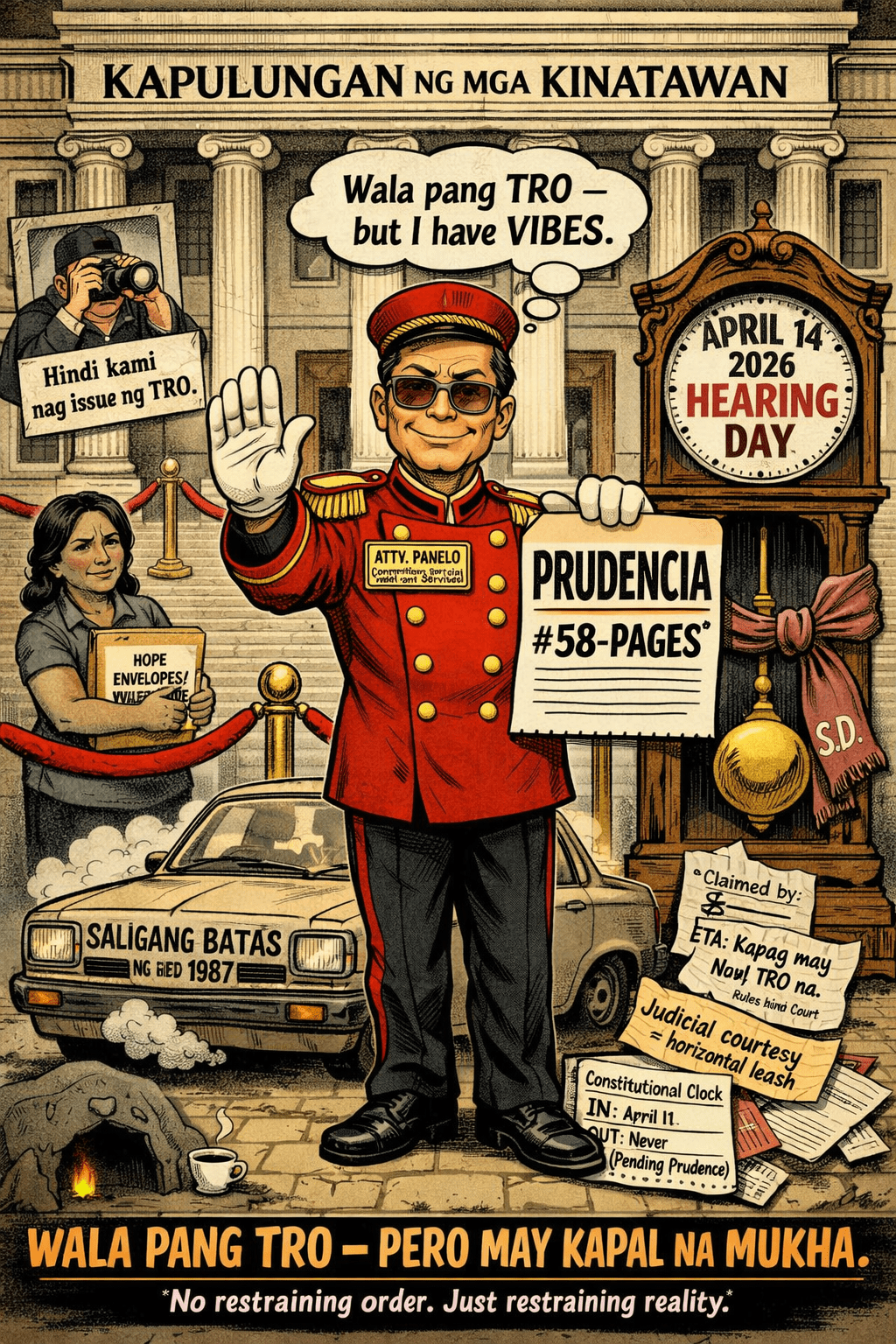
- Panelo’s “Prudence” Scam: Why the House Must Ignore Sara’s SC Delay Tactics

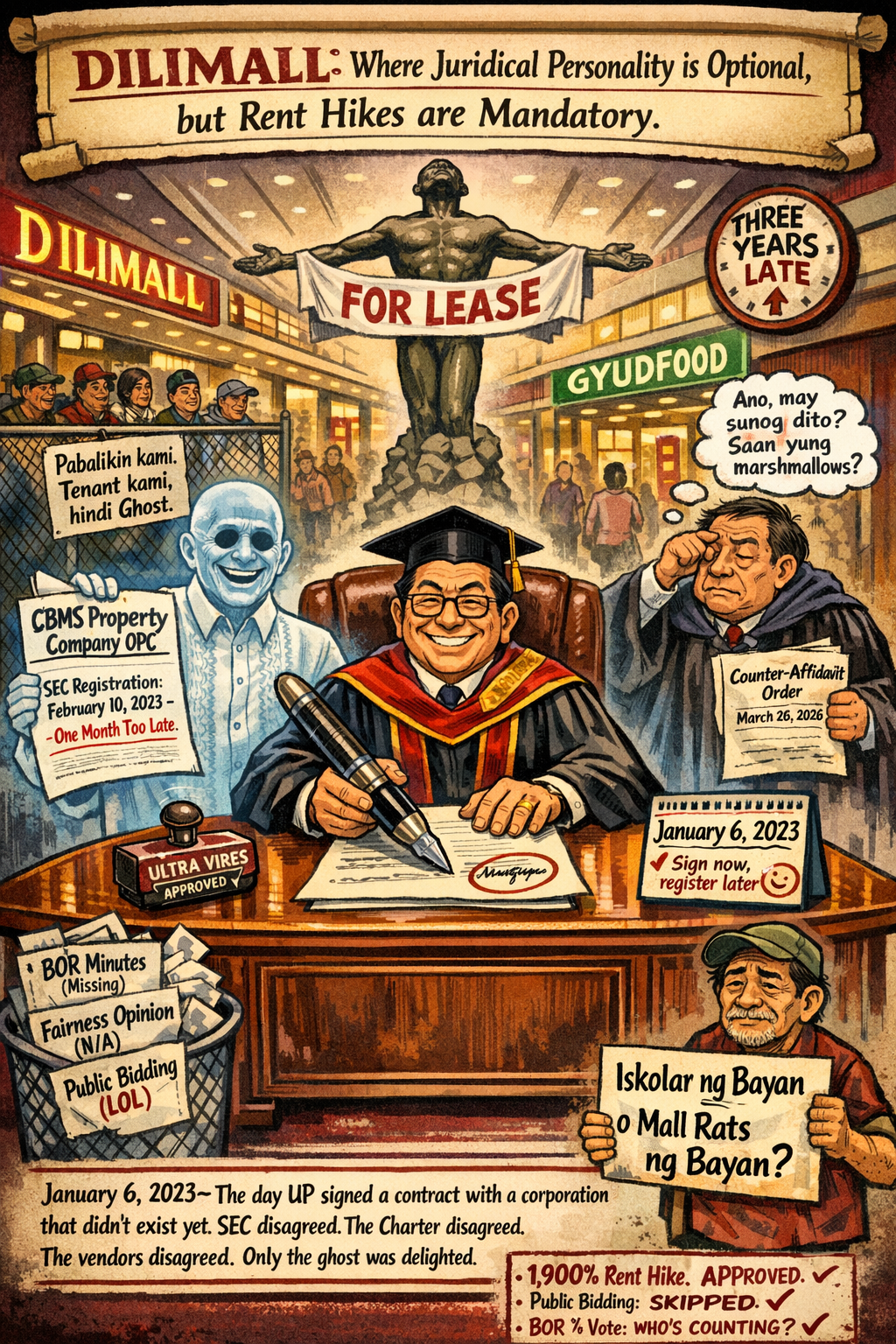
- Ghost Mall at UP: Ombudsman Finally Notices the Phantom Lease Scandal

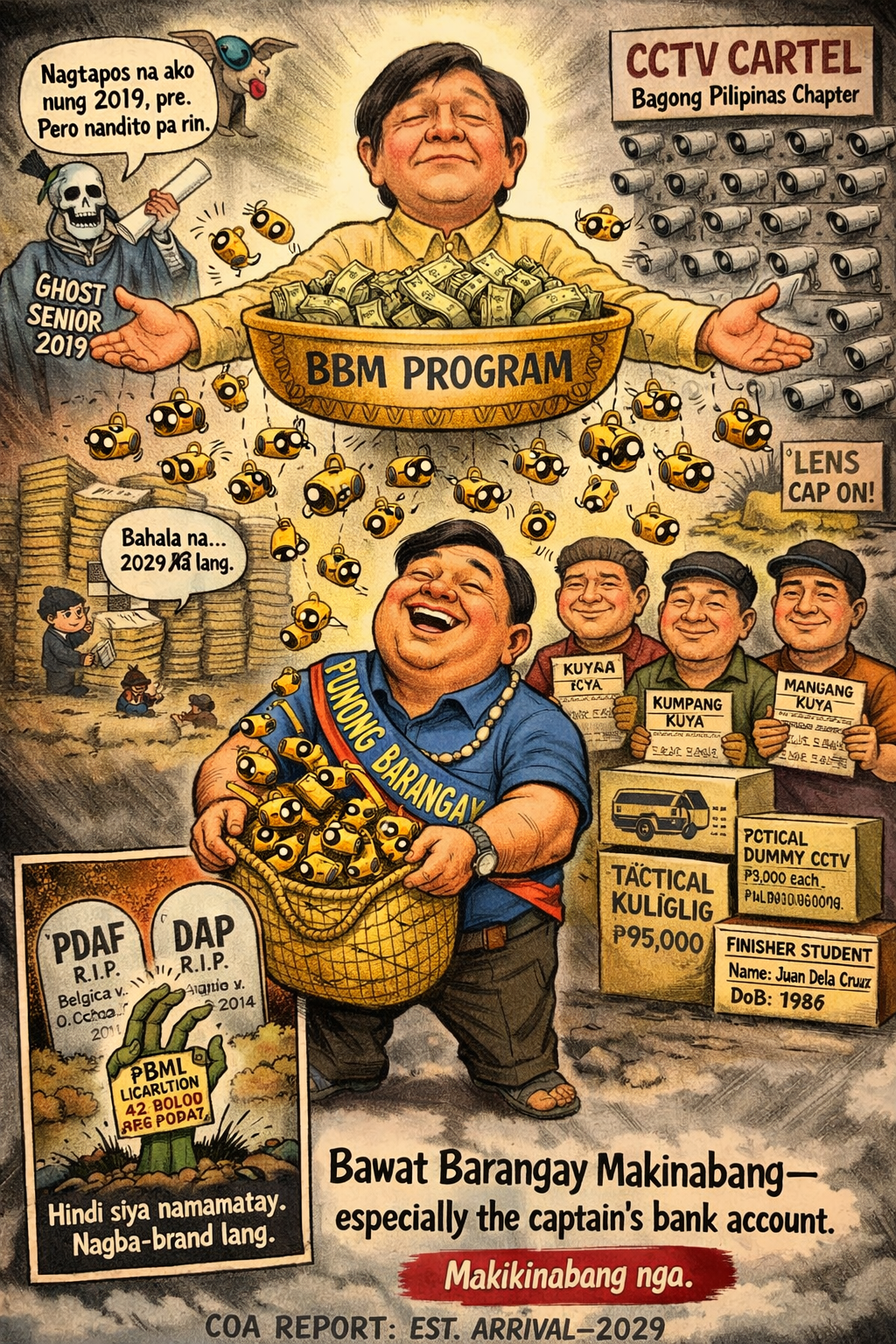
- ₱8B BBM Pork: CCTV for Every Captain’s Kumpare?

- DTI Kills RACE, Bets on EVs: Another Philippine Industrial Policy Funeral?

- Ombudsman Drops the Guillotine on Gabonada’s Ghost Wealth

- SC or Shield? Duterte’s Legal Smoke Bomb to Halt Sara Impeachment Proceedings

- From Podium to Police State: Jonvic Remulla’s Illegal War on Street Life

- Guilty Until Fact-Finding Ends: Chiz, Romualdez, and the Ombudsman’s Premature Verdict

- Ombudsman Remulla Slams Garafil: Release SALNs or Face Suspension!

- MALACAÑANG MEDICAL BULLETIN: PATIENT IS ‘FINE,’ SYMPTOMS INCLUDE DENIAL





 KWEBA ni BAROK
Leave a comment