By Louis ‘Barok‘ C. Biraogo — March 10, 2025
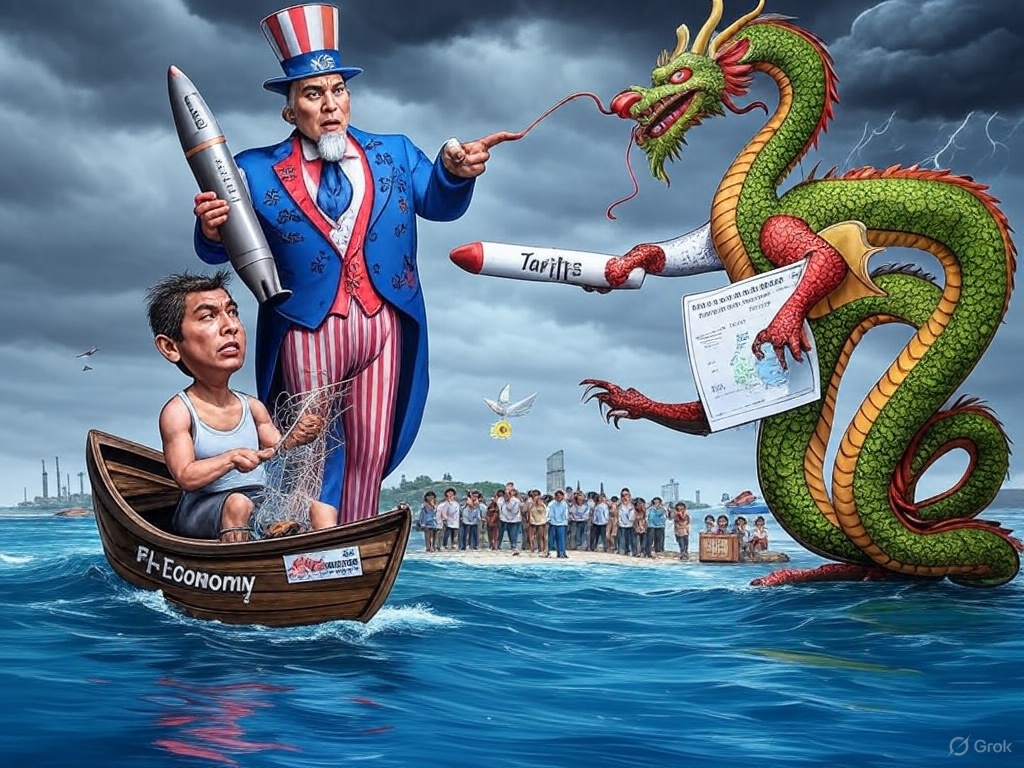
THE Filipino fisherman Manuel Santos hasn’t ventured beyond the coastal shallows for three months, his weathered boat idle since Chinese vessels began patrolling what his father and grandfather called their ancestral waters. In Manila, economist Maria Reyes watches her inflation forecasts climb with each Trump tariff announcement. These Filipinos stand at the crossroads of history as the world’s superpowers edge toward ‘any type of war’—a conflict where Southeast Asia may become both battleground and collateral damage. The escalating US-China confrontation isn’t merely diplomatic theater; it’s reshaping lives across the Philippines in ways both immediate and profound.
Superpower Showdown: When Tariffs Turn Into Threats
The news report titled ‘China Says It Is Ready for “Any Type of War” with US,’ published amid Beijing’s National People’s Congress in March 2025, lays bare a widening U.S.-China chasm, propelled by President Trump’s blanket tariffs on all Chinese imports and Beijing’s swift 10-15% counter-tariffs on U.S. farm goods—a retaliation that threatens American livelihoods and signals a perilous escalation in their economic and geopolitical showdown. This is no ordinary trade skirmish; it’s a collision of ambitions—the U.S. desperate to reclaim economic supremacy, and China, emboldened by its rise, refusing to bend. Deepening the rift, China’s dismissal of U.S. fentanyl accusations as a ‘flimsy excuse’—a charge tied to 100,000 American deaths annually—revives the mistrust of past disputes over intellectual property theft and COVID-19’s origins, casting a shadow over any hope for reconciliation.
These tensions mirror the U.S.-Japan trade wars of the 1980s, when tariffs on Japanese electronics sparked fears of broader conflict, yet stopped short due to shared alliance ties—something absent here. Today, the stakes are higher: China’s $245 billion defense budget (likely underreported) and its actions in the South China Sea signal a readiness to defend its interests, while Trump’s unilateralism risks alienating allies, creating openings for Beijing’s global outreach.
Ghosts of Rivalries Past: What History Warns Us Now
This moment recalls the Cold War’s U.S.-Soviet standoff, where economic competition and military posturing risked escalation but were tempered by mutual deterrence. The Soviet Union’s massive defense spending (15-20% of GDP) ultimately strained its economy, a cautionary tale for China, which faces domestic challenges like a property crisis and youth unemployment. Yet China’s $17 trillion economy and $3.2 trillion in forex reserves offer resilience, unlike the USSR’s fragility. The 1930s Smoot-Hawley tariffs, which deepened the Great Depression by shrinking global trade, also loom large—today’s interconnected supply chains could amplify similar risks, with stagflation threatening vulnerable nations.
For the Philippines, historical parallels abound. The 1995 Mischief Reef occupation by China and the Philippines’ grounding of the BRP Sierra Madre in 1999 foreshadow today’s South China Sea tensions, where Chinese warships now encroach on Manila’s Exclusive Economic Zone (EEZ). During the Cold War, U.S. bases in Subic Bay bolstered Philippine security but also made it a target—today’s Enhanced Defense Cooperation Agreement (EDCA) sites and the Typhon missile system deployment carry similar risks, positioning the Philippines as a frontline state.
Caught in the Storm: Filipinos Facing the Fallout
The immediate impact on the Philippines is stark. Fishermen like Juan, a 45-year-old from Palawan, tell me they’re increasingly harassed by Chinese vessels in the West Philippine Sea, their livelihoods threatened by escalating maritime disputes. Durian and banana farmers in Mindanao, reliant on exports to China, face collapsing markets as Beijing’s tariffs hit U.S. agriculture—and, by extension, Philippine goods. The June 2024 clash at Second Thomas Shoal, injuring a Philippine sailor, underscores the human toll of this rivalry, with families left anxious and communities destabilized.
Long-term, the Philippines risks becoming a proxy battleground. China’s military buildup and U.S. commitments under the Mutual Defense Treaty could draw Manila into conflict, while economic pressures—rising costs from disrupted supply chains and potential Chinese retaliation—could deepen poverty, especially for the 16 million Filipinos living below the poverty line. Youth unemployment, already at 20% in urban areas, could spike if trade wars stall growth, leaving a generation without hope.
Steering Through Chaos: Solutions for a Fragile Peace
We cannot ignore these harsh realities, but there’s room for measured optimism. Here are concrete recommendations, grounded in moral conviction and practicality:
- Restart U.S.-China Dialogue: Trump and Xi must revive direct talks, as they attempted early in Trump’s first term, to de-escalate trade and military tensions. A Phase Two trade deal, focusing on fair competition rather than zero-sum tariffs, could stabilize markets and protect vulnerable economies like the Philippines’.
- Strengthen ASEAN Mediation: The Philippines, as a key ASEAN member, should lead efforts to finalize the South China Sea Code of Conduct, reducing the risk of maritime clashes. International observers, including Japan and Australia, could monitor compliance, ensuring China and the U.S. respect regional norms.
- Bolster Philippine Resilience: The U.S. and allies should expand economic aid to the Philippines—$500 million annually isn’t enough. Invest in rural infrastructure, job training for youth, and climate-resilient agriculture to cushion trade war impacts, particularly for farmers and fishermen.
- Clarify Military Commitments: The U.S. should publicly reaffirm its Mutual Defense Treaty obligations while avoiding provocative deployments like the Typhon system, which escalate tensions. Manila, in turn, should diversify security partnerships with ASEAN nations to reduce reliance on any single power.
The Hidden Twist: Could China Win by Losing?
Here’s the counterintuitive insight others might miss: China’s aggressive rhetoric and military buildup could backfire, alienating Global South nations it seeks to court. Yet, if Beijing pivots to showcase itself as a champion of free trade—offering economic partnerships to offset U.S. tariffs—it could gain soft power, particularly in the Philippines, where public opinion is split on China. This could pressure the U.S. to rethink its unilateralism, creating an unexpected path to de-escalation. But it requires China to temper its saber-rattling with genuine cooperation—a tall order given current dynamics.
Defying the Tide: A Plea for Peace and People
The Philippines stands at a crossroads, its security, economy, and people caught in a superpower struggle. The fisherman dodging Chinese warships, the farmer losing markets, and the young graduate facing unemployment deserve better than proxy warfare. By fostering dialogue, strengthening regional stability, and supporting vulnerable populations, we can mitigate the worst outcomes while preserving hope for a peaceful, prosperous future. Let’s act now—before the tides of rivalry sweep us all under.

- ₱8B BBM Pork: CCTV for Every Captain’s Kumpare?
- ₱75 Million Heist: Cops Gone Full Bandit

- ₱6.7-Trillion Temptation: The Great Pork Zombie Revival and the “Collegial” Vote-Buying Circus

- ₱1.9 Billion for 382 Units and a Rooftop Pool: Poverty Solved, Next Problem Please

- ₱1.35 Trillion for Education: Bigger Budget, Same Old Thieves’ Banquet
- ₱1 Billion Congressional Seat? Sorry, Sold Out Na Raw — Si Bello Raw Ang Hindi Bumili

- “We Will Take Care of It”: Bersamin’s P52-Billion Love Letter to Corruption

- “Skewed Narrative”? More Like Skewered Taxpayers!

- “Scared to Sign Vouchers” Is Now Official GDP Policy – Welcome to the Philippines’ Permanent Paralysis Economy
- “Robbed by Restitution?” Curlee Discaya’s Tears Over Returning What He Never Earned

- “No Pressure” Luistro? The House Pork Bazaar Exposed
- “My Brother the President Is a Junkie”: A Marcos Family Reunion Special


 KWEBA ni BAROK
Leave a comment