
By Louis ‘Barok‘ C. Biraogo — March 11, 2025
MARIA Santos wakes at 4 a.m. to beat the traffic, but there’s no escaping Manila’s gridlock. A mother of three, she spends hours each day crammed into a jeepney, her children’s laughter replaced by the hum of idling engines. She’s heard the promises—an $85 billion infrastructure boom, 104 projects pledged to transform the city. Yet, three years later, the Metro Manila Subway and MRT-7 are still stuck in a web of land disputes, costing the Philippines Php1.277 trillion annually. For Maria, the delays aren’t just numbers—they’re stolen moments with her kids, a future slipping further away.
Digging Deep: Why the Wheels Are Stuck
Institutions Crumbling: A System in Shambles
The Philippines isn’t short on cash—its central bank boasts reserves exceeding Spain’s—but its institutions are. Courts grind at a glacial pace, bogged down by underfunding and a backlog of ROW disputes. The Commission on Audit’s 2023 report reveals the wreckage: Php13 billion in stalled Bicol projects, with potholes and cracks signaling “lack of supervision.” Corruption festers too—contractors rarely face jail, even as billions vanish. In Cebu, a police station budgeted at Php49.9 million in 2015 sat dormant until last month, a decade lost to ownership squabbles. This isn’t mere inefficiency; it’s a governance crisis where accountability is a ghost.
Rushing Blind: The Perils of Hasty Ambition
Ambition outpaces preparation. The MRT-7, meant to link Quezon City to Bulacan by 2022, is only 69.86% complete, its 33-hectare depot snagged by valuation fights. The North-South Commuter Railway (NSCR), eyed for 2026, now hopes for 2028. Why? Rushed approvals skipped robust feasibility studies, ignoring urban density and landowner resistance. Political pressure to showcase progress—a legacy of “Build, Build, Build”—left planners blind to risks, turning timelines into mirages.
Law’s Cruel Bind: Fairness or Paralysis?
Republic Act 10752, the ROW Act, is both shield and shackle. It demands “just compensation” for landowners and relocation sites with “basic facilities” for informal settlers—think Manila’s squatters or Cebu’s jail-adjacent families enduring a decade of stench. Fairness is the intent, but the reality is paralysis. Without pre-built sites, projects like the Metro Manila Subway can’t break ground without courting lawsuits. Local governments, strapped for cash, falter, leaving settlers and engineers in limbo. It’s a noble law crippled by logistical neglect.
Beyond the Balance Sheet: Lives on Hold
Maria’s story echoes across millions. Traffic steals her time; delays rob her hope. In Cebu, residents near the Kalunasan Wastewater Facility have choked on jail runoff since 2011, a Php42.39-million fix stalled by land woes. The Php1.277 trillion figure looms large, but it’s these daily indignities—lost wages, stalled dreams—that reveal the true cost.
Peeling Back the Layers: Truths and Traps
Php1.277 Trillion: Headline or Hype?
The claim that ROW delays cost Php1.277 trillion annually grabs headlines, but it’s a stretch. Traffic congestion predates these projects—JICA pegged losses at Php3.5 billion daily in 2018, hinting at a broader urban planning failure. Yes, unfinished rails like MRT-7 worsen the snarl, but Manila’s gridlock stems from decades of underinvestment, not just ROW snags. The figure’s plausibility holds—escalated by inflation and population growth—but its attribution oversimplifies, risking misdirected blame.
Ambition’s Collision Course: Politics Meets Reality
Aggressive deadlines—MMSP’s “moonshots”—reflect electoral bravado, clashing with RA 10752’s rigid rules. The Department of Transportation (DOTr) admits as much, yet the push persists, driven by a need to outshine richer neighbors. The BSP’s reserves dazzle, but without institutional muscle, money alone can’t pave the way. It’s a classic trap: optics over groundwork.
Missing the Mark: What’s Left Unsaid
The news report nails the symptoms—three years for MRT-7, ten for Cebu—but skims the systemic rot. Corruption’s role is hinted at, not dissected. The Php13 billion Bicol fiasco gets a nod, but not the culture of impunity behind it. And while RA 10752’s hurdles are clear, the human cost—beyond traffic—needs louder voice.
Breaking the Jam: Bold Fixes for a Broken System
Fixing the Foundation: Governance That Works
Governance must harden. Boost funding for courts and agencies—DOTr, DPWH—hiring staff to cut judicial backlogs and monitor projects. Enforce COA’s teeth: rescind contracts, seize bonds, jail offenders. A National ROW Task Force, pairing LGUs with incentives (grants) and sticks (penalties), could unify efforts. Imagine Cebu’s police station breaking ground in 2016, not 2025.
Seeing Ahead: Planning That Sticks
Mandate detailed feasibility studies—land maps, risk profiles—before a spade hits dirt. Phase projects, like MRT-7’s 2025 partial rollout, to deliver relief while ROW unravels. Tech can help: GIS and AI could track disputes in real-time, sparing NSCR’s budget overruns. Haste birthed these delays; foresight can end them.
Loosening the Knot: Law That Moves
RA 10752 needs flex. Amend it to allow phased relocations—temporary aid or modular homes—while sites are built, dodging lawsuits. Pre-identify relocation zones via PPPs, tapping firms like SMC Infrastructure. For landowners, offer tax breaks or project equity, easing MRT-7’s 33-hectare fight. Maria’s neighbors could move with dignity, not dread.
Thinking Bigger: A Unified Push
Expand PPPs beyond cash to ROW fixes—private efficiency meets public need. A public dashboard, showing MRT-7’s 69.86% climb, builds trust. Study Japan’s phased ROW clearances (NSCR’s funder) or Singapore’s streamlined courts. The Philippines can borrow without bending.
The Road Ahead: A Blueprint to Deliver
Quick Wins (0–1 Year)
- Launch the ROW Task Force, piloting in Cebu.
- Pass RA 10752 amendments for phased moves.
- Map risks for MMSP with GIS, targeting 2026 starts.
Building Momentum (1–3 Years)
- Fund courts and DOTr with 1% of $85 billion ($850 million).
- Build relocation sites near Manila via PPPs, housing 50,000 settlers.
- Phase NSCR, aiming for Clark by 2027.
Lasting Change (3–5+ Years)
- Embed an Oversight Commission, jailing corrupt contractors by 2028.
- Cut traffic losses by Php300 billion annually with completed rails.
- Reform planning laws, ensuring no project skips risk checks.
What We Gain
MRT-7 rolls by 2025, NSCR by 2028, MMSP by 2030. Traffic eases, saving billions. Maria spends evenings with her kids, not in a jeepney. Governance sheds its rust.
Time to Act: No More Excuses
The Philippines stands at a crossroads. Its $85 billion dream can falter, bleeding Php1.277 trillion yearly, or rise, lifting millions like Maria. Money isn’t the issue—will is. Reform governance, plan smart, bend the law without breaking it. The rails can run, the roads can clear, but only if leaders choose people over promises. Let’s not wait another decade to prove it.

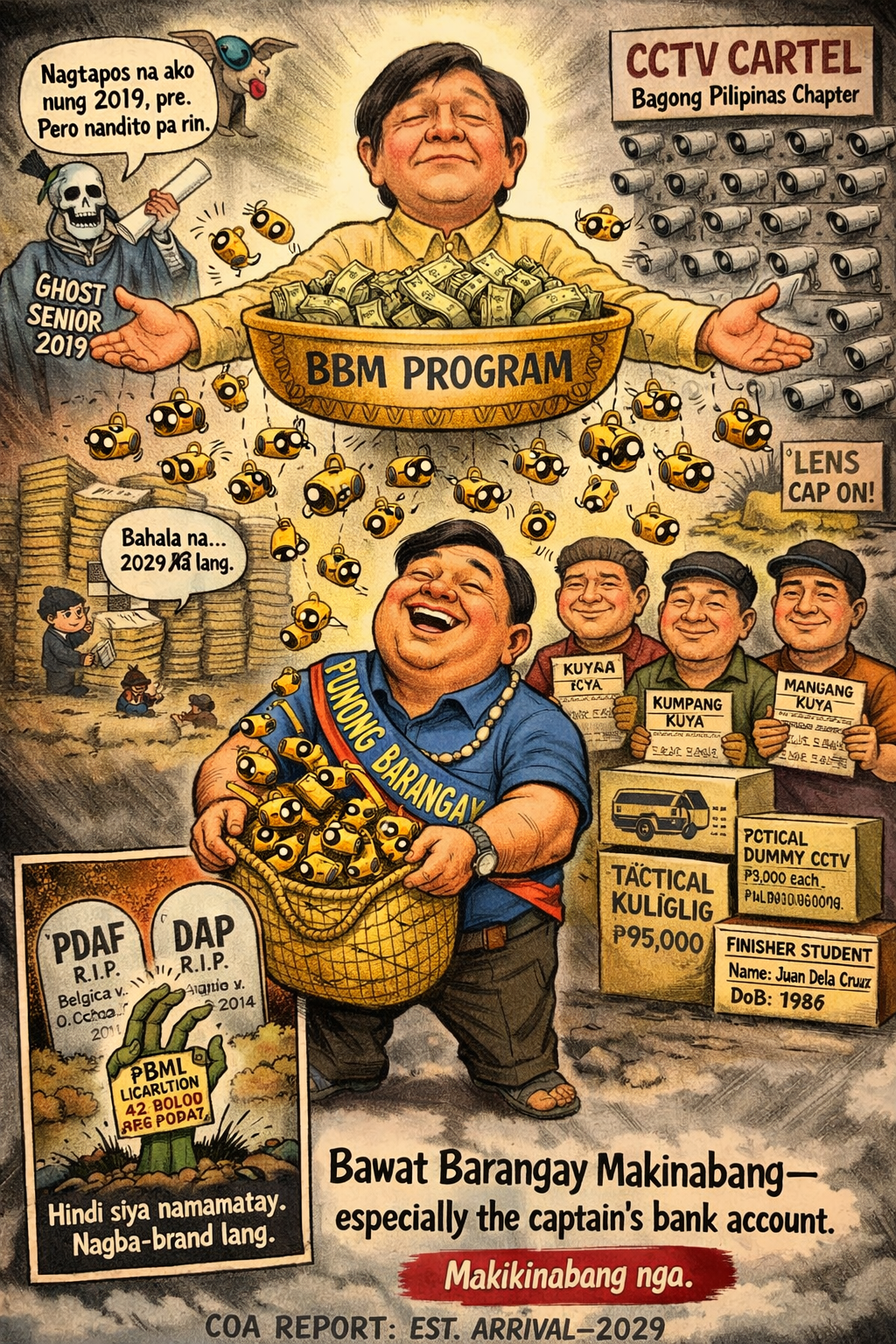
- ₱8B BBM Pork: CCTV for Every Captain’s Kumpare?
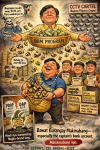
- ₱75 Million Heist: Cops Gone Full Bandit

- ₱6.7-Trillion Temptation: The Great Pork Zombie Revival and the “Collegial” Vote-Buying Circus

- ₱1.9 Billion for 382 Units and a Rooftop Pool: Poverty Solved, Next Problem Please

- ₱1.35 Trillion for Education: Bigger Budget, Same Old Thieves’ Banquet

- ₱1 Billion Congressional Seat? Sorry, Sold Out Na Raw — Si Bello Raw Ang Hindi Bumili

- “We Will Take Care of It”: Bersamin’s P52-Billion Love Letter to Corruption
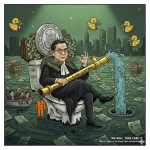
- “Skewed Narrative”? More Like Skewered Taxpayers!

- “Scared to Sign Vouchers” Is Now Official GDP Policy – Welcome to the Philippines’ Permanent Paralysis Economy
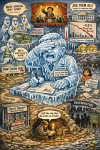
- “Robbed by Restitution?” Curlee Discaya’s Tears Over Returning What He Never Earned

- “No Pressure” Luistro? The House Pork Bazaar Exposed
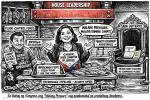
- “My Brother the President Is a Junkie”: A Marcos Family Reunion Special



 KWEBA ni BAROK
Leave a comment